

Writer: Adam West


Editor: Lillian Guevara-Castro


Reviewer: Ashley Fricker

Disclosure: When you apply through links on our site, we may earn a referral fee from our partners. For more, see our ad disclosure and review policy.
Key Takeaways
-
24/7 Lending Group is our top recommendation, connecting borrowers of all credit profiles with loans ranging from $500 to $35,000.
-
Unsecured personal loans don’t require collateral, but borrowers with bad credit may receive higher APRs and less favorable terms.
-
Comparing multiple offers can help you find the most affordable combination of APR, fees, monthly payment, and repayment term.
Unlike loans for cars, homes, or education, unsecured personal loans let you use the money for nearly any purpose. That makes them a popular way to fund home improvements, consolidate debt, or cover the costs of an emergency, even if you have bad credit.
Better yet, unlike a secured loan, you won’t need to risk any collateral when borrowing from one of our recommended options below. Even with bad credit, these networks provide an accessible way to get the money you need.
Best Unsecured Personal Loans for Bad Credit
Most of the options below are installment loans, meaning you repay your debt through a series of equal monthly payments. This helps make a bad credit loan more affordable for most consumers.
And with the online lending networks listed below, you can submit a single loan request to each network, and it will be forwarded to every direct lender that partners with the network. If you qualify, you could receive multiple loan offers within a matter of minutes and have money in your checking account or savings account within one business day.
Be sure to read the fine print and understand the cost of borrowing before agreeing to any loan offer — and you’re never obligated to accept the offer if you don’t like it.

- Personal loans from $500 to $35,000
- All credit types are considered and welcome
- Simple, no credit impact form
- Helping consumers since 2001
- 4.7 out of 5 Trustpilot rating with 2,000+ reviews!
- See official site, terms, and details.

| Loan Amount | Interest Rate | Loan Term | Loan Example |
|---|---|---|---|
| $500 to $35,000 | 5.99% – 35.99% | 60 Days to 72 Months | See representative example |
24/7 Lending Group connects borrowers with personal loan providers offering amounts from $500 to $35,000. Its partners consider most credit profiles and may evaluate factors beyond your credit score, making the network a strong option for borrowers with bad credit.
Submitting the online form may generate multiple no-obligation rate quotes without affecting your credit scores. If you select an offer and receive final approval from the lender, the funds could reach your bank account within 24 hours. The lender may conduct a hard credit check before finalizing the loan.
2. MoneyMutual

- Short-term loans up to $5,000
- Online marketplace of lenders
- Funds available in as few as 24 hours
- Simple online form takes less than 5 minutes
- Trusted by more than 2 million customers
- See official site, terms, and details.
| Loan Amount | Interest Rate | Loan Term | Loan Example |
|---|---|---|---|
| Up to $5,000 | Varies | Varies | See representative example |
MoneyMutual maintains one of the largest lending networks on the internet. Within minutes of submitting your loan request, you could receive multiple short-term loan offers with a competitive interest rate, monthly loan payment, and loan term.
Be sure to study each offer carefully, as some may be more affordable than others. Don’t just go with the offer that has the lowest monthly payment — as that often happens when a lender extends your loan term, which increases the amount you’ll pay in interest over the life of the loan.
3. CashUSA.com

- Loans from $500 to $10,000
- Receive a loan decision in minutes
- Get funds directly to your bank account
- Use the loan for any purpose
- See official site, terms, and details.
| Loan Amount | Interest Rate | Loan Term | Loan Example |
|---|---|---|---|
| $500 to $10,000 | 5.99% – 35.99% | 3 to 72 Months | See representative example |
CashUSA.com not only offers affordable short-term loan options of up to $10,000, but the network also provides all consumers with free financial education modules to make sure you choose the best loan option for your needs and budget.
Applicants must be 18 years old and a U.S. citizen or permanent resident to qualify. Applicants must also have a checking account in their name, an income of at least $1,000 a month, and be able to provide an email address and work and home phone numbers.

- Loans from $500 to $10,000
- Get connected with a lender
- Simple form & quick funding
- Get your money as soon as the next business day, if approved
- See official site, terms, and details.
| Loan Amount | Interest Rate | Loan Term | Loan Example |
|---|---|---|---|
| $500 to $10,000 | 5.99% – 35.99% | 3 to 60 Months | See representative example |
As you may expect from the name, BadCreditLoans.com specializes in curating loan packages for consumers who have a bad credit score. The network even goes so far as to claim that it often accepts applicants who cannot find loans elsewhere.
The amount you qualify for, your interest rate, and your repayment term will vary based on each lender’s qualifications. Depending on how bad your credit is, you may receive both secured and unsecured personal loan offers.

- Loans from $250 to $35,000
- Large lender network
- Fast loan decision
- Use the loan for any purpose
- Funding as soon as one business day, if approved
- See official site, terms, and details.
| Loan Amount | Interest Rate | Loan Term | Loan Example |
|---|---|---|---|
| $250 to $35,000 | 5.99% – 35.99% | 3 to 72 Months | See representative example |
PersonalLoans.com maintains two separate networks — one specializes in bad credit personal loan options and the other works with consumers who have good and excellent credit. While there is no minimum credit score for a bad credit personal loan, not all applicants will qualify.
If you’re eligible for a loan offer, the lender will need to conduct a full credit check before finalizing your loan. You can finish your official loan paperwork in under an hour and have your funds by the next business day.
What is an Unsecured Loan?
There are two main types of loans: secured loans and unsecured loans. An unsecured loan does not require collateral for approval, whereas a secured loan does.
Unsecured loans are often referred to as signature loans. The most common unsecured loan is a personal loan. Lenders are a bit choosier with who they offer these loans to because they have little recourse if you don’t repay the debt.
Many consumers find these loans attractive because they don’t require collateral and generally place few restrictions on how the proceeds can be used.
What Can I Use a Personal Loan For?
Personal loans can be used for nearly any legal purpose. Common uses include consolidating debt, covering emergency expenses, making home or car repairs, paying medical bills, or financing a major purchase.
I say “nearly any” because some lenders restrict uses such as college tuition, business expenses, gambling, or investing. Review the loan agreement before accepting an offer to confirm that your intended use is permitted.
Can I Get an Unsecured Loan With Bad Credit?
Yes, you may qualify for an unsecured loan with bad credit, although you’ll generally receive higher rates and smaller loan amounts than borrowers with stronger credit. Lenders may also consider your income, existing debts, and recent payment history when evaluating your application.
One option is to apply through an online lending network. These networks send a single loan request to multiple partner lenders, including some that specialize in working with borrowers who have poor credit. Depending on the network, checking for potential offers may involve a soft credit inquiry that won’t affect your credit scores.
How to Use a Lender Network in 5 Steps
If you receive an offer, review its APR, fees, monthly payment, and repayment term carefully before proceeding. Approval isn’t guaranteed, and the lender may conduct a hard credit check when you formally apply. If approved, you may receive the money in your linked bank account as soon as the next business day.
How Do You Qualify For an Unsecured Loan?
Qualifying for an unsecured loan is not much different from qualifying for any other loan. Your loan application will require similar information, and you will need to provide proof of employment and income if the lender requests it.
The video below explains how to improve your chances of getting a loan with bad credit and what to expect during the application process.
You can opt through many lenders to prequalify for a loan before you officially apply. This process requires you to submit a short loan request form that takes only a few minutes to complete. The form will ask for your name, Social Security number, address, phone number, email address, income information, loan amount, and the purpose of your loan.
A soft credit pull gives the lenders access to a modified version of your credit history. It provides the lender just enough information to decide whether you may qualify for a loan. If they determine you do, you can choose to officially apply for the loan.
This will require a full loan application that repeats the same information as the first form and may add more details. These could include more detailed employment information, a breakdown of your current monthly debt obligations, and your recent address history if you’ve moved in the last two years.
Keep in mind that prequalifying for a loan does not guarantee that you will receive the loan when you officially apply. On rare occasions, the lender may see something on your credit report that was not present on the modified credit pull. This could negate your ability to qualify for the loan.
What is the Minimum Credit Score Needed For a Personal Loan?
There is no universal minimum credit score required for a personal loan. Some lenders set their own minimums, while others consider your score alongside your income, debts, payment history, and other financial information.
In addition to your credit score, the lender will look at several factors to determine approval, including:
- Your employment history: You will look more responsible to a lender if you have been in your current job for a long time. Someone who jumps around from job to job every few months may have trouble maintaining employment long enough to repay their debt.
- Your payment history: Lenders expect consumers who have bad credit to have several financial mistakes on their credit report. But it’s the age of those mistakes that could make or break your approval chances. For example, your credit score could be held down by a bankruptcy or late payments from a few years ago. If you have a clean payment history since those old mistakes, the lender could be lenient when considering your application. But if you have a settled bankruptcy case from last month, or late payments during each of the last three months, a personal loan lender will likely reject your application for fear of becoming part of a trend.
- Your current obligations: Most of us have to make a monthly mortgage or rent payment for our home. Approximately 44% of Americans also make at least one monthly car payment. You may also have credit card debt, loan payments, or other monthly obligations that eat away at your income. If the total amount of your payments is too close to your total income, a lender will likely reject your application for fear that you cannot afford another payment. But if you have a nice cushion between the two, you may have success, despite a bad credit score.
You can overcome your poor credit by showing a lender that you’re responsible and ready to take on the loan you’re applying for.
Will Accepting a Loan With Bad Credit Affect My Credit Score?
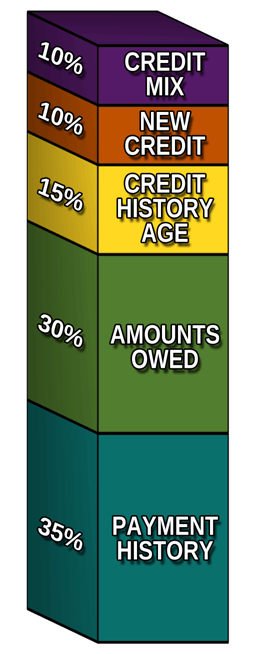
Yes, applying for and accepting a personal loan may initially lower your credit scores, but the loan could help your credit over time if you consistently make on-time payments. The precise effect depends on the rest of your credit profile.
A personal loan can affect several factors of your credit score. Formally applying usually results in a hard inquiry, which may cause a small, temporary score decrease. The inquiry can remain on your credit reports for two years, although FICO Scores generally consider inquiries from only the previous 12 months.
Adding a personal loan may also improve your credit mix if you don’t already have an installment account. However, taking out a loan solely to diversify your credit isn’t worthwhile, and adding a new account or more debt may initially work against your scores.
Your payment history will ultimately have the greatest influence. Making every payment on time can help you build a positive payment history, while missed payments can cause significant credit-score damage.
Do Personal Loans Require a Credit Check?
Yes, most personal loans require a credit check. Because unsecured loans don’t require collateral, lenders typically review your credit history, income, and existing debts to evaluate the risk of lending to you.
The type of credit check depends on where you are in the application process:
- Soft inquiry: A lender may use a soft inquiry when you prequalify or check potential offers. It does not affect your credit scores.
- Hard inquiry: A lender will typically conduct a hard inquiry when you formally apply for a loan. This may temporarily lower your credit scores.
Some lenders offer no-credit-check loans, but these products may carry extremely high APRs and fees. A credit check may feel like an obstacle, but skipping it can result in far more expensive financing.
What Are the Differences Between Secured and Unsecured Loans?
A secured loan requires collateral or a deposit that protects the lender if you stop making payments. An unsecured loan doesn’t require collateral; lenders instead evaluate factors such as your credit history, income, payment history, and existing debts.
Here’s a quick comparison chart outlining the main differences:
| Feature | Secured Loan | Unsecured Loan |
|---|---|---|
| Collateral required? | Yes | No |
| Common examples | Auto, title, and pawnshop loans | Personal and signature loans |
| Rates | Often lower | Often higher |
| Approval | May be easier with bad credit | Typically requires stronger credit or finances |
| Risk if you default | The lender may seize the collateral | The debt may be sent to collections |
An auto loan is a common example of secured debt because the financed vehicle serves as collateral. If you stop making payments, the lender may repossess and sell the car. You could still owe money if the sale doesn’t cover your remaining loan balance.
Secured loans may be easier to obtain because the collateral reduces the lender’s financial risk. Unsecured loans pose more risk to lenders, so borrowers with bad credit may receive higher APRs, additional fees, or smaller loan amounts.
Why Are Personal Loans Also Called Installment Loans?
Personal loans go by a few different names, including installment loans and signature loans. They’re considered installment loans because you repay the borrowed amount, plus interest and applicable fees, through a scheduled series of payments.
A personal loan may also be called a signature loan when it doesn’t require collateral. Instead, your signature represents your promise to repay the debt according to the loan agreement.
“Installment loan” describes how you repay the debt. “Signature loan” describes your promise to repay replaces the need for collateral. An unsecured personal loan can be both.
Many lenders offer installment loans to applicants with bad credit, but your credit profile may affect the amount, APR, fees, and repayment term you receive.
Not every short-term loan is an installment loan. Traditional payday loans, for example, generally require one lump-sum payment on or around your next payday rather than a series of scheduled payments.
What Are the Average Loan Interest Rates For Someone Who Has Poor Credit?
Borrowers with credit scores below 580 received personal loan offers averaging 30.25% APR, according to LendingTree marketplace data. Their lowest available offers averaged 29.05% APR. Borrowers with fair credit scores between 580 and 669 received somewhat lower average APRs.
Average Personal Loan APRs by Credit Score
| Credit Score Range | Average APR — Best Offer | Average APR — All Offers |
|---|---|---|
| 800 or higher | 12.15% | 15.75% |
| 740–799 | 15.54% | 17.89% |
| 670–739 | 20.61% | 23.27% |
| 580–669 | 25.78% | 27.79% |
| Below 580 | 29.05% | 30.25% |
Your credit score isn’t the only factor that affects your rate. Lenders may also consider your income, existing debts, requested loan amount, repayment term, and overall credit history. Because offers can vary between lenders, prequalifying with multiple providers may help you find a lower APR without affecting your credit scores.
Can You Get a Loan if You’re Unemployed?
Some lenders will consider your personal loan application if you’re unemployed. This is because most lenders accept income from sources other than employment.
When you apply for a loan, you’ll need to provide your total current income. This helps the lender determine if your income is sufficient to repay the debt you’re applying for.
Most people think of income only as money earned from employment, but this isn’t always the case. Depending on the lender, qualifying income may include government benefits, Social Security income, retirement income, annuities, investment income, structured settlement payments, or alimony and child support.
How Much Income Do I Need to Get a Personal Loan?
The amount of income you need to qualify for a personal loan will depend on the amount of your loan. After all, a $10,000 loan will require the borrower to have more income to cover the monthly payment than a $500 loan will.
To get a better idea of the income requirements for bad credit personal loans, let’s look at the rules set forth by some of the online lending networks listed above:
- MoneyMutual: Applicants must provide proof of employment and an income of at least $800 per month.
- CashUSA.com: Applicants must provide proof of at least $1,000 in monthly after-tax income.
- PersonalLoans.com: No minimum income requirement, but applicants must have no debt that can’t be covered by their current income.
Remember, your income needs to cover your current debts as well as the new personal loan. Even if you meet the income criteria mentioned earlier, a high debt-to-income ratio might still prevent you from qualifying for a loan.
Compare Unsecured Personal Loans for Bad Credit Online
Bad credit can make borrowing more challenging, but it doesn’t necessarily take an unsecured personal loan off the table. The online lending networks above can help you check potential offers from multiple lenders without filling out application after application.
Just remember that receiving an offer doesn’t automatically make it a good one. Take your time comparing the APR, fees, monthly payment, and total repayment cost, and don’t borrow more than your budget can comfortably handle.
The right loan should help solve the problem in front of you — not create an even bigger one down the road.
Advertiser Disclosure
BadCredit.org is a free online resource that offers valuable content and comparison services to users. To keep this resource 100% free for users, we receive advertising compensation from the financial products listed on this page. Along with key review factors, this compensation may impact how and where products appear on the page (including, for example, the order in which they appear). BadCredit.org does not include listings for all financial products.
Our Editorial Review Policy
Our site is committed to publishing independent, accurate content guided by strict editorial guidelines. Before articles and reviews are published on our site, they undergo a thorough review process performed by a team of independent editors and subject-matter experts to ensure the content’s accuracy, timeliness, and impartiality. Our editorial team is separate and independent of our site’s advertisers, and the opinions they express on our site are their own. To read more about our team members and their editorial backgrounds, please visit our site’s About page.


