

Writer: Eric Bank


Editor: Lillian Guevara-Castro


Reviewer: Jon McDonald

Disclosure: When you apply through links on our site, we may earn a referral fee from our partners. For more, see our ad disclosure and review policy.
Think of your credit score as a key that can open doors to a better lifestyle or keep them closed. That’s why you might want to legally remove certain items from your credit report.
Your credit score is a single number that reflects your creditworthiness, calculated by credit bureaus based on your credit reports. Getting rid of negative items legally can boost your score from poor to good.
Read on to learn how to purge negative items legally from your reports and, thereby, improve your credit score.
1. Hire a Credit Repair Company
If you’re looking for the easiest way to fix your credit report, the following three credit repair services earn our top marks based on BBB ratings, industry reputation, and our own reviews.
These services challenge each of the three major credit bureaus to verify, correct, or remove negative items on your credit reports.

- Since 2004, Lexington Law Firm clients saw over 84 million items removed from their credit reports
- Get started today with a free online credit report assessment
- Cancel anytime
- See official site, terms, and details.

| Better Business Bureau | In Business Since | Monthly Cost | Reputation Score |
|---|---|---|---|
| See BBB Listing | 2004 | $139.95 | 8/10 |

- Best-in-class support
- In business since 1989
- Rapid 35-day dispute cycle, tailored to your situation
- 90-day 100% money-back guarantee
- Low $79 cost to get started, cancel or pause membership anytime
- See official site, terms, and details.
| Better Business Bureau | In Business Since | Monthly Cost | Reputation Score |
|---|---|---|---|
| A+ | 1989 | $79 | 9.5/10 |

- Free online assessment
- CreditRepair.com members saw over 8.8 million removals on their credit reports since 2012
- Free access to your credit report summary
- Three-step plan for checking, challenging and changing your credit report
- Online tools to help clients track results
- See official site, terms, and details.
| Better Business Bureau | In Business Since | Monthly Cost | Reputation Score |
|---|---|---|---|
| See BBB Listing | 2012 | $69.95+ | 8/10 |
The Fair Credit Reporting Act (FCRA) empowers you to challenge inaccuracies on your credit reports. You can do this either by mail or online through the websites of the three major credit reporting companies.
While you can try to fix your credit on your own, the process demands effort, patience, organization, and a bit of expertise. For what many people see as a fair price, you can hire a credit repair organization to handle the work for you.
Credit repair organizations work with you by first identifying questionable and inaccurate items on your credit reports and then disputing those items with the credit bureaus.
Some disputes are straightforward, like the removal of outdated information. Other disputes need more effort, including providing evidence to challenge items and pushing the bureaus to verify questionable data. Ideally, you’ll remove enough negative items to boost your score.
Most credit repair services offer a free consultation to review your credit reports and identify fruitful areas worth challenging. The credit specialist will review with you the different plans the company offers, what services come with each plan, and how much each plan will cost you.
If you decide to move forward, you can subscribe to a plan and pay a monthly fee to engage the service. While most services suggest a six-month subscription, you are free to cancel whenever you choose.
The credit repair company will challenge a specified number of items on your credit reports each month, depending on your chosen plan. In some cases, a simple challenge is enough to correct or remove an item.
In other cases, the service will formally dispute items by posting online communications containing the detailed objections and evidence required to address the problem.
Upon receipt of a credit report dispute submission, the Consumer Financial Protection Bureau says each credit reporting company has 30 days to investigate the matter and decide what to do.
In the course of the investigation, the bureau will forward disputes to the original credit provider that furnished the information. The information provider will review the credit report dispute and report back to the credit reporting bureau.
If the information provider discovers any inaccuracies, they must inform all three credit bureaus and request the removal of the erroneous data. Once this process is completed, the credit reporting bureau will notify you in writing and provide a new copy of your report if any changes were made.
2. Dispute Inaccurate Items Yourself
You can embark on DIY credit repair by ordering your three credit reports from AnnualCreditReport.com, a source of free credit reports authorized by the federal government. You need all three reports (one from each credit bureau, Experian, TransUnion, and Equifax) because creditors may report transactions to only one or two credit bureaus.
After receiving the reports, review the four sections for errors:
- Identification: Information identifying yourself, including your address, date of birth, and Social Security number. Incorrect information may be a tip-off that the report covers accounts that don’t belong to you.
- Tradelines: This contains your account data, which includes your use of credit and your borrowing activity. The data includes loan and credit account balances, payment history, and a collection account or charge-off.
- Public records: Court information regarding adverse legal judgments, bankruptcies, liens, foreclosures, vehicle repos, and money owed for child support.
- Inquiries: Hard inquiries are those you authorize a credit provider to make when you apply for a credit card or loan. These can lower your credit score. Unauthorized soft inquiries have no impact on your score.
The hardest part of DIY credit repair is combing through your report data for accounts or account activity you don’t recognize, incorrectly reported negative credit file items (charge-offs, delinquencies, bankruptcies, etc.), and liens and judgments you have already paid. You also should check for hard inquiries you didn’t authorize.
When you find incorrect information, submit a dispute through the credit bureau’s website, by phone, or mail. Expect to receive a written decision within 30 days.
When disputes are resolved in your favor, it might take some time to reflect on your credit file. If you don’t notice the error on your credit report being corrected or removed after a couple of months, it’s a good idea to follow up with the credit reporting company.
You have the right to re-submit dispute judgments that didn’t go your way, but only if you have new evidence to present. If you do it excessively, the credit reporting company might label the dispute as frivolous and disregard it.
Attach a 100-word note to each disputed item left on your report, detailing your perspective with supporting evidence. While this note won’t affect your score, it provides creditors with more context when deciding whether to offer you credit.
3. Send a Pay-for-Delete Letter to Your Creditor
Your credit score suffers when your credit report contains derogatory information (e.g., late payments, unpaid or paid collection events, charge-offs, debt settlements, etc.). You may be able to negotiate an item’s removal with a debt collector by using a pay-for-delete letter.
It may not work, but it’s certainly worth a try since it is a legal request.
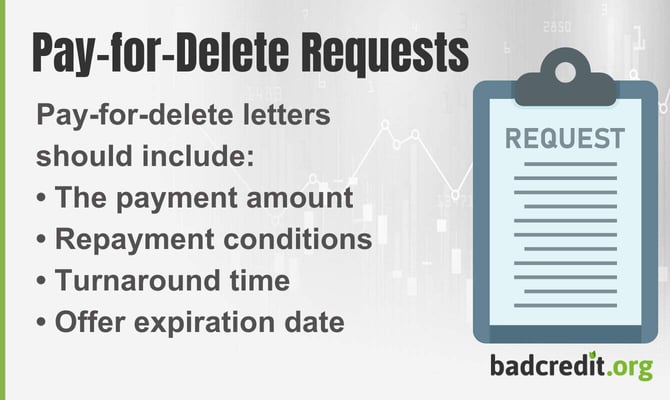
The idea behind a pay-for-delete letter is quite simple: you propose to pay off part or all of your debt, and in return, the collector agrees to erase the negative mark from your credit report. This is sometimes also known as a goodwill deletion.
This can be a win-win situation, as removing an item that damages your credit score benefits you, while the collector receives at least a portion of the money you owe.
The Fair Credit Reporting Act (FCRA) sets the rules for credit reporting as it applies to creditors, debt collectors, credit counseling organizations, and credit bureaus. The FCRA does not contain any language banning pay-for-delete, so it’s technically legal, but it occupies a bit of a gray area in finance.
Remember, you can only use pay-for-delete for items that are incomplete or inaccurate. According to the FCRA, you can’t remove accurate items from your credit report. Trying to do so with questionable methods might actually be illegal.
Whenever you make a pay-for-delete agreement with a debt collector, it’s important to get it in writing. This way, if you need to enforce the deal, you have proof. Typically, you’ll need to pay off the debt first before the collector removes the item, so having a written agreement helps ensure that both parties stick to the terms.
Understand that without an agreement in place, the collector is under no obligation to remove items from your credit report, but they’re also not under any restriction to do so.
4. Make a Goodwill Request For Deletion
If you have a good relationship with a creditor that has listed a late or missed payment, consider sending a goodwill request for deletion letter. The letter requests the original creditor to pretty please remove the offending item from your credit report. You can send the letter through the mail or make the request through email or on the phone.
Goodwill deletion requests work best when you have a long and positive relationship with the creditor. Naturally, you’ll have to be completely current on your payments to the creditor. The letter you send should be polite because the creditor is under no obligation to agree.
Just like other credit repair letters, examples of goodwill request for deletion letters can be found online for free. However, note that a creditor might want to help but could be restricted by its own policies or agreements with credit reporting agencies.
Nonetheless, you have nothing to lose by making the request, except for some of your time.
Since a goodwill letter is not considered an official credit dispute letter, you may never get a response back from the creditor — there are no mandatory deadlines for response. Your best bet is to demonstrate that the late payment was a rare oversight and that you’ll never do it again.
Goodwill letters are usually less successful for more serious transgressions, such as collections and repos.
5. Wait for the Items to Age Off Your Reports
You should know two things regarding the effects of negative information on your credit score:
- The damage to your score is strongest in the first two or three years, after which the impact begins to fade.
- Items must be removed from your report after a set period of time. Once removed, they play no part in determining your credit score.
The following chart summarizes the maximum time a negative item can remain on your credit report:
| Item Type | Time on Credit Reports |
|---|---|
| Soft Credit Report Inquiry | No Report Impact |
| Hard Credit Report Inquiry | 2 Years |
| Delinquent Payment (30+ Days) | 7 Years |
| Vehicle Repossession | 7 Years |
| Defaulted Account | 7 Years |
| Foreclosure | 7 Years |
| Bankruptcy Discharge | 7-10 Years |
The longest-lived item is a Chapter 7 bankruptcy, which hangs around for up to 10 years. In Chapter 7, all your debts (with the possible exception of student loan debt) are forgiven, and you owe nothing. A Chapter 13 bankruptcy, in which you agree to pay back some or all of your debts, remains on your report for seven years.
Credit reporting agencies are supposed to promptly remove any items that have aged off your credit report. If they miss this, you can file a dispute to remind them. The bureau then has 30 days to take action and remove the item.
Illegal Tactics to Avoid
Unfortunately, scam artists might try to sell you an illegal credit repair scheme. Falling for such a scam can lead to losing money and potentially facing civil or criminal charges.
One popular credit repair scam involves credit profile numbers (CPNs), which are nine-digit numbers formatted identically to Social Security numbers (SSNs). In fact, they are often SSNs that have been stolen or otherwise illegally obtained. Scammers may charge hundreds or thousands of dollars for a CPN.
Here’s the tactic: You are supposed to use a CPN instead of your regular SSN when filling out a credit application. You also may be told to give a phony name and address. This is a strictly illegal way to create a false identity with no connection to your existing credit history.
Using CPNs exposes you to charges of identity theft and misrepresenting your SSN, which is a federal crime. Even if you have bad credit, going to prison for using a CPN is definitely not worth it.
A variation on the CPN scam is to use Employer Identification Numbers (EINs), which are like SSNs for companies. While EINs are legal numbers when used properly, they are not substitutes for SSNs on credit applications. It is illegal to obtain an EIN under false pretenses.
Another scam involves hiring a dishonest credit counselor who adds fake information to your credit reports. This counselor invents false creditors and lenders, creating bogus transactions to make your report seem more appealing. This is also considered a crime.
Never be tempted to employ illegal practices to try and fool a creditor. You’ll likely be caught and have to suffer the consequences.
What Happens When an Item is Deleted From Your Credit Report?
Whenever your credit report is altered because of a dispute lodged by you or a credit repair service, the credit bureau must inform you in writing. You are then entitled to a fresh copy of your credit report from the bureau.
Many credit cards offer free alerts that inform you whenever your credit score changes. Thus, if an item deletion results in a change to your score, your credit card company may be the first to inform you of the good news. You also may get a free fraud alert service.
Here are the categories for the most popular credit-scoring model, FICO, so you can tell if you’ve leveled up:
| FICO Score Categories | Score Range |
|---|---|
| Exceptional | 800-850 |
| Very Good | 740-799 |
| Good | 670-739 |
| Fair | 580-669 |
| Poor | Below 580 |
When negative items are removed from your reports, your credit score should improve. However, the extent of the improvement depends on the type of item removed and its age.
The credit bureau must send you written results about your dispute, which usually arrive within the initial 30-day window. If the results are favorable, you can instruct the bureau to notify anyone who received your report in the past six months.
How Long Does it Take to Remove Something From a Credit Report?
After a dispute is settled in your favor, it might take several months for the item to be removed from your credit report.
When you register a dispute, the credit bureau and creditor have 30 days to respond. If the response is favorable, it can take another two months or more for the item to disappear from your report.
Since the same negative item can appear on the credit reports issued by three different bureaus, removal times may vary. If your original dispute fails, you have the right to resubmit it with additional evidence. This can add another month to the process.
How Many Points Will My Credit Score Go Up When a Derogatory Item is Removed?
The impact of an item deleted from your credit report depends on whether the item was negative, such as inquiries, late or missed payments, write-offs, collections, bankruptcies, settlements, liens, and foreclosures.
When these deletions happen, your credit score could jump by just a few points (like with inquiries) or even hundreds of points (as with bankruptcies). Removing a negative item is like lifting a weight off your score, letting it rise.
The impact on your score as a result of removing a negative item depends on the severity and the age of the item. Inquiries are not severe problems, so removing them will have, at best, a minimal impact on your score. Other items are more severe, so removing them could add dozens of points to your score.
The other factor is the item’s age. The impact of removal will always be greater if the item is relatively recent.
Even severely derogatory items begin to lose their bite after a couple of years. The impact of an item aging off your report will be muted because the negative effects have already eroded over time. Nonetheless, you should see your score rebound whenever a negative item is removed.
Is it Better to Pay Off Collections or Wait?
When it comes to boosting your credit score, paying off a collection sooner is generally better, provided you can afford it. However, the real benefit comes only if the collector agrees to remove the item from your credit report.
Short of that, paying off a collection may have no effect on your credit score.
As we’ve discussed, you might have some bargaining power when dealing with a debt collection agency. You can use this to your advantage by sending a pay-for-delete letter, offering to pay off the debt in exchange for removing the collection item from your credit report. You might offer the full amount, but don’t hesitate to ask for a partial reduction of the balance owed.
For example, suppose you had a $10,000 credit card balance and were unable to make payments. Eventually, the card issuer wrote off your account and sold it to a debt collection agency for 20 cents on the dollar. The issuer collected $2,000, which means the collection agency must collect at least that much just to break even.
The fact that your original debt was $10,000 may be less important to the collector than to the credit card issuer. If the collector were to collect, say, $4,000 on the old debt, it would rack up a gross profit of 100%. Therefore, the collector may be willing to accept a pay-for-delete deal.
Once you settle the $4,000, the collector will take the item off your credit report, and your score should get a boost. The quicker you can make this happen, the faster your score will recover, positively impacting your lifestyle.
That is, a higher score will improve your access to credit and lower the amount of interest you’ll be charged. A higher credit limit will reduce your credit utilization ratio, which is part of the second-biggest factor in your credit — amounts owed:
| FICO Score Factor | Percentage of Your Score |
|---|---|
| Payment History | 35% |
| Amounts Owed | 30% |
| Credit History | 15% |
| Credit Mix | 10% |
| New Credit | 10% |
Paying off and removing a collection account from your credit report can lower your owed balance and enhance your payment history, thus improving your credit score. But if it’s not removed, settling the account might not impact your score at all.
But what if the collector refuses to remove the item from your credit report? Paying off the collector may be good for your soul, but it won’t help your credit score.
In that sorrowful case, you would, at best, be able to append a 100-word note to the item informing report recipients that you paid off the collection as of a specified date. True, it won’t help your score, but it may make a favorable impression on future decision-makers, including lenders, employers, and landlords.
Paying off the collection clearly demonstrates your resolve to re-establish your creditworthiness.
If you simply don’t care about your credit score, waiting to pay off the collection will allow you to keep the money you owe for a longer period. Even if you never repay the collector, the negative item will age off your credit report in seven years.
If you are already several years into the collection, you may choose to ignore the collector and let the item age away.
Of course, your collector may take a very different view of the situation and haul you into court to grab the money you owe. This is a fresh opportunity to harm your credit score because a court judgment against you and/or a forced bankruptcy will add additional negative items to your report.
If a collection is accurately reported on your credit report, a dispute (whether initiated by you or a credit repair service) won’t remove it. The only way to get rid of a bona fide collection is to successfully negotiate a pay-for-delete agreement or for the item to age off after seven years.
How Do I Remove Negative Items From My Credit Report For Free?
You can remove negative items for free, but you’ll have to invest some sweat equity in the form of time and attention. If you’re watching every penny, it’s good to know you can get your credit reports and submit disputes for free.
You start your cost-free DIY odyssey by ordering a free credit report from AnnualCreditReport.com. This source is authorized by the federal government to give you a free credit report as often as once per week from each consumer reporting company: Equifax, TransUnion, and Experian.
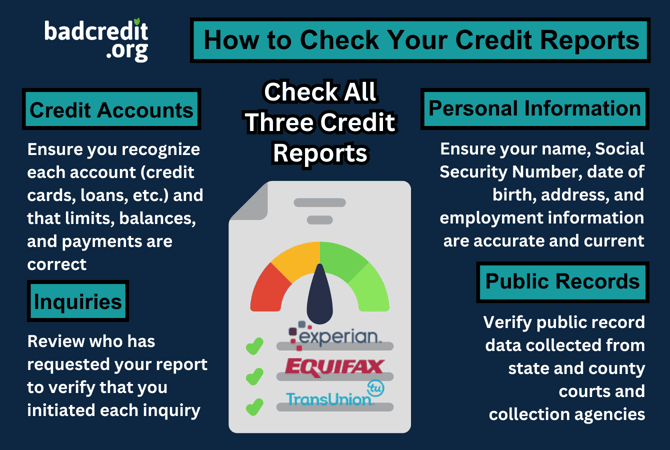
If, after thoroughly checking your reports, you spot items you want to dispute, you can do so for free online, which saves you the cost of paper, ink, and postage.
Tackling this alone means you’ll handle all the record-keeping and tracking of disputes that a credit repair service would normally manage. While this will take up your time, it won’t cost you any money.
Perhaps you would like to make the job easier by spending just a little money. If so, consider a software package as an alternative to support from a credit repair service. For example, Credit Versio offers software-as-a-service for less than $20 per month that supports consumers who wish to dispute items on their credit reports.
The Credit Versio package has provisions for importing your credit reports and helping you identify items for potential dispute. The software can help you generate professional-looking dispute letters and provides $1 million in identity theft insurance. If you become a victim of identity theft, you’ll want to request a credit freeze.
Credit repair services can range from about $80 to $150 a month. As mentioned earlier, these companies aim to have you subscribe for at least six months, so costs may run anywhere from $300 to $900 for the period. That’s how much money you’ll save if you do it yourself.
Can Disputes Hurt Your Credit?
There is no reason for a dispute to ever hurt your credit. At worst, it may have no impact on your credit score.
However, your score should rise if a dispute successfully results in the removal of derogatory items from your credit report.
Perhaps the only negative outcome of a credit dispute occurs when consumers abuse the process by submitting frivolous challenges. Eventually, a credit agency will recognize this kind of abuse and just ignore your dispute submissions.
Like the boy who cried wolf, this can come back to bite you when you suffer from a real credit report error.
Do Credit Bureaus Really Investigate Disputes?
The credit bureaus hand off investigations to the original creditor that furnished the disputed information.
If you dispute a late payment on your credit card, the credit reporting agency will forward your dispute to the card issuer for investigation. They need to wrap up this process within 30 days after you submit the dispute.

There could be situations where a credit reporting agency steps in to investigate a dispute directly. This might happen, for example, if data was properly sent by a creditor but got corrupted within the credit agency’s systems.
You Have Options to Legally Remove Items from Credit Report
It won’t cost you anything to have a free consultation with one of our top-rated credit repair services. This process can, at the least, tell you where your reports stand and whether its services can help you legally remove items from your credit reports.
Knowing which items you can legally dispute will give you an idea of whether you can go it alone or you’d feel more comfortable enlisting a service. Check out Sky Blue Credit Repair’s money-back guarantee if you’re wary of spending money on a credit repair company.
Advertiser Disclosure
BadCredit.org is a free online resource that offers valuable content and comparison services to users. To keep this resource 100% free for users, we receive advertising compensation from the financial products listed on this page. Along with key review factors, this compensation may impact how and where products appear on the page (including, for example, the order in which they appear). BadCredit.org does not include listings for all financial products.
Our Editorial Review Policy
Our site is committed to publishing independent, accurate content guided by strict editorial guidelines. Before articles and reviews are published on our site, they undergo a thorough review process performed by a team of independent editors and subject-matter experts to ensure the content’s accuracy, timeliness, and impartiality. Our editorial team is separate and independent of our site’s advertisers, and the opinions they express on our site are their own. To read more about our team members and their editorial backgrounds, please visit our site’s About page.