

Writer: Lucy Lazarony


Editor: Adam West


Reviewer: Ashley Fricker

Key Takeaways
- Some borrowers with moderate credit scores meet a mortgage program’s minimum requirements but still struggle to get an affordable loan.
- Higher interest rates and thin credit files can leave applicants unable to afford the payments or qualify for the loan amount they want.
- Self-employed and commission-based applicants may have trouble showing enough qualifying income.
According to The Pew Charitable Trusts, tight mortgage lending standards are making it harder for some borrowers with moderate credit scores — which Pew defines as scores from 600 to 699 — to buy a home.
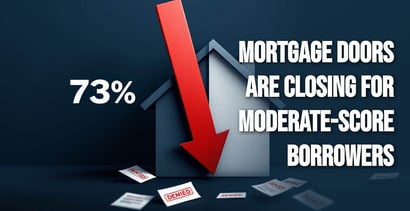
Consider this statistic. In 2000, banks and other lenders originated about 1.08 million home-purchase mortgages to borrowers with credit scores of 601 to 660. In 2024, they originated just 293,000 home-purchase mortgages to borrowers in that same score range, a decline of 73%, according to Pew.
Mortgage Loans to Borrowers With 601–660 Scores Fell 73%
Source: The Pew Charitable Trusts, using National Mortgage Database data.
A large number of borrowers with moderate credit scores are young people, first-time homebuyers, racial minorities, residents of rural areas, and people with low to moderate incomes, according to The Pew Charitable Trusts.
“Borrowers with moderate credit scores do carry more risk than those with high scores, and that shouldn't be ignored. But recent loans to these borrowers have performed well,” Adam Staveski, Principal Associate at The Pew Charitable Trusts, told us. “That suggests lending standards may be tighter than necessary, shutting out many people who could successfully repay.”
Impact on Borrowing in Federal Programs
Borrowers with moderate credit scores may meet the minimum credit score requirements for some federal mortgage programs but still struggle to qualify for an affordable loan.
“Being eligible for a mortgage program doesn't guarantee someone can actually get a loan. Borrowers with moderate scores face higher fees for Fannie Mae and Freddie Mac loans, which can make a mortgage unaffordable,” Staveski said.
Applications referred for manual underwriting can cost lenders more to process, which may discourage some lenders from making those loans.
“The result is that many creditworthy borrowers can't find a lender willing to offer them a loan on reasonable terms.” — Adam Staveski, Principal Associate at The Pew Charitable Trusts
Lenders also may set stricter lending standards if they do lend to a borrower with a moderate credit score.
“Because lenders can face steep financial penalties if a loan later goes bad, many set stricter standards than the federal programs require. The result is that many creditworthy borrowers can't find a lender willing to offer them a loan on reasonable terms,” Staveski explains.
Higher Interest Rates, Lower Borrowing Amounts Shut Off Borrowers
Other factors shutting out borrowers with moderate credit scores from home loans are high interest rates and thin credit files.
“Some potential homebuyers with credit scores in the 600 to 699 range face higher interest rates, making the projected monthly payment unaffordable,” Melinda Opperman, Chief External Affairs Officer at Credit.org, told us.
Credit.org also has seen clients with good jobs and stable incomes but who have thin credit files have a tough time qualifying for the size of the mortgage that they want.
“They may still be approved, but for a smaller mortgage amount, which limits the home they can afford and crushes their dreams,” Opperman said.
After being denied credit these borrowers continue renting, work to build or rebuild credit, increase their savings, set a longer term goal for buying a home, Opperman explained.
Poor Credit Behaviors Trip Up Borrowers
Chris Sbonek, President and Chief Executive Officer for Mitten Mortgage Lending, told us it is the reasons behind the lower credit scores that trip up moderate credit score applicants.
“If borrowers have old charge-offs, collections, or derogatory credit items dragging the score down, the issue often lies there. More often than not, the issue resolves if we clean up those derogatory credit items or pay them off at closing,” Sbonek said.
Resolving old debts may help some applicants, but mortgage approval also depends on factors such as income, existing debt, and the lender’s underwriting requirements.
Income Hampers Mortgage Applicants
Another reason people with moderate credit scores get turned down for mortgages has to do with income.
“A lot of them are self-employed, or they're commission based employees,” Joey Rivero, Broker Owner at Clear Choice Lending Group told us. “So they're not showing the income that they need to qualify.”
He does not think lenders have been too conservative with the lending standards they apply to borrowers with moderate credit scores.
“They're just basically making sure that the customer has the ability to repay. I think they're right on,” Rivero said.


