
Writer: Erica Sandberg


Editor: Jon McDonald


Reviewer: Ashley Fricker

Rejection is awful, but it can be especially disheartening when it comes to your finances. Imagine that you researched all of your options and finally found a credit card that had everything you wanted. So you took the time to read about all of its terms, rates, and fees, and carefully completed the application.
Then, you pressed the “submit” button and waited with high hopes. But rather than receiving an affirmative response and a credit line offer, you got a “sorry, not interested” message from the issuer. Now what?
You may feel dejected, and that’s understandable. A 2025 Bankrate survey found that 1 in 8 people were denied a credit card in the last 12 months. But once you come to terms with that denial, it’s time to figure out how to move forward.
If your credit card application was denied, the best next step is to review your credit report, understand the issuer’s reasons, improve your credit profile, and use pre-approval tools before applying again. Taking these steps can significantly increase your chances of approval on your next application. Let’s go through them one by one.
Step 1: Check Your Credit Report After a Credit Card Denial
Because most issuers use your credit history and credit scores as the primary qualification factor, you’ll want to know what made them decline your application.
So, you should pull your free TransUnion, Experian, and Equifax credit reports from annualcreditreport.com. If you notice missed payments, collection accounts, and charge-offs, those may have been reasons the issuer backed away.
Or maybe it shows that you already have a lot of debt relative to your current credit limits (called the credit utilization ratio). In that case, you probably appear overextended.
Also, check your credit scores. These numbers represent your overall credit health, and issuers depend on them to make instant eligibility decisions.
FICO Scores are most commonly used, and the typical breakdown is:
| FICO Score Categories | Score Range |
|---|---|
| Exceptional | 800-850 |
| Very Good | 740-799 |
| Good | 670-739 |
| Fair | 580-669 |
| Poor | Below 580 |
Scores range from 300 to 850, and a higher number indicates lower credit risk.
Step 2: Understand The Creditor’s Reasons
The immediate denial message you received will probably be brief and won’t tell you much. However, you will receive an “adverse action notice” by mail or email within a week or two, which will provide more details.
This is important information for you. Maybe your credit score wasn’t high enough, you owed too much money, had late payments, or made too many recent inquiries.
Each of these factors can be considered a red flag to a lender, but when combined, they indicate a high level of risk.
For example, credit scores are numerical risk assessments based on your credit report. Every month, credit scoring companies take the data that is listed and input it into their algorithm.
For a FICO Score, payment history and credit utilization (the percentage of your total available revolving credit that you’re currently using) carry the greatest weight. Length of credit history, types of credit in use, and new credit are also factors, but they’re less impactful.
| FICO Score Factor | Percentage of Your Score |
|---|---|
| Payment History | 35% |
| Amounts Owed | 30% |
| Credit History | 15% |
| Credit Mix | 10% |
| New Credit | 10% |
A low score indicates that you may be a high credit risk borrower, but it doesn’t provide specifics.
Credit issuers can also review the details on your report. If they see a lot of debt, you may be ineligible for a new credit product because they believe you can’t responsibly handle more.
Some issuers will automatically deny a credit card application if they see you’ve paid late within a certain number of months or years, or your credit report shows defaults, collection accounts, and bankruptcies.
Of course, you have to apply for a card to get one, but too many of these inquiries can be perceived as a sign that you are desperate for credit.
Step 3: Improve Your Creditworthiness
Because credit scores are such a major determining factor, try to add as many scoring points as you can before applying again.
Most legitimate negative information (such as late payments and accounts in collections) will stay put for seven years, but you can make certain swift improvements:
- Drive down high debt: If you can find a way to pay existing credit card bills down so the balance is less than 30% of the limit, do so. Credit scores are calculated monthly, so when your utilization ratio is reduced, your credit scores should improve. According to Experian, your score will typically improve in one to two months after paying off a revolving credit account.
- Dispute inaccuracies: If you spot incorrect information on your credit reports, dispute it immediately. It won’t be factored into your scores during the investigation, and if the credit bureau can’t verify that the data is correct, it will be removed from your report, and the positive scoring impact will last.
- Pay on time, starting now: If you have a history of late payments on your credit report, you’ll have to wait a bit before you see improvement while you continue to make on-time payments. That’s because lenders like to see patterns of behavior. You may see a positive scoring impact after three to six months of on-time payments, but a more significant spike could take between six and 12 months.
- Add extra positive data: With tools like Experian’s free Boost program, you can add rent, utility, cellphone, and streaming service payments to your credit report. Depending on your credit history, this could increase your score immediately after connecting your bank account and verifying qualifying on-time payments. Experian reports that many Boost users see their scores increase right away, often by 10-30 points.
Step 4: Make a Short List of Potential Cards
Now, focus on the credit cards that are within your range of possibilities. Aggregated lists that assemble credit cards based on credit ratings (such as “best credit cards for bad credit”) make it easy, but you can also go to an issuer’s site and dive deeper.
For example, a Capital One credit card that requires good credit means you can’t have declared bankruptcy or defaulted on a loan in the past five years. You also don’t qualify if you’ve been more than 30 days late on any credit card or loan payment in the last year.
It’s just as important for you to identify the credit card that fits your requirements and desires as it is for the credit card issuer.
Know what you want. A cash back card? One that offers travel rewards? Make a short list of those you like that are also in your credit profile range.
Step 5: Use the Pre-Approval Process
I love pre-approval! Since these are soft credit checks, a hard inquiry won’t show up on your credit report and hurt your scores. And pre-approval is free, fast, and secure.
Using the tool on the issuer’s website, you will enter basic personal and financial data. This information is often the same information you provide during the full application, so the issuer can still evaluate your financial situation.
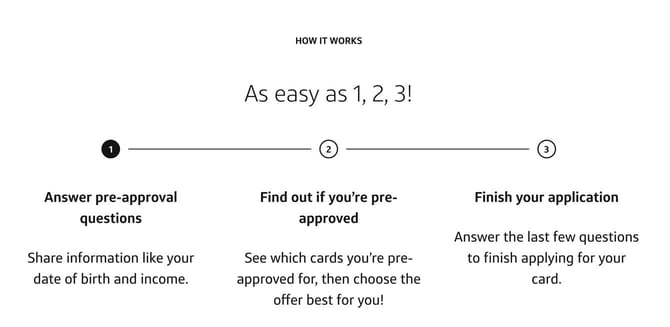
After submitting a pre-approval application, you should find out within seconds if that account is within your reach. If it’s not, the issuer may suggest one of their other credit products that is.
Just note that if you get the green light to apply after pre-approval, that doesn’t guarantee you’ll be approved after the final application. It just gives you a good idea.
The Final Step: Apply for a Credit Card
After you’ve pinpointed the card that’s the best fit for both you and the issuer, proceed with the application.
With well over 1,000 credit cards currently on the market, you have plenty of options. And by going through these steps, you should know where you stand, what you want, and how qualification is determined.
When you take the time to improve, regroup, and learn why you got rejected the first time, chances are you’ll get the answer you want next time.
FAQ: Common Questions After a Denial
You may still have some questions as to why your credit card application was denied and what you should do next.
While it’s normal to feel frustrated or upset, when you get all of the facts, you can move forward in a better position. Here are a few other questions that might come up during the process:
Does a Credit Card Denial Hurt My Credit Score?
Applying for a credit card can negatively impact your score. The credit card issuer will notify the three credit bureaus of a hard credit inquiry.
It will stay on your credit report for a total of two years. During that time, it can be used as a credit scoring factor. Generally, it will only have an impact in the first year.
You can lose around five points for a single hard credit inquiry, depending on what’s on your credit file. If you don’t have very much listed on your credit report, or if your credit is already damaged, it can have a more severe impact.
| How Long Certain Items Can Stay on Credit Reports | |
|---|---|
| Item Type | Time on Credit Reports |
| Hard Credit Report Inquiry | 2 Years |
| Delinquent Payment (30+ Days) | 7 Years |
| Vehicle Repossession | 7 Years |
| Defaulted Account | 7 Years |
| Foreclosure | 7 Years |
| Bankruptcy Discharge | 7-10 Years |
But if you have a lot of good information in your report, the effect should be minor.
This is one of the reasons I’m such a big fan of the pre-approval process. Many credit card issuers offer a soft credit inquiry as a way to determine whether or not you are a strong candidate for a specific credit card.
Soft inquiries are not factored into credit scores, so they can help you avoid unnecessary applications that end up as rejections.
However, there will be no big, ugly mark on your credit report that shows you were denied. The credit card issuer won’t send that information to the credit bureaus, so the denial itself won’t affect your credit score. No one will know but you.
How Long Should I Wait to Reapply?
There is no specific time frame you need to wait before applying for the same card again, but a good rule of thumb is three to six months.
What’s most important is that you know why the issuer denied your application, and then take action to remedy the problem.
For example, if it was because you had a late payment on your credit report in the last 24 months, hold off until that delinquency is older than two years.
If it’s because you have too much debt, reduce it. Once those fixes are noted on your report, you’ll have a better chance at approval.
Can I Call the Bank to Reconsider My Application?
You can certainly call the bank and ask them to reconsider your application if you really want this particular card and think you should qualify.
Most major credit card issuers have a dedicated reconsideration line, but if yours doesn’t, you can just call the customer service number.
Before calling, have your adverse action notice at the ready. You should have received it shortly after you applied. If it says you were denied for something specific that is either incorrect or too old, point that out to the representative.
The person you speak with will manually review your application and listen to your explanation. After that, they may approve you while you’re on the phone, ask you to send more documentation, or stick with the denial.
This review will not trigger a hard inquiry, so you’re safe from more credit damage. Just remember that the issuer makes the final decision, and you may not get the answer you want.
Thankfully, a rejection is not the end. There are plenty of credit cards on the market, and one (or more) should be a good fit for you.
Don’t Let a Credit Card Denial Get You Down
Credit card denials can sting, but soothe yourself with the knowledge that it’s not about you, personally. Instead, it’s about what is on your credit report or the information you listed in the application.
These are business decisions, and each issuer has its own criteria. Sometimes they simply grant fewer accounts because of economic conditions or their own business health.
Once you do get the right credit card, use it effectively. Pay on time and keep debt low.
And when you move up the credit scoring ladder and want a new card with more bells and whistles, you’ll be more likely to get the “Congratulations, you’ve been accepted!” notice you were hoping for in the first place.