Eric Bank has been covering business and financial topics since 1985, transforming complex subject matter into clear, accessible insights for consumer audiences. His work regularly appears on Credible.com, eHow, WiseBread, The Nest, Get.com, Zacks, Chron, and several other respected outlets. A former software engineer, Eric holds an M.B.A. from New York University and an M.S. in finance from DePaul University, and brings a rare blend of technical expertise and financial acumen to his writing.
Lillian brings more than 30 years of editing and journalism experience, having written and edited for major news organizations, including The Atlanta Journal-Constitution and the New York Times. A former business writer and business desk editor, Lillian ensures all BadCredit.org content equips readers with financial literacy.
Ashley has managed content strategy for BadCredit since 2015, partnering with major banks, financial institutions, and media outlets to deliver authoritative personal finance content. Her expert credit card commentary has appeared in top national publications, including CNBC, MarketWatch, Investopedia, Yahoo Finance, and Reader's Digest, establishing her as a trusted voice in the industry.
Getting a home loan with bad credit can be challenging, but several lenders offer mortgage options for lower-credit borrowers. We reviewed the best bad credit home loan lenders and ranked them based on reputation, loan options, and overall value.
Disclosure: When you apply through links on our site, we often earn referral fees from partners. For more info, see our ad disclosure and review policy.
BadCredit.org’s home loan ratings are based on our experts’ analysis of key factors for subprime borrowers, including interest rates, fees, approval odds, and lender reputation. We also consider down payment flexibility, credit score requirements, and borrower support. Our ratings are unbiased and updated regularly.
BadCredit.org’s home loan ratings are based on our experts’ analysis of key factors for subprime borrowers, including interest rates, fees, approval odds, and lender reputation. We also consider down payment flexibility, credit score requirements, and borrower support. Our ratings are unbiased and updated regularly.
BadCredit.org’s home loan ratings are based on our experts’ analysis of key factors for subprime borrowers, including interest rates, fees, approval odds, and lender reputation. We also consider down payment flexibility, credit score requirements, and borrower support. Our ratings are unbiased and updated regularly.
BadCredit.org’s home loan ratings are based on our experts’ analysis of key factors for subprime borrowers, including interest rates, fees, approval odds, and lender reputation. We also consider down payment flexibility, credit score requirements, and borrower support. Our ratings are unbiased and updated regularly.
BadCredit.org’s home loan ratings are based on our experts’ analysis of key factors for subprime borrowers, including interest rates, fees, approval odds, and lender reputation. We also consider down payment flexibility, credit score requirements, and borrower support. Our ratings are unbiased and updated regularly.
BadCredit.org’s home loan ratings are based on our experts’ analysis of key factors for subprime borrowers, including interest rates, fees, approval odds, and lender reputation. We also consider down payment flexibility, credit score requirements, and borrower support. Our ratings are unbiased and updated regularly.
BadCredit.org’s home loan ratings are based on our experts’ analysis of key factors for subprime borrowers, including interest rates, fees, approval odds, and lender reputation. We also consider down payment flexibility, credit score requirements, and borrower support. Our ratings are unbiased and updated regularly.
BadCredit.org’s home loan ratings are based on our experts’ analysis of key factors for subprime borrowers, including interest rates, fees, approval odds, and lender reputation. We also consider down payment flexibility, credit score requirements, and borrower support. Our ratings are unbiased and updated regularly.
Offers 100% Financing, Low rates and Affordable Payments.
Helps lenders work with low and moderate income families living in rural areas to make home ownership a reality.
Loans can be used for repairs and rehabilitation; physical disability equipment; connection fees, assessments or installment costs for utilities; and essential household equipment.
Loans can include closing costs and reasonable/customary expenses associated with the purchase
BadCredit.org’s home loan ratings are based on our experts’ analysis of key factors for subprime borrowers, including interest rates, fees, approval odds, and lender reputation. We also consider down payment flexibility, credit score requirements, and borrower support. Our ratings are unbiased and updated regularly.
★★★★★
4.0
Interest Rate
In Business Since
Application Length
Reputation Score
Varies
1897
9 Minutes
9.0/10
Advertiser Disclosure
BadCredit.org is a free online resource that offers valuable content and comparison services to users. To keep this resource 100% free for users, we receive advertising compensation from the financial products listed on this page. Along with key review factors, this compensation may impact how and where products appear on the page (including, for example, the order in which they appear). BadCredit.org does not include listings for all financial products.
Our Editorial Review Policy
Our site is committed to publishing independent, accurate content guided by strict editorial guidelines. Before articles and reviews are published on our site, they undergo a thorough review process performed by a team of independent editors and subject-matter experts to ensure the content’s accuracy, timeliness, and impartiality. Our editorial team is separate and independent of our site’s advertisers, and the opinions they express on our site are their own. To read more about our team members and their editorial backgrounds, please visit our site’s About page.
Review Breakdown: Home Loans
As many homeowners can tell you, not all mortgages are created equal. This is especially true for those with a poor credit history, whose options are limited to just a handful of lenders willing to take a risk on financing a subprime applicant. Below is a summary of the top lenders and services we recommend for people with poor credit, along with key stats and ratings for each. To apply online for a new mortgage, refinance, cash-out, or virtually an other type of home loan, simply click the name of the provider you prefer to visit its website.
BadCredit.org’s home loan ratings are based on our experts’ analysis of key factors for subprime borrowers, including interest rates, fees, approval odds, and lender reputation. We also consider down payment flexibility, credit score requirements, and borrower support. Our ratings are unbiased and updated regularly.
BadCredit.org’s home loan ratings are based on our experts’ analysis of key factors for subprime borrowers, including interest rates, fees, approval odds, and lender reputation. We also consider down payment flexibility, credit score requirements, and borrower support. Our ratings are unbiased and updated regularly.
BadCredit.org’s home loan ratings are based on our experts’ analysis of key factors for subprime borrowers, including interest rates, fees, approval odds, and lender reputation. We also consider down payment flexibility, credit score requirements, and borrower support. Our ratings are unbiased and updated regularly.
BadCredit.org’s home loan ratings are based on our experts’ analysis of key factors for subprime borrowers, including interest rates, fees, approval odds, and lender reputation. We also consider down payment flexibility, credit score requirements, and borrower support. Our ratings are unbiased and updated regularly.
BadCredit.org’s home loan ratings are based on our experts’ analysis of key factors for subprime borrowers, including interest rates, fees, approval odds, and lender reputation. We also consider down payment flexibility, credit score requirements, and borrower support. Our ratings are unbiased and updated regularly.
BadCredit.org’s home loan ratings are based on our experts’ analysis of key factors for subprime borrowers, including interest rates, fees, approval odds, and lender reputation. We also consider down payment flexibility, credit score requirements, and borrower support. Our ratings are unbiased and updated regularly.
BadCredit.org’s home loan ratings are based on our experts’ analysis of key factors for subprime borrowers, including interest rates, fees, approval odds, and lender reputation. We also consider down payment flexibility, credit score requirements, and borrower support. Our ratings are unbiased and updated regularly.
BadCredit.org’s home loan ratings are based on our experts’ analysis of key factors for subprime borrowers, including interest rates, fees, approval odds, and lender reputation. We also consider down payment flexibility, credit score requirements, and borrower support. Our ratings are unbiased and updated regularly.
BadCredit.org’s home loan ratings are based on our experts’ analysis of key factors for subprime borrowers, including interest rates, fees, approval odds, and lender reputation. We also consider down payment flexibility, credit score requirements, and borrower support. Our ratings are unbiased and updated regularly.
9 FAQs About Home Loans For Bad Credit
Eric Bank, Finance Writer
Updated:
Finding home loans with bad credit can feel overwhelming at first. The good news is you still have several loan options, even if your credit score is low.
We’ve assembled the answers to nine frequently asked questions that can help you understand your borrowing alternatives.
1. What Is a Home Loan For Bad Credit?
Mortgages and home equity loans are available to consumers with bad credit. First mortgages pay for the purchase of a home, whereas home equity loans (or second mortgages) let you cash out some of the equity you’ve built since you bought your home.
Bad credit mortgages may have features that make home purchases easier. For example, federally guaranteed mortgages often have low minimum down payments.
2. Can I Get a Mortgage With Poor Credit?
Consumers with poor credit (i.e., FICO scores below 600 within a 300 to 850 range) can access mortgage loans but may have to pay higher interest rates. Many mortgage lenders tolerate less-than-perfect credit, but only up to a point.
Federally sourced or guaranteed mortgages generally accept lower credit scores than private mortgages.
Loan Type
Minimum Credit Score
Minimum Down Payment
Notes
Conventional
Varies by lender and program
As low as 3% for eligible borrowers
Low-down-payment conventional options are available through programs such as Fannie Mae HomeReady, Fannie Mae 97% LTV, and Freddie Mac Home Possible. PMI typically applies when the down payment is less than 20%.
FHA-Insured
500+
3.5% with a score of 580+; 10% with a score of 500–579
FHA loans generally require upfront and annual mortgage insurance premiums.
VA-Backed
No VA minimum; lender may set one
0% in many cases
VA-backed purchase loans often allow no down payment for eligible borrowers.
USDA Guaranteed
No specific USDA minimum; lender or investor may set one
0%
Available only for eligible borrowers purchasing in qualifying rural areas.
Minimum down payment and credit requirements vary by lender, loan program, property type, and underwriting profile. This table reflects general program-level rules and common low-down-payment options, not every lender’s overlay.
When shopping for a bad credit mortgage, keep a few things in mind:
Minimum credit scores vary among lenders.
You must generally be two or more years past bankruptcy and three years from a home foreclosure.
You won’t be eligible if you owe back taxes to the IRS or are behind on your student loan payments.
Less than perfect credit, especially with outstanding debt, can limit the loan amount that even the best mortgage lender will offer you. If your home shopping can wait, you can use the time to raise your low credit score by paying your bills on time and reducing your debt. Doing so will broaden your mortgage options and may lower the mortgage rate you’ll have to pay.
3. What Are the Different Types of Mortgages Available?
Most mortgages, including those backed by the federal government, come from banks, credit unions, or thrift institutions. In some cases, federal agencies also lend directly for certain mortgage programs.
Online mortgage sites, such as Rocket Mortgage and Bank of America, may directly originate loans, but others such as eMortgage, match loan requests to a network of lenders.
Definitions
The mortgage industry has its own lingo:
Conventional Loans: Home loans that the federal government does not guarantee.
Conforming Loans: These loans adhere to FHFA (Federal Housing Finance Agency) standards governing maximum debt, minimum credit, and maximum loan amount. In 2026, the baseline conforming loan limit for a one-unit property is $832,750 in most areas, with higher limits in certain high-cost markets.
Non-Conforming Loans: Loans that don’t conform to FHFA standards. For example, the home may cost more than the maximum conforming loan amount, or the borrower may have subprime credit.
Government Insured Loans: Includes VA, USDA, and FHA loan programs, as described below.
Fixed-Rate Mortgages: Loans that do not enact a lower or higher interest rate throughout the loan term. Your monthly mortgage payment doesn’t change unless you refinance.
Adjustable-Rate Mortgages (ARM): The interest rates on these loans can change over time according to market conditions. ARMs often have a fixed interest rate for the first few years before switching to a variable, higher interest rate. The variable rate may have yearly and overall caps.
Loan Term: The amount of time borrowers have to repay the loan. Typically, loan terms vary between eight and 30 years, but other periods are possible. Mortgages may impose penalties for early pay-off.
Debt-to-Income Ratio (DTI): Debt-to-income requirements vary by lender and loan type, so borrowers should check the specific guidelines for the mortgage program they are considering.
Loan-to-Value Ratio (LTV): LTV equals the mortgage size compared with the home’s value. The larger the down payment, the lower the LTV.
Private Mortgage Insurance (PMI): Lenders usually require you to buy PMI when your down payment is less than 20%. Once you achieve 20% equity, you can cancel your PMI.
Mortgage Insurance Premium: FHA loans generally require upfront and annual mortgage insurance premiums.
Seller Concession: The seller pays some or all of the buyer’s closing costs, including title charges, state and local government fees, lender costs, and home/pest inspections.
When shopping for a mortgage, consider the credit requirements, interest rate, fees, loan size, loan term, rate adjustability, and required down payment.
It’s smart to prequalify for a mortgage before you start house hunting so you’re ready to make an offer as soon as you find the right home. Sellers often favor offers that come with preapproved financing.
Conventional Mortgages
Typical baseline requirements for conventional conforming loans may include a minimum credit score of 620, a down payment as low as 3% in some cases, a qualifying debt-to-income ratio, and an appraisal verifying the home’s value and condition.
GSEs offer multiple conventional loan programs with differing requirements. For example, a Fannie Mae 97% LTV Standard Mortgage requires one borrower to be a first-time homebuyer.
Freddie Mac Home Possible Loans don’t require you to be a first-time homebuyer. Instead, they focus on helping people with very low, low, or moderate incomes.
If the home you want to buy receives an appraisal for less than the contract price, your options include:
Renegotiating the price
Increasing your down payment
Appealing the appraisal
Applying for a larger mortgage
Withdrawing your bid
If you fail to keep up with your payments, the mortgage lender may initiate foreclosure proceedings. Unless you immediately get current on your payments, the lender will foreclose on your home, and you’ll lose all your equity.
FHA-Insured Home Loans
The Federal Housing Administration backs loans from conventional mortgage lenders. The FHA encourages loan officers to approve subprime borrowers by insuring loans.
The requirements for FHA mortgage insurance include:
A down payment of 10% for credit scores between 500 and 579
A down payment of 3.5% for credit scores of 580 or higher
Upfront and annual mortgage insurance premiums typically apply
A DTI below 44%
A minimum credit score of 500
A two-year history of steady income and employment
An FHA-approved appraiser’s inspection report on whether the real estate meets the minimum standards for safety, security, and soundness
The home must be your primary residence
You must occupy the home within 60 days of closing
Each year, the FHA sets mortgage size limits for low- and high-cost areas. For 2026, the FHA nationwide loan-limit floor and ceiling for a one-unit property are $541,287 and $1,249,125, respectively. Higher limits may apply in certain special exception areas.
VA Home Loans for Veterans
The Department of Veterans Affairs (VA) guarantees mortgages for the US military’s active and retired members (and eligible surviving spouses).
The VA does not set a minimum credit score for VA-backed home loans, but individual lenders may impose their own credit-score requirements. Borrowers with full entitlement generally have no VA loan limits, while loan limits may still apply in some cases involving partial entitlement.
USDA Rural Home Loans
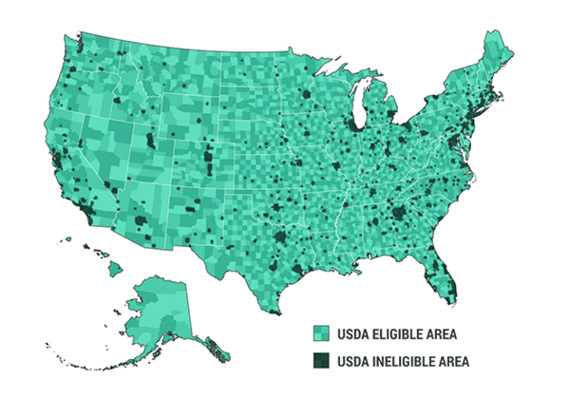
The USDA Single Family Housing Guaranteed Loan Program helps eligible low- and moderate-income borrowers purchase homes as their primary residence in eligible rural areas. USDA loan requirements include:
The property must be your primary home and be located in an eligible rural area (typically, an area with a population below 20,000)
No need for a down payment
Your income cannot exceed the local median by more than 15%
No minimum credit score or requirement for a credit history
The maximum DTI is generally 41%, but higher ratios may be acceptable if you have a good credit score and stable employment
No fixed loan size limits. Instead, your loan limit depends on your income and DTI ratio.
All mortgages are 30-year, fixed-rate loans
USDA loan programs often come with low interest rates, sometimes lower than FHA mortgage rates. They may also allow seller concessions, and buyers can use gift funds to help cover closing costs.
A portion of your monthly mortgage payment reduces your loan principal, and the remainder is an interest charge.
For fixed-rate mortgages, the monthly payments remain the same throughout the loan term. The monthly amount may change if you have an adjustable-rate mortgage.
The payment principal and interest proportions vary over time. In the first few years, payments overwhelmingly consist of interest charges, but, eventually, principal payments predominate.
Your mortgage documents will include an amortization schedule specifying each payment’s principal and interest amounts.
The mortgage principal equals the home’s purchase price (plus any fees rolled into the loan) minus your down payment. For example, suppose you purchase a home for $380,000 and put down 20% ($76,000). If you take out a 30-year, fixed-rate loan for $304,000 with a 5% interest rate:
Your monthly payment will be $1,631.94, plus any escrow amounts (for property taxes, homeowners association fees, homeowners insurance, etc.).
Your total mortgage interest will be $283,497.58 if you pay off the mortgage in 30 years (i.e., 360 payments).
Your total mortgage payments will be $587,497.58, almost double the original loan principal.
You must repay the entire loan principal to retire your mortgage. If you repay the mortgage ahead of time, you’ll save on interest charges, but the lender may impose a prepayment penalty fee to discourage you.
Lenders aim to collect all the interest owed unless current rates have climbed above your contract rate. If that happens, lenders actually profit more from issuing new mortgages instead of collecting interest on existing ones, so they might waive the penalty.
It’s advantageous to list all income sources when applying for a mortgage. Include available income from other household members and non-work sources, such as savings, investments, annuities, and retirement accounts.
Lenders really value a steady income that has been consistent and growing over the past two years. You’ll likely need to prove your income by providing tax returns, pay stubs, W-2 forms, and statements from banks, brokerages, or credit unions.
Current Debts
Income has relevance only in the context of your financial obligations — the amount you spend each month to pay debts, housing costs, and other required amounts. Mortgage lenders rely heavily on DTI ratios to gauge your ability to make the required monthly home loan payments. Paying down existing debts before applying for a mortgage is a wise move.
Credit History
Your low credit score does not instill lenders with the confidence that you’ll repay a loan on time. Nonetheless, many lenders specialize in home loans for subprime consumers.
These lenders reduce their exposure to default risk by limiting loan amounts and charging higher interest rates and fees.
To some extent, a credit report free of recent negative items can help overcome earlier financial mistakes. Better yet, you’ll access better home loans if you can first raise your bad credit score by paying your bills on time, reducing your debt, and fixing derogatory errors in your credit file.
Property’s Monthly Principal, Interest, Taxes, and Insurance
A mortgage loan must be large enough to pay for your property purchase (minus your down payment) plus any rolled-in charges such as closing cost fees. You can reduce your out-of-pocket expenses when you roll fees into your mortgage principal. But keep in mind that you’ll pay interest on those fees for the life of the mortgage.
When considering your application, even the best mortgage lender looks at your total monthly payments to the loan processor, including escrowed and other expenses. Your monthly bill will include these expenses, which may add hundreds of dollars to each payment.
A down payment reduces the size of the loan you need. The larger the down payment, the less principal and interest you’ll have to pay back.
Many lenders require mortgage insurance when your down payment is less than 20%. This insurance repays the lender if you default on your loan. You can cancel the insurance when your equity in the property reaches 20%.
7. What Is a Home Equity Loan?
A home equity loan, or second mortgage, is an additional loan collateralized by your home. Your equity is the current value of your home minus the money you owe on the property (including home equity loan balances, if any).
The two contributors to your home equity are:
The principal portion of your monthly mortgage payments, which in the early years is small compared with your interest charges
Any increase in the price your home could fetch if you put it up for sale
For example, suppose your home can sell for $300,000, and you owe $220,000 on your mortgage. Your current equity is ($300,000 – $220,000), or $80,000. You can usually cash out up to 80% of your equity through a home equity loan, as lenders usually want a cushion against unforeseen expenses or sudden decreases in the home’s selling price.
A home equity loan provides you with a lump sum cash payment to use however you want. Your increased debt means you’ll face two monthly housing bills, assuming you haven’t already repaid your first mortgage. Failure to repay your home equity loan can precipitate foreclosure proceedings.
A home equity loan can have a term ranging from five to 30 years. Like a first mortgage, it’s an amortizing debt with a payment schedule that includes both principal and interest.
An alternative is to cash out your home equity through refinancing your mortgage. A cash-out refi means getting a new mortgage for more than your current balance. You use part of this new loan to pay off the old one, and the rest is yours to use as you wish.
Expect to pay closing costs, such as origination and title search fees, when refinancing a mortgage.
8. What Is a Home Equity Line of Credit?
A home equity line of credit, or HELOC, shares characteristics with home equity loans and credit card cash advances. As with an equity loan, a HELOC uses the equity in your home as collateral.
You can usually borrow only a portion of your home equity, and borrowing limits vary by lender.
Home Equity Loan
Home Equity Line of Credit (HELOC)
Interest Rate
Usually fixed
Usually variable
Repayment
Fixed monthly payments over a set term
Draw period followed by a repayment period
Funds
Lump sum
Revolving line of credit
Structure
Closed-end loan secured by your home
Open-end line of credit secured by your home
Best For
One-time large expenses
Ongoing or unpredictable expenses
Much like credit card cash advances, a HELOC allows you to tap into a large revolving line of credit. You only pay interest on what you borrow, and you must cover at least the minimum payment each month.
A HELOC open balance reduces the remaining amount you can borrow. As you repay the credit line, your available credit increases. Conversely, you can continue to draw down your HELOC until you exhaust the remaining credit or your draw period ends. That’s fine as long as you make your monthly payments on time.
9. Can I Get a Home Loan With a Credit Score of 400?
Very few lenders are willing to approve a bad credit home loan for someone with a 400 credit score. However, it might be possible in certain situations:
The VA and USDA do not impose minimum credit score requirements on the home loans it guarantees. But the underlying lender may (and probably does) specify a minimum score. USDA mortgages are available in about 97% of the geographical United States.
You may be able to overcome a lower credit score if you substantially overcollateralize the loan. If you keep the LTV low (e.g., 50%), the lender will be better assured of repayment should you default on the loan.
A cosigner with solid credit can work magic. Lenders value cosigners because they are another payment source should you fall behind. Cosigners can make your bad credit score irrelevant.
On the positive side, if you do land a mortgage despite your low credit score, you’ll boost your score by paying your loan on time. But late payments can sink your score even deeper.
About The Author
Eric BankFinance Writer
Eric Bank has been covering business and financial topics since 1985, specializing in taking complex subject matters and explaining them in simple terms for consumer audiences. Eric's writing appears on Credible.com, eHow, WiseBread, The Nest, Get.com, Zacks, Chron, and dozens of other outlets. A former software engineer, Eric holds an M.B.A. from New York University and an M.S. in finance from DePaul University.
Information Warranty & Disclosure: Great efforts are made to maintain reliable data on all offers presented. However, users should check each provider’s official website for updated terms, details and conditions for each offer before applying or signing up. Our site maintains strict terms of service and may accept compensation for paid ads or sponsored placements in accordance with these terms. Users must be at least 18 years of age to be eligible for financial offers as per the terms presented on provider websites.
* FICO scores/credit scores are used to represent the creditworthiness of a person and may be one indicator to the credit type you are eligible for. However, credit score alone does not guarantee or imply approval for any financial product.