


Writer: Eric Bank


Editor: Lillian Guevara-Castro


Reviewer: Adam West

Key Takeaways
- The official launch of Snap Finance’s Seen brand coincides with growing financial stress, as Q3 2025 data show weakening credit conditions and tighter household budgets.
- Seen differentiates itself with transparent credit-building tools and a rewards card aimed at subprime borrowers.
- Snap Finance plans to expand Seen with a secured card while maintaining an underwriting approach tailored to today’s credit environment.
Consumer budgets have been under pressure throughout 2025, a backdrop that helps explain Snap Finance’s September launch of Seen, its new credit card arm. The brand debuted with products geared toward credit rebuilding and features meant to boost transparency, including bureau reporting and simplified statements.
Fresh data from the American Bankers Association’s Consumer Credit Index shows conditions weakened in Q3, pointing to mounting strain on borrowers.

That creates a complicated environment for lenders targeting subprime segments: risk is rising just as demand for credit tools accelerates. In an interview, Seen president Debtosh Banerjee told us the resumption of student loan payments has added to household stress and helped spur the timing of these launches.
The rollout shows how lenders are adapting in a market of rising defaults without slowing new product launches.
Banerjee said the team began shaping Seen before today’s credit stress hit — but the timing aligned perfectly with current conditions. “For us, it was a great opportunity to get in because we were starting fresh. … Because in a stress situation, if we can stress your portfolio, then you did the toughest work,” Banerjee said.
The move highlights how lenders are targeting borrowers shut out of mainstream credit while managing greater portfolio volatility.
Seen also signals a broader shift in subprime card strategy: products are increasingly designed not just to extend credit, but to balance borrower access with stable returns.
Seen’s Differentiation
Seen debuted with its unsecured Seen Mastercard® and the Seen CashBack Plus Mastercard®, while a secured product remains in development. The base and rewards cards targets borrowers who may have struggled to qualify for traditional cards.
The rewards card provides cash back through a straightforward model, avoiding the complexity that has limited adoption among nonprime users.
Banerjee stressed the credit-building focus. “I’m pretty sure there’s no one in the industry right now who says ‘You have to do XYZ, and you would get a credit line increase by this amount …’ Nobody says that.”
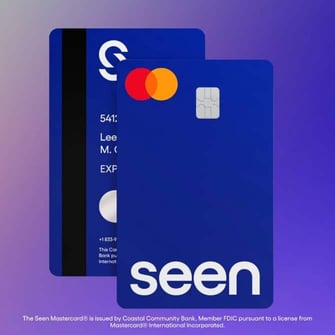
By combining bureau reporting with streamlined statements, Seen makes credit progress more visible and practical for its users.
The company has added a five-step progress tracker to its phone program, giving users clear milestones as they work to improve their credit.
For lenders, transparency is increasingly a competitive advantage in the subprime market, and Seen’s approach demonstrates how engagement features can support careful risk management.
By embedding educational elements into product design, companies can strengthen customer relationships and potentially lower the risk of early defaults.
Underwriting and Future Outlook
Balancing broader access with portfolio safety remains a core challenge. Banerjee said Seen’s underwriting draws on a wider set of data points to assess borrowers outside the prime and near-prime ranges.
That approach expands eligibility while managing risk amid rising delinquencies.
Seen plans to add a secured card to its product mix, creating an additional option for new or turnaround borrowers. The card will require a minimum $100 deposit — half the $200 industry standard — making it an accessible entry point for those starting from scratch.
For subprime lenders, Seen’s rollout highlights how competition is evolving. Transparent reporting, simple rewards, and embedded borrower education aren’t just consumer perks. They serve as tools to curb losses, boost retention, and maintain portfolio performance when margins are tight.
Additional Subprime Context
The ABA’s Q3 survey also highlighted that lending conditions are likely to soften in the months ahead. For subprime lenders, this could mean narrower spreads and greater sensitivity to risk indicators.
Portfolios heavily concentrated in lower-income borrowers may face rising losses if delinquencies increase, making credit models that draw on broader data sets — like Seen’s — more attractive.
Student loan obligations are a particular pressure point, cutting directly into disposable income. Banerjee noted that many consumers are now juggling multiple payments and leaning more on revolving credit.
The implication for lenders is clear: Strategies that focus only on expanding access without building resilience may underperform. Products that promote disciplined repayment and deliver visible credit progress may have a competitive advantage.
Bottom Line
Seen is entering a high-demand credit market where risks are rising. Snap Finance’s focus on clarity, streamlined benefits, and deeper underwriting positions the brand as a next-generation entrant.
For lenders, the launch highlights how subprime card design increasingly relies on guardrails to stabilize portfolios during turbulent cycles. Education and transparency can help reduce charge-offs, boost retention, and support steadier returns.
As defaults rise and competition intensifies, lenders will be watching whether this approach boosts margins and portfolio resilience — and whether clearer reporting and credit-building features become a baseline expectation across the market.


