


Writer: Eric Bank


Editor: Lillian Guevara-Castro


Reviewer: Adam West

Key Takeaways
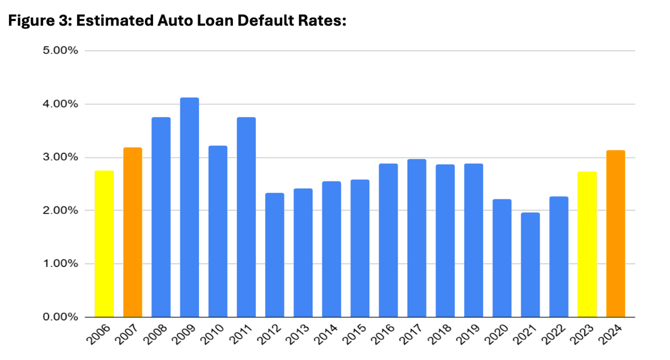
- Auto loan delinquencies and repossessions are climbing toward pre-Great Recession levels, and repossessions are up more than 40% since 2022, according to a Consumer Federation of America report.
- Mid-tier borrowers are defaulting at nearly double their pre-pandemic levels, forecasting larger losses ahead for subprime portfolios and suggesting broader risk exposure.
- Subprime lenders face rising pressures at the funding, regulation, operations, and securitization market fronts — which narrow avenues of capital and raise reputational concerns.
Severe auto loan delinquencies are climbing back toward financial-crisis peaks, with outstanding balances surpassing $1.66 trillion and repossessions climbing more than 40% since 2022, according to a new Consumer Federation of America report.
The report, Driven to Default, raises red flags for subprime lenders already facing shrinking spreads and tougher oversight.
Severe delinquencies (90 or more days late) are headed back to pre-financial-crisis peaks, an indicator of repayment stress across auto loan portfolios. Repossessions are at their highest since 2009, which only serves to highlight the manner in which payment defaults are becoming asset losses.
The strain is now reaching mid-tier borrowers. Borrowers in the 620–679 range — once considered “above average” — are defaulting at nearly double their pre-pandemic level.
Their slide signals even greater trouble ahead for subprime accounts, a warning that lenders could soon face heavier losses, tighter margins, and tougher questions from investors and regulators.
Evolving Risk Environment
The report references several cost and loan-structure headwinds that make repayment harder. Car prices remain high, loan terms longer, and adverse equity consistently transfers into new financing. Add-ons and markups by dealerships still contribute more to the cost.
The report also mentions chaotic new tariffs on steel, aluminum, and imported cars, which could add thousands of dollars more on car prices and increase loan amounts. Young adults aged 18–29 are driving into severe delinquency more than any other cohort, highlighting fragile repayment patterns.
At the same time, oversight by the FTC and CFPB has eased, resulting in inconsistent enforcement actions.
The report states that Congress cut the CFPB budget despite a record level of complaints, and the FTC closed a complaint it received against a large group of dealerships for allegedly overcharging minority consumers for add-ons, demonstrating the backtracking from oversight.
For subprime auto lenders, the trends increase exposure to litigation and reputational harm, even if the regulator doesn’t always act.
Why Subprime Lenders Should Care
Loan defaults hit portfolio performance directly. As losses mount, securitization buyers and warehouse lenders demand higher risk premiums, driving up funding costs. Weak loan performance puts subprime auto asset-backed securities at risk, reducing liquidity and limiting cash-generation options.
Structured finance channels, long a lifeline, become strained when downgrades or reduced investor interest shrink the pool of buyers and raise borrowing costs for lenders.
Independent finance companies are more reliant on such markets than banks or captives and are therefore more vulnerable.
Dealer relations play a key role. Dealers usually drive application volumes and push markups or add-ons that regulators often frown upon. Cutting ties with overly aggressive dealers can shrink volumes — but also limit exposure to risk.
Rising delinquencies are straining operations. More late accounts mean bigger collections costs, more repossessions, and deeper auction losses — hitting profits and forcing lenders to expand infrastructure.
At the same time, media and consumer watchdogs are shining a spotlight on defaults and predatory practices, threatening brand credibility and putting dealer and funding relationships at risk.
Likely Lender Responses
The report suggests stress points will push subprime lenders toward strategic realignments:
- Tighter underwriting: Larger deposits, stronger vetting of incomes, and shorter loan horizons reduce exposure and add resilience to portfolios.
- Greater portfolio monitoring: Stress testing at the region or borrower level can pinpoint issues early and isolate them before they spread more widely.
- More resources for collections: Recovery can be strengthened through added staff and upgraded systems, but aggressive strategies can trigger legal or reputational backlash.
- Dealer relationship analyses: Disengaging or adjusting relationships with dysfunctional dealer networks lowers risk for abusive conduct, but decreases channels for originating loans.
- Review of securitizations: Tailoring the restructuring of loan or credit enhancement pools can reassure investors and maintain ABS pipelines as a readily available source of financing.
The Road Ahead
Repayment behavior is weakening once again. As younger borrowers falter, mid-tier credit profiles deteriorate, and regulatory scrutiny softens, subprime lenders are confronted with rising losses, higher operating costs, and declining brand trust.
Without a strategic recalibration, the sector risks returning to conditions reminiscent of the period before the last major downturn. While consumer advocates push for affordability and fairness, lenders must prioritize risk management and capital resilience.


