

Writer: Gerri Detweiler


Editor: Jon McDonald


Reviewer: Ashley Fricker

This question was posted on Reddit, but over the years I’ve heard versions of it many times:
“Which app is the most helpful for monitoring credit scores? Any suggestions which is most useful when it comes to paying for premium while on my credit rebuild(ing) journey?”
When it comes to credit monitoring, I often find people fall into one of four main camps:
- I use a credit monitoring service and check in regularly.
- I use a monitoring service, but I don’t pay much attention to it.
- I have good credit (or a credit freeze on my credit reports), so I don’t need to monitor it.
- I want to monitor my credit, but I’m not sure where or how to do it.
If you are not in the first group — already monitoring your credit regularly — then I recommend you start.
If you’re in the third group and don’t think you need to monitor your credit, I’ll warn you that I was a victim of both personal and identity theft a few years ago, and credit monitoring was how I caught it early before it became a huge problem.
If you’re wondering how to get started tracking your credit, here’s what I recommend.
Use This Self Assessment
I suggest you start by understanding your goals, motivations, and level of commitment.
1. What’s Your Goal?
Let’s start with your reason for checking your credit. Do you want to:
- Check your credit out of curiosity?
- Help prevent and detect fraud?
- Build or rebuild your credit?
- Prepare for a major purchase like buying a home?
Any of the services we’ll mention here can help you accomplish these goals, but some are better for specific needs.
Regardless of the approach you choose, I urge you to monitor your credit with sources that provide information from each of the three major consumer credit bureaus: Equifax, Experian, and TransUnion.
While the information on each report is probably quite similar, there can be critical differences, such as inquiries for new credit applications.
An inquiry for a new credit card is likely to only show up on one of your credit reports, for example, and if you miss it, that gives an identity thief more time to do more damage.
2. What’s Your Budget?
A number of tools will let you check and monitor your personal credit for free.
Currently, free weekly credit reports from Equifax, Experian, and TransUnion are available through AnnualCreditReport.com. These are credit reports, not credit scores.
While it’s a good idea to check your credit reports periodically, viewing your credit scores takes a little more work.
Most personal credit scores are created by FICO or VantageScore. These two companies aren’t credit bureaus, so they always partner with credit bureaus for the data they need to calculate scores.
Let’s start with FICO since it is the most well-known source of credit scores.
Many card issuers allow you to check and monitor your FICO score if you have a credit card or other type of account with them. Here are examples from top issuers:
| Issuer | Bureau | Score Model |
|---|---|---|
| American Express | Experian | FICO Score 8 |
| Bank of America | Experian | FICO Score 8 |
| CapitalOne* | TransUnion | FICO Score 8 |
| Citi (select cardholders) | Equifax | FICO Score 8 |
| Wells Fargo (select accounts) | Experian | FICO Score 9 |
There are also a number of sites that offer free FICO or VantageScores. Here are some examples:
| Site | Bureau | Score Model |
|---|---|---|
| Credit.com | Experian | VantageScore 3.0 |
| CreditKarma | Equifax, TransUnion | VantageScore 3.0 |
| Credit Sesame | TransUnion | VantageScore 3.0 |
| MyFICO | Equifax | FICO Score 8 |
| NerdWallet | TransUnion | VantageScore 3.0 |
If you don’t have extra money to pay for credit monitoring, free services can be valuable. But you may not get the features you want or need from a paid service (more on that in a moment).
3. What’s Your Commitment Level?
You can monitor your credit for free through different sources, but if you want to stick with free monitoring, you will need to use more than one service to get full three-bureau coverage.
A paid service may give you all the tools and information you need in one place and keep you focused on your goal.
Next: Choose Your Monitoring Method
Now that you know what you want to accomplish, you need to choose the best approach. For all of these options, I will emphasize again how important it is to monitor your scores with all three bureaus to catch unusual activity as soon as possible.
Curiosity
If your goal is just to see where you stand, you may want to start with free credit scores offered by your credit card issuer, bank, or financial institution where you do business.
When you pay your credit card bill each month, take a quick look at your credit score to see if it’s changed significantly, and to identify any new inquiries or new accounts.
If you don’t have access to free scores with all three bureaus, consider filling in the gaps with other credit monitoring services.
Fraud Detection and Prevention
If your goal is to catch identity theft quickly, make sure you use a service with alerts that you’ll pay attention to. When you set up a credit monitoring account, review your notification options and choose carefully.
If you get too many messages and find yourself avoiding them, you may miss crucial updates.
Paid services may also offer identity theft services, such as helping you respond to and recover from ID theft. This can be helpful if you don’t feel comfortable navigating the process on your own — or if you just don’t have time to deal with it.
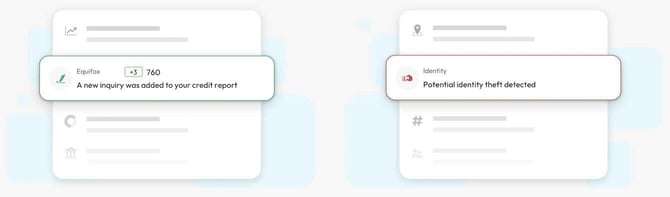
I’ll add a tip for those who think they don’t have to check their credit because they pay their bills on time: ID thieves love to steal the identities of consumers with good credit.
They often get access to higher credit limits that come with good credit scores. Don’t assume that because your credit is good, you don’t need to worry about monitoring it.
Building or Rebuilding Credit
If your goal is to build or rebuild your credit, make sure you are monitoring a FICO score with at least one bureau. Card issuers and other lenders often rely on FICO scores, and you should have an idea of what this score is.
Just remember, there are many different versions (models) of FICO scores, so the exact number can vary by bureau, but you can definitely get an idea of where you stand. You’ll also see explanations of factors affecting your scores, which can help you figure out what to focus on next.
If your budget allows, you may want to spring for a MyFICO subscription that shows you multiple FICO scores. It also offers a tool that lets you test different actions against FICO’s most widely used score, FICO 8.
Preparing for a Major Purchase
If you are planning to get a mortgage, I would encourage you to consider a MyFICO subscription that includes access to a simulator for FICO mortgage scores.
Your credit scores can make a significant difference in the interest rate you will pay for a mortgage loan, and a lower rate can save you thousands of dollars over time.
Here’s a summary of options for checking your free credit scores:
| Goal | Provider | Try multiple services if needed to find the types of alerts most helpful for you |
|---|---|---|
| Curiosity | Free or paid services to cover all three bureaus | A free monitoring service may be beneficial to get startedConsider mixing up FICO and VantageScore scores |
| Fraud detection and prevention | Free or paid services to cover all three bureaus | Try multiple services if needed to find types of alerts most helpful for you |
| Building or rebuilding credit | Free or paid services to cover all three bureaus | Look for services with score simulators that let you test the effect of different actions |
| Mortgage or car loan | MyFICO.com | Advanced or premier plans give scores for auto loans, mortgages, and more, along with score simulators |
If You Choose a Credit Monitoring Service, Use It
Ultimately, the best service for monitoring your credit is the one you’ll use.
If you are pinching pennies and the only way you’ll monitor your credit is through free services, then use those. Again, just make sure to check your credit with multiple credit bureaus.
If your goal is to improve your credit scores or qualify for a mortgage, it may be worth it to sign up for a paid service that gives you additional insights and tools to test how different actions may impact your scores.
And if you want to be sure you can get help if your credit is compromised, paid monitoring with identity theft restoration may give you additional peace of mind.


