

Writer: Lucy Lazarony


Editor: Ashley Fricker


Reviewer: Adam West

Key Takeaways
- 1 in 5 single women ages 18 to 49 said they could never realistically save $15,000 for egg freezing. Another 12% would need at least three years to save for the costs.
- Among women who definitely or probably want children, 78% would consider egg freezing if one cycle and five years of storage were free, but only 29% could afford $15,000 without financial strain.
- Among women who would consider the procedure if it were free, 18% would consider carrying a credit-card balance and 20% would consider taking out a personal loan.
- The egg-freezing expense could compete with other major goals: 23% of interested women would consider delaying homeownership, 20% building an emergency fund, and 14% contributing to retirement.
When Rep. Alexandria Ocasio-Cortez recently shared her egg-freezing journey on social media, she reignited conversations about the procedure and the financial barriers that can determine who has access to it. For many women, the cost of this procedure determines whether it is a realistic option for them.
When asked whether they were aware that Ocasio-Cortez had publicly shared her experience, 34% said yes. Awareness was highest among younger respondents: 42% of women ages 18–29 knew about her announcement, compared with 35% of those ages 30–45 and 14% of women ages 46–49.
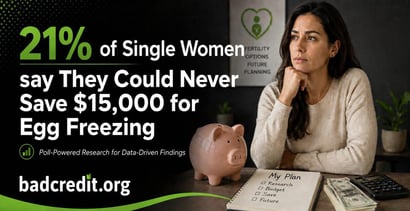
A new BadCredit.org survey of 505 single women ages 18 to 49 found that 21% could never realistically save $15,000 for the procedure, and another 12% would need at least three years to gather together the money for it.
The findings reveal a stark divide between interest in egg freezing and financial access. Among women who definitely or probably want children, 78% would consider the procedure if one cycle and five years of storage were free. Yet only 29% of those women could afford a $15,000 egg-freezing cycle without financial strain.
For some women, pursuing egg freezing could mean carrying credit-card debt or taking out a personal loan. For others, it could require delaying financial goals such as buying a home, building emergency savings, repaying debt, or contributing to retirement.
Egg freezing may give women greater control over when to have children, but paying for it could jeopardize other parts of their financial future.
78% Would Consider Egg Freezing If It Were Free
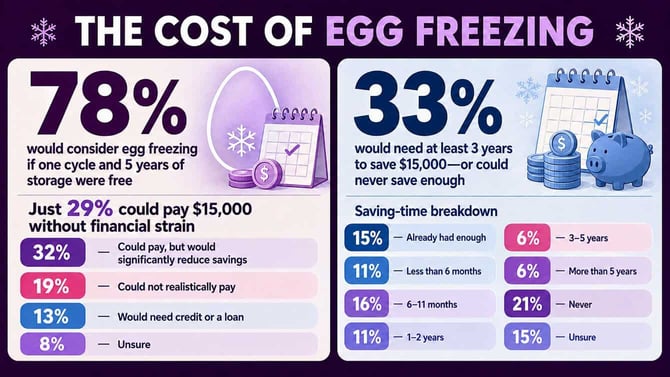
For women who definitely or probably want children, a majority (78%) would consider freezing their eggs if one cycle and years of egg storage were free. A small amount (29%) would be able to pay the $15,000 for the procedure without financial strain.
But for other women who want children, paying for egg freezing would be a financial challenge.
Thirty-two percent could pay for it, but doing so would significantly reduce their savings. Thirteen percent could pay only by using credit or taking out a loan, 19% could not realistically pay for it, and 8% were unsure.
These responses reveal that for some women the cost of freezing their eggs is beyond their financial reach, or for others it would involve expensive borrowing. Just 29% of the women who want children would be able to afford to pay for egg freezing without financial strain.
“Freezing eggs for a future pregnancy is an expensive process. At around $15,000, the price can definitely lock a vast number of interested women out of this option,” says Erica Sandberg, consumer finance expert at BadCredit.org.
33% Would Need at Least 3 Years or Never Save Enough
When asked about how long it would take to pay for egg freezing, all women surveyed gave a variety of responses. Twenty-one percent would never realistically be able to save $15,000, 6% would need more than five years, and 6% would need three to five years.
Combined, 33% would need at least three years or could never save the amount. This is a telling figure with one-third of women surveyed needing three years to save for the procedure or never being able to save the $15,000 price tag at all.
Other women have the financial fortitude to pay for egg freezing. Fifteen percent of women surveyed already had enough money available for it. Eleven percent could save the money in less than six months, 16% would need six to 11 months, 11% would need one to two years, and 15% were unsure.
43% Would Consider Borrowing to Freeze Their Eggs
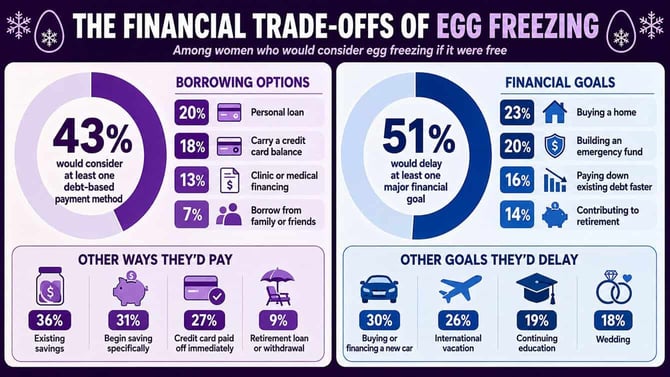
Among the women who would consider egg freezing if it were available for free, 43% selected using at least one debt-based method of payment:
- 20% would consider a personal loan.
- 18% would consider carrying a credit card balance.
- 13% would consider clinic or medical financing.
- 7% would consider borrowing from family or friends.
Here are the responses when women were asked to consider additional ways for paying for egg freezing. Nine percent would consider a retirement account loan or withdrawal, 27% would use a credit card they expected to pay off immediately, 36% would use existing savings, and 31% would begin saving specifically for the procedure.
It is interesting to note that 27% would consider using a credit card that they expected to pay off immediately to pay for egg freezing. But just 18% consider paying for the procedure if it meant carrying a credit card balance.
Carrying a credit card balance or taking out a personal loan or using clinic financing to pay for egg freezing will increase costs due to the interest charges incurred. Because of this, the total cost goes up when a woman borrows to pay for the procedure.
“Determine what you can put off until this expense is covered”, suggests Erica Sandberg. “Can you wait on home purchase, or sacrifice a robust emergency fund? That’s your choice, but I would be very careful with accumulating high-interest debt or letting it revolve because the fees will make achieving your goal more difficult.”
51% Would Delay a Major Financial Goal
Among women who would consider egg freezing if it were free, 51% would consider delaying at least one of the following:
- Buying a home: 23%
- Building an emergency fund: 20%
- Paying down existing debt more quickly: 16%
- Contributing to retirement savings: 14%
Each of these goals is a way of attaining financial security. Respondents also were asked about personal goals they would be willing to delay to have the money needed to freeze their eggs. Nineteen percent would delay continuing education, 18% would delay a wedding, 30% would delay buying or financing a new car, and 26% would forgo an international vacation.
Choosing to freeze eggs is a big decision and one that allows women to gain greater control over when they wish to have children. But because of the costs, it may not be accessible to every woman who may be interested in the procedure.
Indeed, for women who do not have $15,000 readily available, they may need to raid their savings, take on debt, or shift money away from other goals to pay for it. Those other goals could be saving for a home or building up an emergency fund, important goals in their own right.
Some women may even consider taking on credit card debt or securing a personal loan to pay for it.
Per Sandberg, “If you really want to go down this path, decide on a fixed amount you can save every month and deposit it into a specific savings account for just this purpose. For example, if you’re 26 years old and want to have the money available by the time you’re 28, you would need to set aside $625 every month.”
“And if you don’t need the money for egg freezing after all, you can use the fund for something else that you put on ice.”
The survey in no way suggests that every woman would want to or need to freeze eggs. But it reveals that for women who want that option, financial resources greatly influence the decision. When discussing freezing of their eggs, the cost must be considered as well as financing options and long-term tradeoffs for women pursuing this procedure.
Sandberg adds, “It’s a bit of a conundrum. When eggs are at their healthiest, woman are on the young side, but it’s also when many are just starting out with their career and aren’t at their peak earning years. However, our study clearly showed that access to this fertility procedure is important to many women. If you are among them, prioritize spending and saving.”
Methodology:
BadCredit.org surveyed 505 single U.S. women ages 18 to 49 from August 19 to 22, 2026. The survey examined respondents’ interest in egg freezing and the financial implications of paying $15,000 for one cycle.
The results are based on raw, unweighted responses. The margin of error for the full sample is approximately ±4.4 percentage points at the 95% confidence level. Margins of error are larger for subgroups.
Percentages are rounded to the nearest whole number and may not total 100%. For questions allowing multiple responses, percentages may total more than 100%.
For media inquiries, please email catherine@badcredit.org

