

Writer: Lynn Cadet


Editor: Ashley Fricker


Reviewer: Adam West

Key Takeaways
- Two-thirds (66%) of parents said they would go into debt just to help their child fit in at school.
- Most parents are spending without a plan, with 59% saying they have not discussed a budget with their child.
- More than half of parents (51%) say public schools should foot the bill for supplies, even if it means higher local taxes.
Two-thirds of parents say they are willing to go into debt to help their children fit in at school, according to a recent BadCredit.org study, revealing just how emotionally loaded and financially unsustainable the back-to-school season has become for millions of American families.
Americans are still feeling the pinch of inflation. Yet, despite the soaring costs of essentials, many American parents are prioritizing social comfort over responsible spending.
Instead of operating within a budget, parents are letting the fear of their children being left out drive their spending decisions. This, in turn, is causing some parents to spend beyond their budgets or lean on credit cards to finance back-to-school supplies.
According to our survey, parents increasingly feel a sense of obligation to shield their children from embarrassment or exclusion, no matter the cost.
57% Admit to Overspending to Avoid Disappointing Their Kid
For millions of Americans, the reality is that back-to-school shopping has become more complex. Parents aren’t just buying essential school supplies; they’re equipping their kids with the things they need to feel included, making back-to-school a much more emotionally charged experience for everyone involved.
Behind the shopping bags of notebooks, backpacks, and clothing is a parent potentially spending more than they can afford to buy supplies that they hope will help their kids belong in the social environment.
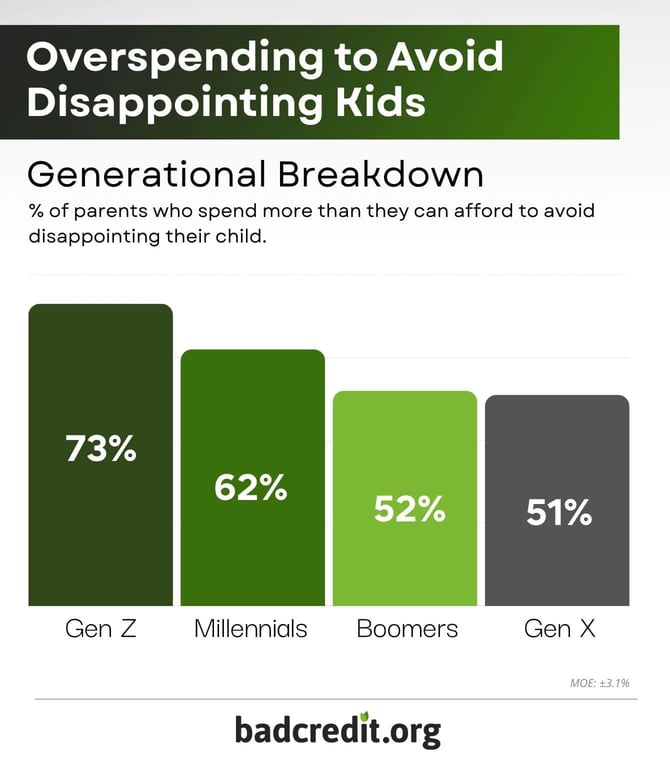
Our study reveals a concerning trend: 57% of surveyed parents admit to overspending in fear of letting their kids down. Perhaps what’s more telling is that parents from younger generations show the most willingness to overspend, with Gen Z parents 21% more likely to overspend than Gen X parents:
- Gen Z: 73%
- Millennials: 62%
- Boomers: 52%
- Gen X: 51%
But the emotional weight doesn’t stop there. Our study found that 48% of those surveyed said they feel guilty or inadequate for not being able to afford name-brand or trendy items.
For the sake of their kids’ happiness, millions of parents are making unsustainable financial choices and overstretching their budgets. While most kids follow the trends of the times, we can’t ignore the impact social media may have on amplifying their importance.
With trends and fads more visible to kids, parents may feel the pressure to provide and help their kids feel seen more than ever.
But this pressure has contributed to what was traditionally considered routine seasonal spending becoming an emotional and financial burden for many American families.
59% Haven’t Set a Back-to-School Budget with Their Child
Americans have become increasingly financially stretched. Growing costs, including those tied to tariffs, are squeezing families, pushing them to spend more on everyday essentials. Yet, millions of families are overspending without a plan or the means.
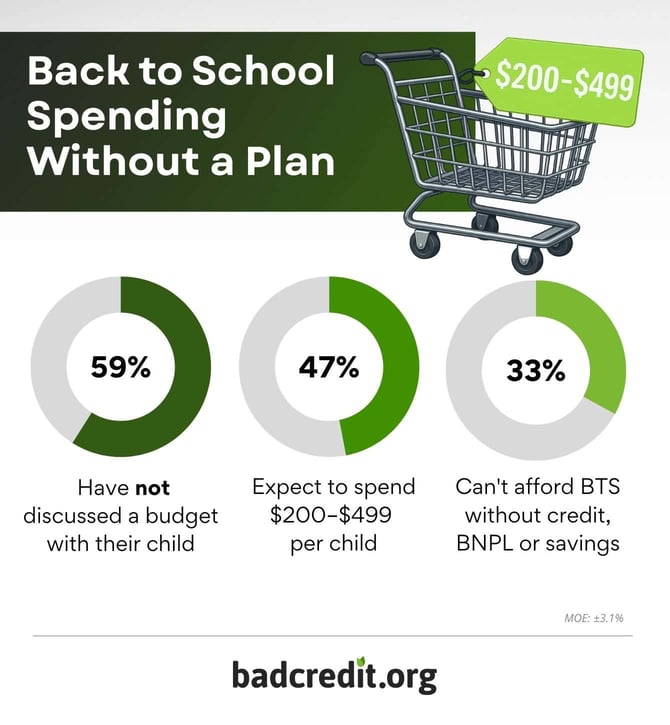
According to our study, nearly half (47%) of parents say they expect to spend $200–$499 per child this back-to-school season. But 59% say they haven’t discussed a back-to-school budget with their kids.
Increased costs are also driving parents to rely on financing back-to-school purchases or dip into savings.
Our study finds that a third (33%) of surveyed parents are unable to cover their back-to-school expenses without resorting to credit cards, Buy Now, Pay Later (BNPL) services, or dipping into their savings. This indicates a growing number of people are making purchases without the necessary financial resources.
These stats reveal a bigger story: Money conversations are missing among American families, and it could be costing them greatly. Without honest conversations about their financial concerns, the overspending will only continue to dig a deeper hole that many may be unable to break free from.
51% Say Public Schools Should Cover the Cost of Supplies
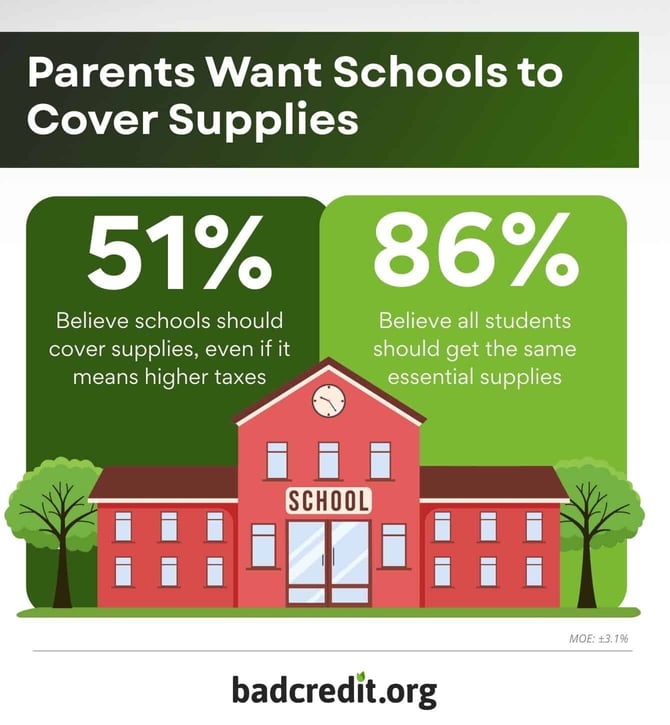
About 86% of surveyed parents believe all students should receive the same essential school supplies, regardless of income. And parents are willing to pay higher taxes to achieve this.
According to our survey, 51% of surveyed parents say public schools should cover the cost of school supplies, even if it means raising taxes. Younger generations were the biggest proponents of this idea, with 76% of Gen Z and 60% of millennials showing support.
Parents are voicing their opinion — and they want an even playing field. They are tired of being drowned under this financial pressure alone and are seeking a life raft, primarily from public schools.
“Parents realize that keeping up is becoming an arms race they can’t win,” said Bobbi Rebell, CFP® and personal finance expert with BadCredit.org. “The expectations just keep rising, especially because social media is creating an impossible standard that also keeps rising.”
Rebell adds, “The solution for many is to advocate for leveling the playing field by having the schools supply what students need, so everyone starts the year in the same place. They want the focus back on education and healthy socialization. They also want financial relief for themselves.”
Back-to-school shopping shouldn’t just be about buying the essentials for the school year, but also helping kids feel like they belong, no matter the cost.
From universal supplies to practical curriculum, families are calling for schools to meet today’s real needs, so they don’t have to figure it all out alone. Until then, many parents will continue to overextend their budgets and struggle under the consequences.
Methodology
This survey was conducted in July 2025 among 1,000 U.S. parents of school-aged children via an online panel. The sample is unweighted but includes a broad cross-section of respondents by age, gender, household income, and race/ethnicity.
All responses were single-selection, and each question received 1,000 completes. The margin of error is approximately ±3.1% at a 95% confidence level. Crosstabs by demographic group are available upon request.
For media inquiries, please reach out to catherine@badcredit.org.


