

Writer: Andrew Allen


Editor: Lillian Guevara-Castro


Reviewer: Adam West

Key Takeaways
A new study from leading credit bureau Equifax reveals that, while many Americans are enjoying relative financial stability, a growing number are facing more stress when it comes to money matters.
The company’s latest edition of the Market Pulse Index reports on the financial health of U.S. consumers in the fourth quarter of 2025.
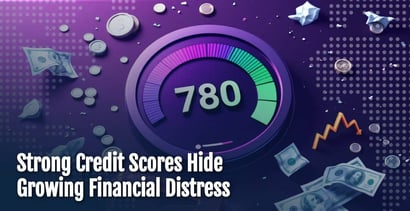
The report may give lenders the impression that all is well for U.S. borrowers. After all, Equifax assigns a score to measure consumer financial health, and the number it gave to consumers overall in the fourth quarter was nearly the same as it was at the end of the third quarter.
But a closer examination of the report shows that the share of people Equifax describes as facing the most financial stress has grown by 11% since the second quarter of 2023.
The new Market Pulse Index supports the idea of a K-shaped economy, which sees one segment of the population thriving financially as another struggles to manage debt and keep pace with rising prices of essentials such as groceries and utilities.
With a growing number of people encountering periods of financial difficulty, subprime lenders may find more potential customers knocking on their doors for help to get through tough times.
But lenders should be especially vigilant in their underwriting processes to ensure they don’t take on too many customers who aren’t able to pay back loans on time or at all.
Preparing for a Boost in Demand
The most recent edition of the Market Pulse Index also tells lenders that more people may soon fall into a category that Equifax refers to as Strivers.
Emmaline Aliff, Advisory Leader at Equifax, said in a press release that the company sees three distinct stories emerge when it considers the financial health of Americans.
“We have ‘Thrivers’, who make up 10% of the scorable population and who enjoy high credit and growth,” Aliff said. “At the other end, we have the ‘Strivers’, the 20% who are feeling the weight of debt and limited savings. But the real story is the ‘Pivoting Middle’ — that 70% in the center.”
Aliff said the Pivoting Middle represents the traditional middle class. This group is currently at a critical juncture that lies somewhere between financial stability and growing economic stress.
Should this group migrate more toward the territory of the Strivers, subprime lenders could see increasing demand for loans from them. Creditors that prepare now to meet the needs of this segment may be able to seize the opportunity to boost their bottom lines while helping more consumers better their financial positions.
Equifax also looked at age ranges when putting their study together, which allowed them to uncover how different generations are faring in the current economic climate.
The latest edition of the Market Pulse Index uncovers how different age groups are faring in response to economic factors.
The company said that members of Generation Z are working toward achieving financial independence, but many younger adults still receive economic assistance from their families. Meanwhile, many members of Generation X are facing impacts from the rising costs of essential items.
Many younger borrowers just starting their careers may look like risky bets for lenders to provide financing to. Yet those very same consumers may be on the cusp of entering a time of financial prosperity.
Lenders who can accurately estimate a consumer’s future financial position can make more informed decisions about whether that person is on the path to becoming a responsible borrower.
“The current economic landscape requires a more nuanced approach than single source metrics and averages can provide,” Aliff said.
“For lenders and retailers, there is a significant opportunity to engage high-capacity households whose financial buffers remain strong, but they must also account for a rise in financial pressure for other segments and manage risk with greater precision,” she added.


