

Writer: Eric Bank


Editor: Lillian Guevara-Castro


Reviewer: Adam West

Key Takeaways
- Goldman's exit from the Apple Card book highlights a subprime-dominated portfolio that now must be valued by Chase.
- JPMorgan Chase should use stricter underwriting on a card with more than one-third of its accounts below a 660 credit score.
- How Chase would potentially segment, price, and service the Apple Card portfolio could impact subprime lenders and credit raters.
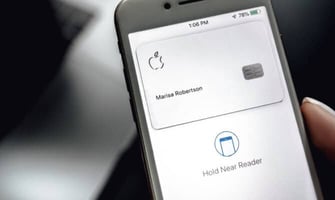
Talks on the sale of the Apple credit-card business to JPMorgan Chase continue, a transaction that would transfer the massive portfolio of nonprime borrowers to the largest bank in the United States.
On the block are some $20 billion in balances and 12 million card members, of whom about 34% are reported to have credit scores below 660. That puts the Apple Card portfolio solidly in the subprime and nearprime market, a space that Chase has historically held at arm’s length.
The current issuer, Goldman Sachs, has tallied high losses and a nearly 4% delinquency rate for the Apple Card, higher than the national average and even certain subprime books.
Unlike most cards, the Apple Card does not assess the consumer a late charge, a step that robbed Goldman of a key source of profits. Goldman has set aside $2.45 billion for the cost of likely losses down the road and has tried for years to turn the program around.
Though Chase does not routinely go after this segment, in March of 2025, only 15% of its card balances comprised cardholders with scores less than 660, compared with 31% for Capital One.
In assuming the Apple program, Chase would potentially have to deal with a significantly larger population of low-score cardholders but not significantly change its own risk mix.
The impacts reach beyond Chase’s balance sheet. Strengthened approval assumptions, restructured risk segmentation, or repricing of the portfolio by Chase would set new benchmarks for subprime issuers and credit modelers too.
A New Kind of Cardholder for Chase
The Apple Card is a double-edged opportunity for Chase — a loyal, tech-savvy consumer base and a traditionally volatile credit population. Inflating the book could yield customer acquisition and cross-sell opportunities, but also operational and reputational risk.
The subprime consumer may have been drawn to the Apple Card because of the user-friendly design, no-fee approach, and compatibility with the Apple Pay platform — features that made the card more accessible and simple than the typical subprime offerings. The allure, however, could not be translated into profitability for Goldman.
The underwriting and anti-fraud functions of Chase are better than Goldman’s. In the event of the transaction, analysts and observers expect Chase to set tougher terms for new applications in distinction to how to handle existing lower-score members.
It may include restructuring the billing cycles, simplifying the repayment streams, or adopting risk-based models for pricing.
Chase will bring better discipline to the portfolio because it will want to control losses, said Brian Riley, Co-Head of Payments Research for Javelin Strategy & Research.
“You can be certain that Chase will not want to dilute their credit quality, which would significantly reduce the Apple volume,” said Riley.
All this would amount to a major shift in the modus operandi of one of the most recognizable programs of unsecured credit in the country.
Subprime Lenders Take Notice
If Chase can pull this off without incurring major losses, the deal could reshape how lenders and credit modelers approach subprime portfolios — especially if it uses segmentation to distinguish between high-risk and recovering borrowers, or taps into Apple user behavior data to sharpen its credit decisions.
Subprime lenders should take notice as the Chase deal could redefine how lenders approach subprime portfolios.
Chase’s entry into subprime lending could raise the bar for legacy players. Established competitors like Synchrony and Capital One — both more deeply rooted in the space — may need to revisit their pricing strategies or rethink product design to stay competitive.
Credit-scoring firms are also interested in how things would unfold. If the risk thresholds are redesigned or the approval flow is altered, that would indirectly affect how models are calibrated in the marketplace.
Large banks have periodically toyed with subprime or tech-driven lending during stable periods, only to exit when volatility resurfaces. The Apple Card portfolio may serve as a case study in whether a disciplined, data-intensive approach can deliver durable returns where past efforts have faltered.
What Becomes of the Lower-Score Cardholders
The biggest unknown is how Chase would handle the approximately one-third of subprime or nearprime Apple Card consumers. Some of them will have their cards repriced or even closed if they are outside Chase’s risk tolerance.
“I am also curious how Chase will look at cardholders with very high credit limits at Chase already and high Apple Card limits, and if Chase has to review how to balance total user risk when combining the portfolios,” said Matthew Goldman, Founder of Totavi.
Other Apple Card consumers would prefer access to better-managed products with clearer terms. But such a shakeout would likely have spillover effects, as subprime consumers look elsewhere for new credit.
For subprime card issuers, that could be new business — or more competition.
Conclusion
The purchase of the Apple Card business won’t turn Chase into a subprime lender overnight. But it will test how far the bank will go to gain a bigger piece of the market.
Even without a public pronouncement from the bank’s executives, Apple Card’s 34% subprime ratio reported in The Wall Street Journal makes one thing clear: Whoever inherits this portfolio will shape how the broader market approaches risk, reward, and accountability in subprime consumer lending.
In doing so, it may encourage the rest of the credit card world to redefine subprime success.


