

Writer: Lucy Lazarony


Editor: Adam West


Reviewer: Ashley Fricker

Key Takeaways
Kentucky’s Medical Debt Relief Program could erase at least $250 million in medical debt for an estimated 130,000 residents.
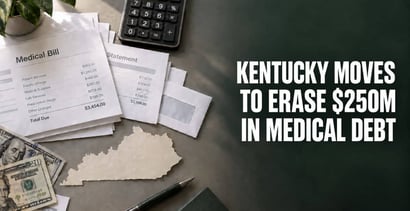
On Sept. 15, Kentucky Governor Andy Beshear signed an executive order authorizing the transfer of $2.5 million to Undue Medical Debt, a national nonprofit that purchases and abolishes medical debt, with the aim of erasing $250 million in medical debt for an estimated 130,000 Kentucky residents.
Because Undue Medical Debt is managing the debt relief process, Kentucky residents do not need to apply to be helped and have their medical debt erased.
Kentucky medical
debt relief
Kentucky’s Medical Debt Relief Program uses state funding to buy medical debt for a fraction of its face value. For example, it is estimated that $1 in state funding would erase $100 in medical debt. And that is how Kentucky’s $2.5 million transfer may result in the erasing of $250 million in medical debt.
The Need for Medical Debt Relief
One in five Kentucky residents and more than 100 million Americans struggle with medical debt, according to a Kentucky government website.
A 2019 study found that medical bills or illness-related income loss contributed to nearly two-thirds of surveyed bankruptcies.
Medical debt also has a negative impact on consumer credit scores with Kentucky’s Medical Debt Relief Program estimating that just $500 in medical debt can result in a 20 to 60 point drop in a consumer’s credit score.
How Kentucky’s Medical Debt Relief Program Works
There is little for Kentucky residents to do rather than to watch their mail. Letters will be sent out to Kentucky residents with eligible medical debt to be erased.
The letter itself is a notice that the recipient’s medical debt has been cancelled. Kentucky residents will want to keep the letter for their records.
Other Medical Debt Relief Programs
Kentucky is hardly alone in using public dollars to eliminate medical debt. Twenty-nine state and local governments and the District of Columbia have placed $116.1 million in public funds into medical debt relief programs, according to the Institute on Race, Power, and Political Economy.
medical debt relief
nationwide
Taken together these initiatives expect to deliver $15.8 billion in medical debt relief to about 6.3 million low and moderate-income residents.
States with medical debt relief programs include Arizona, Connecticut, Delaware, Illinois, Michigan, New Jersey, North Carolina, Rhode Island, Vermont and now Kentucky.
Medical Debt and Credit Reports
While not the same as eliminating medical debt in its entirety, some states are banning the use of medical debt in consumer credit reports.
A growing number of states restrict medical debt from appearing on consumer credit reports, although the protections, exceptions, and effective dates vary by state.


