

Writer: Eric Bank


Editor: Lillian Guevara-Castro


Reviewer: Adam West

Key Takeaways
- The CFPB abruptly revoked a $95 million consent order against Navy Federal Credit Union in a case over surprise overdraft fees.
- Lawmakers and former officials say the action weakens consumer protection and defies the agency's own priorities.
- Subprime lenders may face increased uncertainty, as well as reputational risk, in a deregulating environment.
The Consumer Financial Protection Bureau has come under new criticism for abruptly dropping a high-profile enforcement action against Navy Federal Credit Union.
Then-Director Rohit Chopra in November 2024 issued a $95 million consent order, in which the credit union was required to pay back $80 million in restitution and pay a $15 million civil penalty for charging so-called “illegal surprise overdraft fees” during the period from 2017 through 2022.
Later, in June 2025, the CFPB revoked the order without giving any public explanation and waived any non-compliance allegations. Acting Director Russ Vought signed the two-page ruling just seven months after imposing the penalty.
A Pattern of Deregulation
This shift didn’t occur in a vacuum. Under Vought, the CFPB has backed down from a series of consent orders with prominent institutions including Bank of America, Trustmark Bank, Fay Servicing, and fintech firm Wise.
In virtually every case, the enforcement action had started during President Biden’s tenure and were dropped in part or fines dramatically reduced.
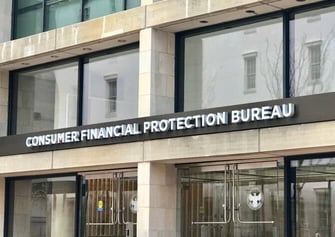
Vought, who came into office with a mandate to tighten the reins on the agency, sprang into action. He put new spending in cold storage, attempted to trim the CFPB workforce by over 90%, and attempted reversing earlier decisions in court documents.
He’s also repeatedly contended the bureau had become a tool for political vengeance.
That action hasn’t gone unremarked. In a bipartisan letter signed on July 17, seven Democratic senators, headed by Ruben Gallego (D-AZ), criticized the move as an “abrupt reversal” and questioned the bureau’s commitment to protecting service members.
The letter called for an accounting of how much restitution had been collected as well as who in the CFPB signed off on the reversal.
Implications for Subprime Lenders
These steps are rippling through the subprime financial environment. Credit unions, fintechs, and other nonprime lenders now face a less predictable enforcement climate. Policies once seemingly entrenched now are uncertain, leaving institutions wondering whether investment in enhanced compliance will pay off or collect dust.
That creates a competitive disadvantage. Companies that enhanced their consumer protection policies during Chopra’s tenure may now be at a competitive disadvantage with their counterparts who do not incur those costs but get away without any penalty.
For smaller lenders with lower profit margins, that kind of disparity is hard to endure.
At the same time, a scandal with any kind of connection, even an indirect one, with overdraft abuse can bring reputational harm. Subprime entities in compliance may see their borrowers grow more cautious or doubtful — and become hard to distinguish from non-compliant providers.
The about-face also hinders long-term planning. Some financiers spent resources and energy streamlining internal operations in preparation for earlier CFPB enforcement indications.
Though deregulation may bring more freedom to lenders, it also poses a threat to their reputation and could promote instability within their customerbase and market.
Now, with the tone shifting with the agency, the improvements might fail to provide a payback that can be justified to cost-conscious stakeholders.
In addition, there’s also a danger of inconsistent enforcement. As big players with political clout can escap fines while others are exposed, faith in the rules themselves declines. It’s especially concerning in the subprime space, where reputational risk is especially acute.
And the politics aren’t done. Should Congress go back with stronger requirements or legislative action, even cooperating banks could be facing new demands. In an atmosphere like this, caution and vigilance are paramount.
Lenders ought to be redoing compliance, refining communications with the public, and tracking regulatory advances intensely.
Criticism for the CFPB
Observers say the bureau’s credibility may be on the line. Former enforcement head Eric Halperin, who resigned in February and left soon after Vought froze the agency’s activity, was candid when he spoke with Military.com.
“It’s very uncertain whether the Consumer Financial Protection Bureau will ultimately step in on the side of consumers and not take the side of their bank as they did here,” Halperin told the outlet this month.
With each withdrawn enforcement action or reduced penalty, the agency, in observers’ eyes, moves farther afield from its core mandate. The Bureau has offered little explanation for why these high-profile reversals took place — fueling the sense that the CFPB is shielding institutions instead of holding them accountable.
Such a trend could do more than harm enforcement — it can also annihilate the public trust the agency was intended to preserve.


