

Writer: Lucy Lazarony


Editor: Lillian Guevara-Castro


Reviewer: Adam West

Key Takeaways
- Bank of America and Citigroup are thinking about offering new credit cards with 10% interest rates as an alternative to a 10% rate cap.
- Consumers would save more than $100 billion from a 10% rate cap, according to a study from Vanderbilt University.
- A 10% rate cap would change the credit card business.
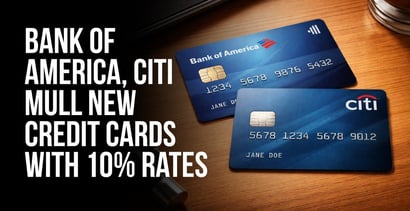
Citigroup and Bank of America are considering offering new credit cards with 10% rates as an alternative to a 10% rate cap.
President Trump wants banks to offer 10% rates on all credit cards for a year, but that would mean redoing the terms and conditions on all current credit cards. Banks have balked at the rate cap saying it would greatly limit credit access, including in the subprime market, and hurt the economy.
Study: Rate Cap Would Bring $100 Billion In Consumer Savings
A study from Vanderbilt University said a 10% rate cap would bring about at least $100 billion in annual savings for credit card customers.
“The credit card industry is so profitable that it could rein in interest rates, save billions for Americans and small businesses, and still make profits,” said Brian Shearer, Director of Competition and Regulatory Policy at Vanderbilt Policy Accelerator.
“Policymakers should look more seriously at interest caps as a way to help Americans keep more money in their pockets,” he said.
But to get to that more than $100 billion in savings for credit card customers would mean revamping every existing credit card in America and pushing out subprime credit card customers from the card market.
With a 10% rate cap, credit card lending would be cut for consumers with FICO scores below 600, according to the Vanderbilt study.
Issuing new credit cards at 10% rates is a more doable alternative for banks.
10% Rate Cap Would Change Card Business
A 10% rate cap would force credit card issuers to lower credit lines and cut back on credit card offerings, The New York Times reports.
“You would have to adjust your model for the added risk,” Jamie Dimon, Chief Executive Officer of JPMorgan Chase, told The New York Times. “If it happened the way it was described, it would be dramatic.”
Mike Santomassimo, Chief Financial Officer for Wells Fargo, said credit availability would be strongly affected by a 10% rate cap.
“There would be significant negative impact of credit availability for a wide spectrum of people,” Santomassimo told The New York Times.
Cutting Back on High Marketing Expenses
Credit cards have high operating expenses and a big component of those expenses is for marketing. According to a study from the Federal Reserve Bank of New York, credit card issuers spend an average of 1 to 2% of their assets on marketing. This is 10 times the marketing amount spent by other banks.
Cutting back on marketing expenses is one way credit card issuers could manage a 10% rate cap, according to the Vanderbilt study.
How to Mitigate the Risk for 10% Credit Cards
Brian Riley, Director of Credit Advisory Services at Javelin Strategy & Research and writing for PaymentsJournal, outlines four ways card issuers can handle risk when dealing with 10% interest rates on credit cards.
Riley suggests changing the minimum amount due, stop lending to people with FICO scores below 740, charging a transaction fee for borrowing, and making credit card interest tax deductible again.
The Bottom Line
Citigroup and Bank of America are thinking about issuing new credit cards with 10% interest rates. These cards with interest cards of 10% would be an alternative to the 10% interest rate cap for a year that President Trump wants. Issuers contend that a rate cap would hurt access to credit especially for subprime customers.


