My Review of the Surge® Platinum Mastercard® & How It Can Help You Rebuild Credit
I’ll tell you all about the card’s credit-building aspects and the fees you should take into consideration.
By: Jon McDonald
Jon McDonald
With more than 15 years of journalism expertise, Jon stays apprised of finance trends, influential companies, and financial literacy resources for subprime consumers. He is most knowledgeable in the areas of budgeting, loans, and responsible credit use, and his articles have appeared in publications produced by The New York Times.
Lillian brings more than 30 years of editing and journalism experience, having written and edited for major news organizations, including The Atlanta Journal-Constitution and the New York Times. A former business writer and business desk editor, Lillian ensures all BadCredit.org content equips readers with financial literacy.
Ashley has managed content strategy for BadCredit since 2015, partnering with major banks, financial institutions, and media outlets to deliver authoritative personal finance content. Her expert credit card commentary has appeared in top national publications, including CNBC, MarketWatch, Investopedia, Yahoo Finance, and Reader's Digest, establishing her as a trusted voice in the industry.
Disclosure: When you apply through links on our site, we often earn referral fees from partners. For more info, see our ad disclosure and review policy.
When I was a teenager, I convinced my parents to add me as an authorized user for a credit card linked to their account. But that wasn’t because I understood the importance of building credit or needed to finance anything — I just thought getting a card with my favorite football team’s logo on it looked cool.
In hindsight, I know that’s not a good reason to want, or get, a credit card. Without understanding how credit (or credit scores) work, it can be pretty easy to buy stuff you can’t afford now — and you may pay for it later with interest and points off your credit score.
If that sounds like something you did in the past, you’re not alone. But even if you’re confident you can use credit cards responsibly, you might still get rejected when you apply.
In that case, the unsecured Surge® Platinum Mastercard® could be a bridge to help you build credit, and the lack of a security deposit helps those who aren’t in a position to tie up their cash.
However, as I’ll cover in this guide, you need to make sure you’re comfortable with the fees, or you could end up with little to show for your effort. I’ll also go into more detail on the costs, benefits, and application process to help you decide if the Surge® Platinum Mastercard® is right for you.
What to Expect From the Surge® Platinum Mastercard®
If you’re trying to rebuild your credit, a common option is to use a secured credit card. Yet these don’t typically provide true “credit.” You have to put down a certain amount as a security deposit, and you can usually only then spend up to the security deposit amount.
As you pay off the balance, your credit limit resets, but you’re never really borrowing money since you’re not exceeding the security deposit.
See if you Pre-Qualify with No Impact to your Credit Score
Less than perfect credit? We understand. The Surge Mastercard is ideal for people looking to rebuild their credit.
Unsecured credit card requires No Security Deposit
Perfect card for everyday purchases and unexpected expenses
Monthly reporting to the three major credit bureaus
Use your card everywhere Mastercard is accepted at millions of locations
Enjoy peace of mind with Mastercard Zero Liability Protection for unauthorized purchases (subject to Mastercard guidelines)
Apply with Confidence! There is no impact to your credit score if you’re not approved. See terms.
Our Rating
★★★★★
4.7
While that helps some people learn better credit habits and build back their scores, you might prefer a card that lets you actually borrow money and doesn’t tie up any cash. That’s where an unsecured credit card comes into play.
An unsecured credit card is what most people think of as a regular credit card, but the problem is it can be hard to qualify for one if you’re in the “poor” to “fair” credit score range of around 300-670.
The Surge® Platinum Mastercard® stands out as one of the few unsecured credit cards for this credit-challenged group. It is offered and serviced by Continental Finance and issued by Celtic Bank, as Continental Finance is not a bank.
But the unsecured card can come with high costs, as I’ll cover here.
Potential Credit Limit
One perk of the Surge® Platinum Mastercard® is that the initial credit limits range from $300-$1,000, which is more than you might get with some other cards geared toward those with bad credit.
You’ll also know your initial offer almost instantly — credit decisions generally take less than one minute, though it’s possible it’ll take up to 30 days if the bank needs more info.
Rates & Fees
The Surge® Platinum Mastercard® has relatively high fees and interest rates, as would be expected for a subprime credit card that caters to applicants with credit issues.
The Surge® Platinum Mastercard® card also has an annual fee and a monthly maintenance fee, although that seems to typically be waived for the first year.
Still, by year two, you could be paying more than $200 per year, not including interest, just to use the card.
Some of these fees also reduce initial credit limits. For example, if you get an offer for a $1,000 credit limit and have a $125 annual fee, you’ll actually start with $875.
Once that’s paid off, your limit would reset to $1,000 (or whatever your limit is), but that’s important to consider if you’re weighing this card as an emergency line of credit.
Zero Liability Protection
While the Surge® Platinum Mastercard® is short on perks, it does come with Mastercard’s zero liability protection policy. That means you’re generally covered against any unauthorized charges on your card.
That said, this type of protection has become fairly standard nowadays, even for debit cards, so it’s not a huge selling point.
What You’ll Need to Qualify
While the Surge® Platinum Mastercard® is meant to be easier to qualify for than most credit cards, you do still need to meet baseline requirements. There’s no stated minimum credit score, but you do need to provide your monthly income and monthly expenses to indicate you have the means to keep up with payments.
That’s good news for subprime credit applicants who are used to getting turned down for not having a high enough credit score, but there’s still no guarantee that you’ll qualify.
If you don’t have any income, for example, and you have high monthly expenses, you might not get approved, so this probably isn’t the card you should look to if you’re navigating a job loss.
Also, you need to be at least 18 and have a valid U.S. address (not a P.O. Box) and Social Security number. You also seem to need a checking account that you can link to your account to pay your balance.
Once you start making payments, they are reported to the three major credit bureaus — Equifax, Experian, and TransUnion.
So, if you’re consistently making on-time payments and using a relatively small portion of your available credit limit, that could help you rebuild your credit score and help you qualify for other types of unsecured credit cards.
How to Apply (A Step-by-Step Guide)
The application process for a Surge® Platinum Mastercard® is super easy. I filled it out in just a few minutes and got a decision within a minute after that.
What I liked most was that it only asked for the important, necessary information.
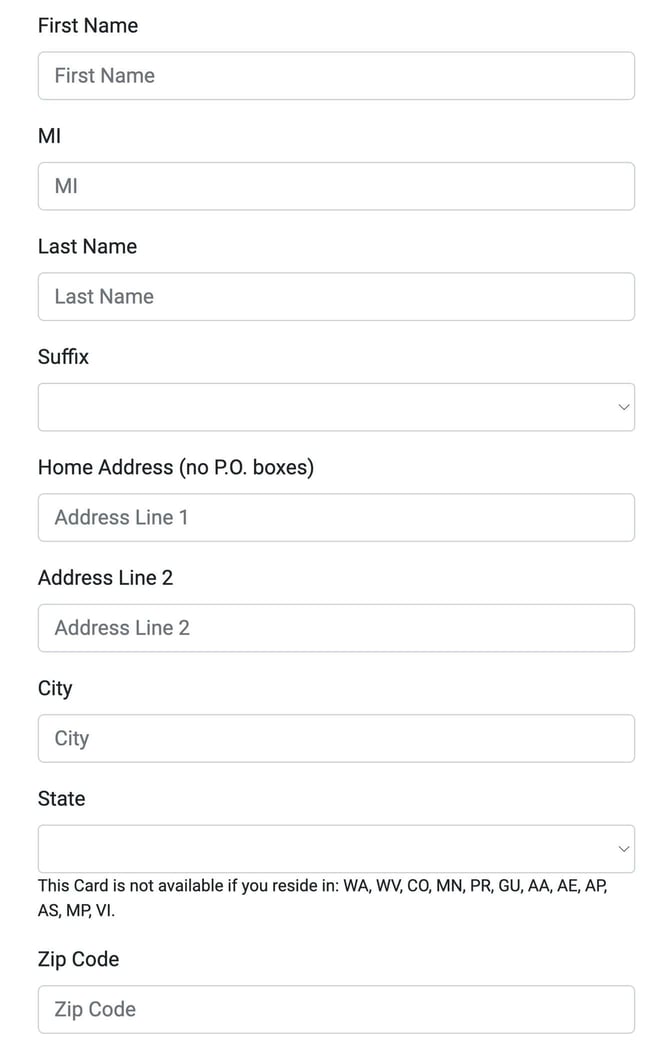
Step 1: Name and Home Address
From there, it took me to a one-page prequalification form. The first few lines asked for basic information, like my name and address. There are a few states and territories where the card isn’t available, as listed on the form.
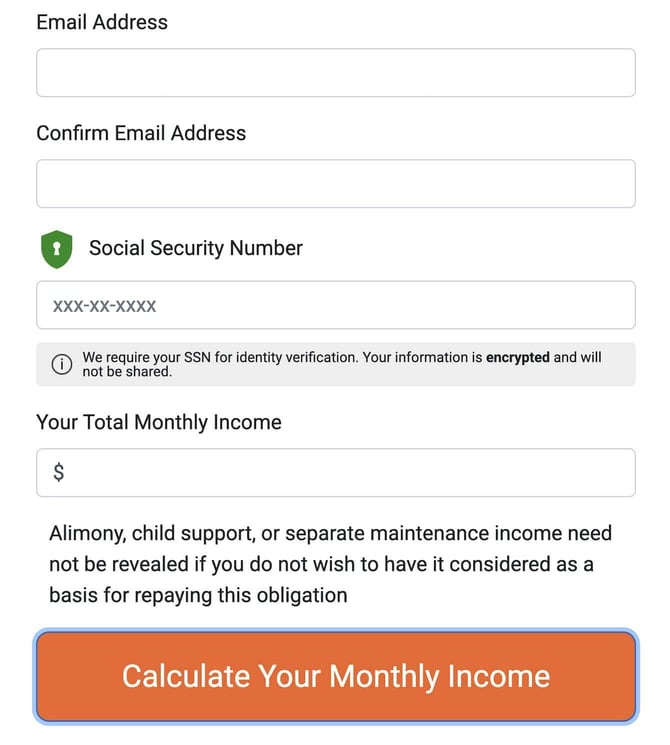
Step 2: Email, Social Security Number, and Monthly Income
After that, it asked for my email, Social Security number, and total monthly income. If you need to convert your annual income into a monthly amount, there’s a built-in calculator so you don’t even have to leave that tab.
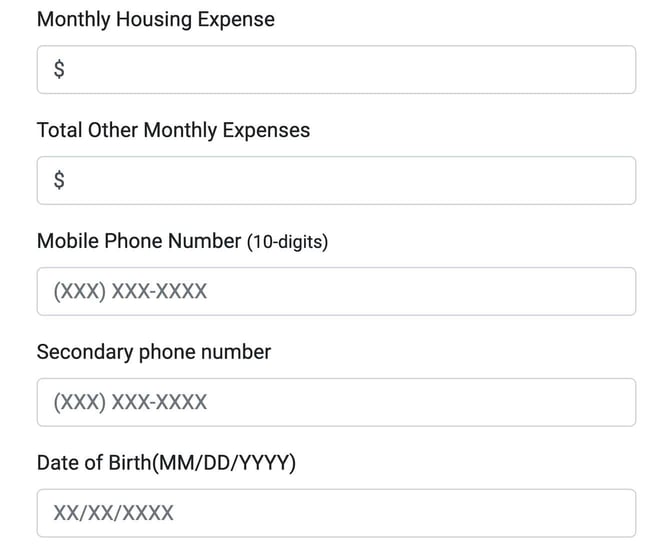
Step 3: Housing and Other Monthly Expenses
Next, the prequalification form asked about my monthly housing expenses and any other monthly expenses. The details are light here, but it seems to be asking about fixed costs, not your general monthly spending.
Then there are a couple more basic requests for a phone number and date of birth.
Step 4: Checking Account Information and Authorizations
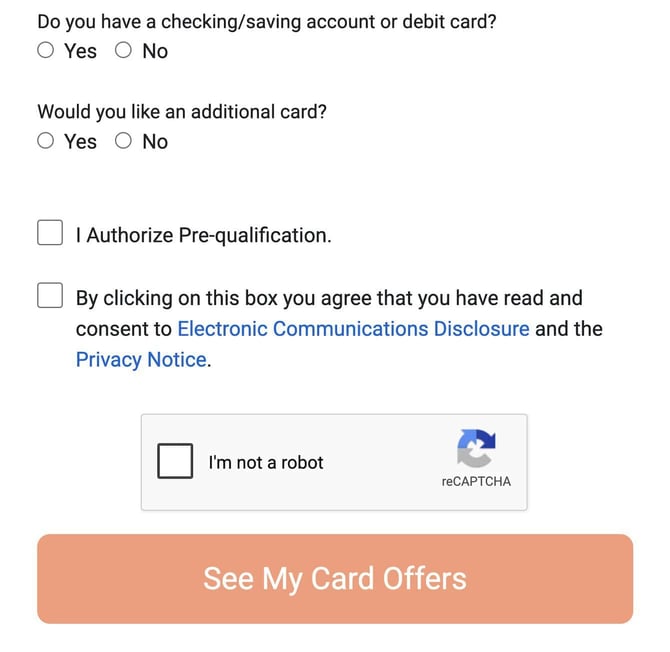
Finally, the form asked if I have a checking account or debit card, as well as if I’d like more than one card. Then I just check the boxes to authorize pre-qualification and that you read/consent to the Electronic Communications Disclosure and Privacy Notice.
Depending on how long it takes you to read through these, this would probably be the longest part of the process.
Once you solve the reCAPTCHA, you can then click the button to see your card offers.
Completing this prequalification just results in a soft credit pull, so it won’t ding your credit just for checking. But if you do go through with a full application, that would result in a hard credit inquiry, which could temporarily lower your credit score a bit.
Also, during the actual application process, Celtic Bank will confirm that everything in your application checks out. But in general, this is all still an almost-instantaneous process.
Only in select cases might you need to submit more information to verify your application, like if there’s a problem matching your name and address for some reason.
Building Credit With the Surge® Platinum Mastercard®
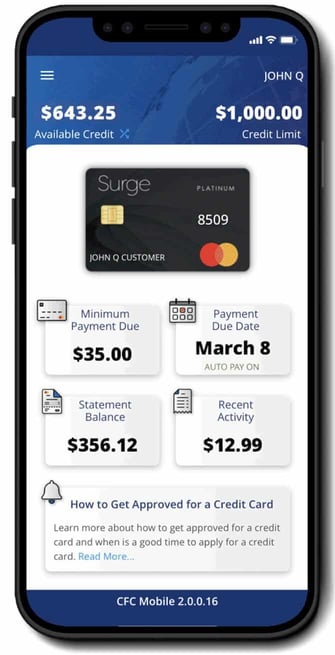
Even though Celtic Bank technically approves and issues the credit card, you manage everything through Continental Finance. You can access your account via an online dashboard or download the CFC Mobile Access app to manage your card on your mobile device.
Cardholders can easily manage their accounts through the CFC Mobile App.
There, you can view your account activity and manage your payments. You’ll also get paper statements, unless you opted into e-statements during your initial application or if you change that online after.
A big advantage of enrolling in e-statements, aside from any convenience or environmental factors, is that you should then be able to see your VantageScore® 3.0 credit score for free on each statement, so you can track your progress.
Through your online account, you can also set up autopay, or you can make manual payments if you prefer. I’d suggest autopay because it takes forgetting your due date off the table.
You can also choose between making the minimum monthly payments or paying the full statement balance.
If you need to change your payment due date, call customer service, as they can likely help you make that shift, along with other changes like switching to e-statements if you can’t figure it out online.
These processes might seem like formalities, but it’s important to get your account management set up in a way that’s comfortable for you so you can start rebuilding your credit.
The Surge® Platinum Mastercard® doesn’t have many special credit repair features, but reporting to the three major credit bureaus gives you an opportunity to build up your score by consistently making on-time payments.
Also, your credit utilization ratio has a big impact on your credit score. Because of the high APR, you probably want to pay your statement in full every month and not let your balance creep up anyway.
But even still, best practice is to generally keep your balance below 30% of your credit limit. So, if your credit limit is $1,000, you should generally try to spend less than $300 on your card in a given statement cycle.
Who Should (and Shouldn’t) Consider the Surge® Platinum Mastercard®
If you have bad credit and can’t qualify for other unsecured credit cards, you might be tempted to apply for this one. But because of the high fees and interest rates, there are very limited use cases for the Surge® Platinum Mastercard®.
The main reason would be if you can’t afford to put down a security deposit for a secured credit card, yet you really want a credit card to finance a purchase or build up your credit score.
With a secured card, your credit limit typically equals your security deposit. And because you want to generally keep your credit utilization ratio on any card below 30%, you might need to put down quite a bit of money to make most secured cards worthwhile.
But even then, there are likely more affordable options, and it would be hard to finance much on the Surge® Platinum Mastercard® without getting to a high credit utilization rate anyway.
Who Should Consider It
Who Shouldn’t Consider It
Those who have bad credit and cannot qualify for other unsecured cards.
Someone who qualifies for unsecured cards with lower or no annual/maintenance fees.
Someone who wants to build credit but cannot afford an upfront secured card cash deposit.
Those who can get approved for credit cards that offer rewards or cash back.
People who want an unsecured card to build credit and can deal with high fees.
People who don’t want an annual fee that may take up a big part of their low credit limit
Instead of paying the annual fee and possibly maintenance fees, you could consider options like a personal loan. Or, some banks let you access your paycheck early or get a few hundred dollars in cash advances without necessarily costing you as much as the Surge® Platinum Mastercard® would.
But those options won’t help as much with building credit, if that’s your goal.
If you can qualify for another unsecured credit card that charges lower or ideally no annual fees or maintenance fees, then you probably shouldn’t consider the Surge® Platinum Mastercard®.
Also, if you can qualify for a similarly priced card that has some perks like cash back or rewards, that would likely make that alternative win out over the Surge® Platinum Mastercard®.
So, if the goal is mainly to rebuild your credit, you might be better off putting that annual fee as a security deposit for a secured card.
Your credit limit would be very low, but you could, say, put $100 down as a security deposit and then just put one coffee per month on the card so your credit utilization stays low and you can pay it off every month.
Pros and Cons
The Surge® Platinum Mastercard® is typically quick and easy to apply and qualify for, and the unsecured nature with a potentially solid credit limit could make it a fast way to rebuild your credit. Yet it’s one of the more expensive ways to do so.
Pros
Unsecured (no security deposit)
Initial credit limit up to $1,000 (minus annual fee)
Mastercard network and zero liability protection
Cons
High APR and Fees
No rewards program
The Surge® Platinum Mastercard® may not have enough perks to justify the high fees in most cases. There are plenty of other credit cards that are geared toward those with bad credit that have lower fees, more rewards, or both.
Similar Alternatives
While the Surge® Platinum Mastercard® is a viable option if you have bad credit, it isn’t the only card that can help you build credit. It is unsecured, though, which is a bit of a differentiator.
But here are two other cards (one secured, one unsecured) that you may want to consider if you want to compare options:
2% cash back on category of choice with direct deposit***
The perks of credit building meet the best of banking****
Chime Checking Account required to apply for the Chime Visa® Credit Card
Chime is a financial technology company, not a bank. Banking services provided by The Bancorp Bank, N.A. or Stride Bank, N.A., Members FDIC. The secured Chime Visa® Credit Card is issued by The Bancorp Bank, N.A. or Stride Bank, N.A. pursuant to a license from Visa U.S.A. Inc. and may be used everywhere Visa credit cards are accepted. Please see the back of your Card for its issuing bank.
*Money added to Chime CardTM will be held in a secured deposit account as collateral for your Chime Card, and you can spend up to this amount. You can use money deposited in your Secured Deposit Account to pay off your charges at the end of every month.
**Out-of-network ATM withdrawal and over the counter advance fees may apply.
***With a qualifying direct deposit, earn 2% cash back on category of choice on eligible secured Chime Visa® Credit Card purchases.
****On-time payment history may have a positive impact on your credit score. Late payment may negatively impact your credit score. Results may vary.
Our Rating
★★★★★
4.8
Unlike the Surge® Platinum Mastercard®, this is a secured credit card, meaning you have to put down a deposit to use it — but there’s no annual fee or maintenance fees. Unlike some other secured credit cards, Chime® also lets you use the money in your Chime® Checking Account to pay down the balance.
So, if you’re mainly focused on rebuilding your credit via on-time payments, this could be a good option. Just know that you’ll need to open a Chime® Checking Account to get started.
Earn Cash Back Rewards* – 3% on Eligible Gas, Groceries, and Utilities, and 1% on All Other Eligible Purchases
Up to $1,000 credit limit subject to credit approval
Prequalify** without affecting your credit score
No security deposit
Free Access to your Credit Score†
*See Program Terms for important information about the cash back rewards program.
** Prequalify means that you authorize us to make a soft inquiry into your credit history (that will not affect your credit) to create an offer. If you accept an offer a hard inquiry will be made. Final approval is not guaranteed if you do not meet all applicable criteria (including adequate proof of ability to repay). Income verification through access to your bank account information may be required.
† Your credit score will be available in your online account starting 60 days after your account is opened. (Registration required.) The free VantageScore 4.0 credit score provided by TransUnion® is for educational purposes only. This score may not be used by The Bank of Missouri (the issuer of this card) or other creditors to make credit decisions.
Our Rating
★★★★★
4.7
This is an unsecured card that resembles the Surge® Platinum Mastercard® in many ways, such as both having an initial credit limit of up to $1,000. But you’ll likely need a fair credit score (around 600+) to qualify for this one.
The Aspire® Cash Back Rewards Mastercard offers cash back rewards, but it also has annual and maintenance fees — always read the fine print. The Surge® Platinum Mastercard® may offer lower fees, so it’s good to research what you qualify for.
Would I Recommend the Surge® Platinum Mastercard®?
One of the most frustrating things about having bad credit is that it can be more expensive to find financial products that will help you build credit. And no matter how you got there, you still need to show consistency over time to get out.
The Surge® Platinum Mastercard® is an unsecured credit card that can help, if you’re prepared to look at it as an opportunity and not just extra money you have access to.
I’d recommend the Surge® Platinum Mastercard® to someone who has a plan to build their credit by maintaining a low credit utilization ratio and making on-time payments. And someone who understands that unsecured credit card fees are just part of that journey — because the bank is reducing its risk.
In time, this card can help build back your score, and then you can upgrade to an unsecured credit card with fewer fees, better rates, and perks like rewards, points, or signup bonuses.
I wouldn’t recommend it to anyone who desperately needs the money, because that could end up in a lot more debt — and an even worse credit score. If you are in that situation, you might be better off applying for a personal loan or a bank account that can provide early access to your paycheck if you use direct deposit.
While it may be tempting to get an unsecured credit card to have some flexibility, you don’t want to stay stuck in a high-fee, high-interest cycle. Instead, make a clear goal, and find the credit-building tool that you’ll stick with.
Advertiser Disclosure
BadCredit.org is a free online resource that offers valuable content and comparison services to users. To keep this resource 100% free for users, we receive advertising compensation from the financial products listed on this page. Along with key review factors, this compensation may impact how and where products appear on the page (including, for example, the order in which they appear). BadCredit.org does not include listings for all financial products.
Our Editorial Review Policy
Our site is committed to publishing independent, accurate content guided by strict editorial guidelines. Before articles and reviews are published on our site, they undergo a thorough review process performed by a team of independent editors and subject-matter experts to ensure the content’s accuracy, timeliness, and impartiality. Our editorial team is separate and independent of our site’s advertisers, and the opinions they express on our site are their own. To read more about our team members and their editorial backgrounds, please visit our site’s About page.
Surge® Platinum Mastercard®
★★★★★ 4.7/5.0
4.7/5.0
About this rating
BadCredit.org’s credit card ratings are calculated by our financial experts based on key criteria including APRs, fees, and approval odds. We also consider factors such as customer service and cardholder benefits. Our ratings are unbiased and regularly updated.
Information Warranty & Disclosure: Great efforts are made to maintain reliable data on all offers presented. However, users should check each provider’s official website for updated terms, details and conditions for each offer before applying or signing up. Our site maintains strict terms of service and may accept compensation for paid ads or sponsored placements in accordance with these terms. Users must be at least 18 years of age to be eligible for financial offers as per the terms presented on provider websites.
* FICO scores/credit scores are used to represent the creditworthiness of a person and may be one indicator to the credit type you are eligible for. However, credit score alone does not guarantee or imply approval for any financial product.