

Writer: Lucy Lazarony


Editor: Lillian Guevara-Castro


Reviewer: Adam West

Key Takeaways
- When it comes to retiring, Americans are feeling less confident about their ability to save enough.
- A majority of workers say debt is a problem in their household and for 25% of workers debt is a major problem.
- Rising healthcare costs and housing expenses are adding to the financial strain of workers and retirees.
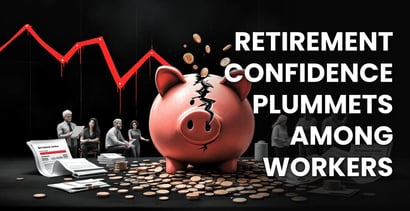
Americans are feeling less confident about having enough money for a comfortable retirement.
Rising costs are concerns for workers, and retirees worry about the future of Social Security and Medicare, according to the 2026 Retirement Confidence Survey from Employee Benefit Research Institute (EBRI) and Greenwald Research.
“Americans are contending with a mix of immediate financial pressures and long-term uncertainty,” said Craig Copeland, Director of Wealth Benefits Research at EBRI.
“Many workers are struggling with debt, inflation and rising housing and health care costs, while retirees are increasingly worried about the future of Social Security and Medicare. Together, those pressures are making it harder for people to feel secure about their retirement.”
Falling Confidence About Retirement
Both workers and current retirees are feeling less confident about having enough money for their retirements. Worker confidence in attaining a comfortable retirement fell to 61%, 6 percentage points lower than in 2025.
Retiree confidence was higher than that of workers but still lower than in 2025. Retiree confidence in 2026 fell to 73%, 5 percentage points lower than last year.
Lack of savings may be contributing to a lack of confidence. Less than 3 in 5 workers say they have enough savings to pay for an emergency expense. Some retirees also lack savings, with fewer than 7 in 10 saying they have enough savings to pay for an emergency expense.
Debt Is a Major Factor for Workers
A majority of workers, 65%, say debt is a problem in their household. And for 25% of workers, debt is a major problem. Fifty-percent of workers carry credit card debt and pay interest on their balances every month.
How big of an issue is debt for workers? Almost 1 in 3 workers have more than $25,000 in non-mortgage debt. About 3 in 5 workers say debt hampers their ability to save for retirement.
Retirees have debt concerns as well. Three in 10 retirees say debt impacts their ability to live comfortably in retirement.
Healthcare and Housing Costs Add to Financial Strain
Almost 6 in 10 workers say health care costs are hurting their ability to save money for retirement. Retirees are struggling with healthcare costs as well. Two in 5 retirees say healthcare expenses are higher than they expected.
Housing costs are another cause of financial pressure for workers and retirees. Seven in 10 workers, and 50% of retirees say they are concerned rising housing costs will affect their retirement plans.
Housing costs are already impacting the ability to save money for retirement for 3 in 5 workers and one-third of retirees.
“People are not only worried about whether they have saved enough, but also about how rising costs, health care needs, and policy changes could reshape retirement itself,” said Lisa Greenwald, Chief Executive Officer of Greenwald Research.
Dealing With Debt in Retirement
Almost 6 in 10 people who are retired have debt and carry a median balance of $32,050, according to an Investopedia analysis of Federal Reserve data. What is the most common type of debt for retirees? Credit cards are the most common debt, but mortgages tend to have the biggest balances.
When it comes to debt, Americans as a whole are turning to credit cards. Credit card balances rose by $44 billion in the fourth quarter of 2025 reaching $1.28 trillion, according to the Federal Reserve Bank of New York.
Carrying credit card debt from month to month, especially a large balance with a hefty monthly payment, can take money away from other important financial goals such as attaining a comfortable retirement. And the financial stress of grappling with credit card debt can cause financial confidence to ebb.
The Bottom Line
Americans are feeling less confident about saving enough for retirement. Rising costs and concerns about the future of Social Security and Medicare are key concerns as are inflation, healthcare costs, housing expenses, and debt.
Rising healthcare costs and housing expenses in particular are impacting workers’ ability to save money for retirement. Debt is another area of concern, with workers saying debt is a problem or even a major problem in their household.
