

Writer: Lucy Lazarony


Editor: Lillian Guevara-Castro


Reviewer: Adam West

Key Takeaways
- Americans are feeling stressed about their finances and many are turning to a nonprofit credit counseling organization for help.
- The National Foundation for Credit Counseling’s forecast reveals American households are locked into a period of elevated financial strain.
- The Northeast and South are two regions of the country that are experiencing heightened levels of financial strain with consumers actively seeking credit counseling help.
Americans are stressed about their finances. The forces of economic volatility and inflation are putting a squeeze on household budgets. And many Americans are turning to nonprofit credit counseling for help.
The National Foundation for Credit Counseling’s (NFCC) Financial Stress Forecast for the first quarter of 2026 reveals a surge of stressed consumers reaching for help. With rising debt and difficulty paying bills, consumers find they need assistance.
While getting help is a good sign, experiencing high levels of financial stress is a bad one.
Consumers are facing a period of elevated financial strain.
And there is more bad news. Struggling consumers reaching out for credit counseling is an economic indicator of broader economic distress.
“When we see a sharp increase in people actively seeking credit counseling, it’s the canary in the coal mine,” said Mike Croxson, Chief Executive Officer of the NFCC.
“It tells us that the pressure from sustained credit reliance and affordability challenges has reached a tipping point. Consumers want to manage their obligations responsibly, but their traditional capacity to do so is evaporating under current market conditions.”
A Closer Look at the Financial Stress Forecast
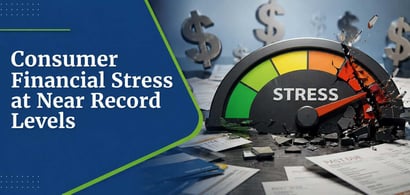
How stressed out are consumers? The NFCC Stress Forecast eased slightly to 6.6 in the first quarter of 2026 and is expected to edge back upward to 6.7 in the second quarter. This suggests households are locked into a sustained period of elevated financial strain.
Any stress level above 6.0 indicates that debt is constraining day-to-day financial choices, limiting financial flexibility, and hampering a consumer’s ability to save. But the forecast hasn’t always been so high. In comparison, the stress forecast hit a post-pandemic low near 3.5 in 2021.
Stressed Out Regions
According to NFCC, certain regional pockets of the country are experiencing heightened levels of financial strain. These regions include the Northeast and the South. And in these areas consumers are most actively seeking credit counseling help.
These financially distressed consumers who are reaching out for credit counseling assistance live in high-growth Southern hubs and densely populated Northeastern corridors.
Flexibility from Creditors
To prevent widespread consumer defaults, creditors need to become more flexible in adopting and supporting debt management plans, NFCC advises.
“The fact that consumers are taking the initiative to find a path forward is a positive sign, but the industry must meet them halfway,” Croxson added.
“Providing enhanced creditor support for longer-term, more sustainable repayment options is vital to keeping these households viable and preventing a deeper consumer credit crisis.”
Understanding Debt Management Plans
A debt management plan places unsecured debt, such as credit cards and personal loans, into a single account. So rather than juggling a handful of debt payments, a consumer with a debt management plan has one bill to pay to the credit counseling agency each month.
In addition to consolidating debt into one account, signing up for a debt management plan may lower the interest rates owed on credit cards and other accounts. Interested in a debt management plan? Reach out to a nonprofit credit counselor near you. But be prepared to pay some fees.
Credit counseling agencies charge setup fees of about $50 and monthly maintenance fees ranging from $30 to $100.
Most credit counseling agencies also request consumers in debt management plans close their credit card accounts while repaying their debts.

