

Writer: Choncé Maddox


Editor: Jon McDonald


Reviewer: Ashley Fricker

Paying off your debt is supposed to make your credit score increase, but what about when it comes to an account that’s in collections? Paying off a collection account should be celebrated, but unfortunately, it doesn’t always result in a noteworthy credit score increase.
When an account is sent to collections for failure to pay, it usually causes your credit score to dip (unless it was very low to begin with). It can also be a red flag to creditors who look at your credit report and see that you may be a risky person to lend money to.
Quick answer: Paying off collections doesn’t always boost your credit score because the impact depends on the scoring model, the size and type of the debt, and the rest of your credit profile. A paid collection may still remain on your credit report even if it no longer affects some newer scores.
Let’s talk more about why your credit score may not go up after paying off collections, how collections are treated on your credit report, and why it’s often a good idea to pay them anyway.
How Credit Scoring Models Treat Collections
Finding out that your account was sent to collections can always feel a little nerve-racking. If you check your mail and find a collection letter, it’s usually bold, intimidating, and filled with legal jargon and warnings about your overdue balance.
This is what happens when your original creditor or lender sells your debt to a third-party collection agency, which then takes over. Lenders commonly do this once your balance hasn’t been paid for at least 180 days.
The worst part of it all is that the account in collections will likely show up on your credit report anyway, and each credit scoring model treats it differently.
| Timeline of Late Payment Impacts | ||
|---|---|---|
| 30-59 Days Late | 60-179 Days Late | 180+ Days Late |
| Bank will charge another late fee | Bank continues to charge late fees | Account closed |
| Penalty APR likely goes into effect | Your account may be closed | Debt sold to collections agency or other debt buyer |
| Account reported to the major credit bureaus as late | Accounts later than 90 days considered seriously delinquent | Bank may sue you |
| Your credit score will start to drop | Account may go to collections | Defaulted account remains on your credit report for seven years |
FICO has several scoring versions, but FICO 8 is one of the most common, and it actually treats paid and unpaid collections the same. Paying off an account in collections may not really impact your credit score, but it will show that it’s been paid.
It all depends on other information in your credit report, such as whether you already have other collection accounts, a history of late payments, or high credit utilization. This scoring model does ignore collection balances that are extremely low, under $100, though.
New models, FICO 9 and 10, actually give consumers credit for paid-off collection accounts and don’t factor the collection status into the scoring models when the account has been paid. So this could positively impact your credit score, depending on your situation.
With VantageScore, models 3 and 4 ignore all paid collections, which is good news for anyone looking to pay off any past-due accounts.
Exceptions for Small Amounts and Medical Debt
As you can see, not all collections are treated the same, so it’s important to see where you stand. One exception to the credit reporting guidelines is that smaller collection balances, under $100, won’t impact your credit score.
Another exception is medical debt, which is treated differently when it comes to collections. According to FICO, unpaid medical collections under $500 are considered, but have less of an impact on your FICO 9 and 10 scores. VantageScores 3 and 4 also exclude all medical debt, paid and unpaid, in their credit score calculations.
Keep in mind: Medical collection accounts may still show up on your credit report, and you’ll need to explain them to future lenders.
It’s a good idea to factor in paying off your medical collection accounts along with other collection accounts.
Just don’t expect to see a huge change in your credit report, especially if the debt didn’t significantly contribute to a drop in your score.
Payoff Timing and the Date of Delinquency
Collection accounts can stay on your credit report for up to seven years. The clock starts from the month of the first missed payment that leads to the collection process.
It’s called the Date of Delinquency, which just means the day you fell behind on payments and never caught up.
A common misconception is that the timeline starts when your account is sent to collections, or even when you pay the account off. So, for example, let’s say:
- You stopped paying on a credit card in June 2020
- The account went to collections in December 2020
- You pay it off in 2024
Even though you paid the debt in 2024, the collection will still fall off your credit report around June 2027, which is seven years from the original missed payment.
When I was just starting to use credit, I was always told that it’s best to pay off a collection account because, even though it can stay on your credit report for a long time, the status does change to “paid” once it’s paid off, so it looks better to potential lenders and creditors.
I still give that advice to this day.
You also shouldn’t fall for the myth that making payments or having an activity on that account (once it’s in collections) will reset the clock or cause it to stay on your credit report longer.
That’s not true. In fact, I think one of the worst things someone can do is ignore collection accounts and do nothing. This won’t make the problem go away.
Strategies to Reduce the Negative Impact
Collections can be tricky to navigate, right? But here’s what you’ve learned so far:
- Paying off a collection account won’t make it disappear from your credit report overnight.
- Waiting to address your account also won’t erase the debt you owe or affect how long it stays on your credit report.
- Paying off a collection debt may not increase your score, but the status will change to “paid”, which can look better to lenders.
While you can’t always control how a collection affects your credit score, there are some things you can do to minimize the overall damage to your credit during the process.
Communicate With Your Lender Early On
Of course, before an account goes to collections, you always have the option to communicate with your creditor and let them know you’re struggling to make payments on an account.
You typically have 180 days (more or less), and the creditor will remind you about the bill several (if not many more) times.
If you can’t make the payment, don’t beat yourself up. Many of us have been there, but it’s better to let the creditor or lender know that you’re trying to take care of the balance. You can ask if they have any hardship deferral programs, can cut interest, or even take a partial payment.
Making this effort on your end can signal to the lender that you will make payments soon, and they may delay the process of sending the account to collections.
Pay-for-Delete Agreements
If you already have a debt in collections, you’ll have to deal with the new third-party company that took over the debt. They may be willing to negotiate and settle the debt for a smaller amount.
This can help you save money if you can manage to make one lump sum payment, and you may be able to arrange a pay-for-delete agreement.
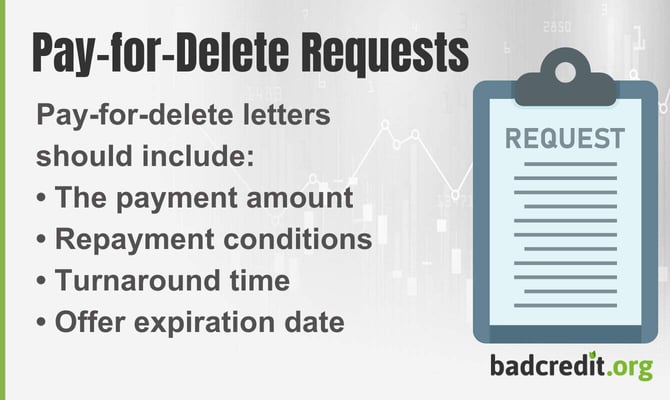
Just like it sounds, a pay-for-delete agreement is when you and the collection agency make an agreement that they will remove the account from your credit report in exchange for payment.
While these agreements do sometimes work, they aren’t guaranteed, and you can’t put them in writing, but some collection agencies may agree to do it, so it doesn’t hurt to ask.
Goodwill Letters
Another option is to write a goodwill letter to the creditor or debt collector once you’ve paid off a collection debt. You can simply ask them to remove the negative mark from your credit as an act of grace.
Again, there’s no guarantee with this option, but if you pay down your balance in a reasonable time and work with the debt collection company promptly, they may be willing to help you out.
Improve Your Financial Habits
Even if that collection activity is sticking around on your credit reports for seven years, it is always a great idea to improve your financial habits for the future and build positive new credit history.
Make sure you pay your bills on time and set up automatic bill pay if needed. You should also keep your credit card balances well below 30% of your total credit limit and avoid applying for new credit too often to avoid stacking up hard inquiries.
Avoid new delinquent accounts and allow your positive financial habits to outweigh your past challenges so your credit score can improve.
Consider Paying Collections Even if it Won’t Improve Your Score
Paying off an account that’s in collections is hardly ever a bad idea. Sure, it may not cause your credit score to skyrocket, but it can minimize the negative impact in the long term.
It can also reduce further penalties and drawn-out communication with the debt collection agency — or worse, legal action.
When it comes to increasing your score, there are also so many other ways to build a positive credit history. So when you improve your financial habits, you will see the results pay off with a higher, well-earned credit score.

