


Writer: Eric Bank


Editor: Lillian Guevara-Castro


Reviewer: Adam West

Key Takeaways
Plaid has brought out an upgraded reporting pipeline called Plaid Check that adds new subcategories to clearly show income types, fee activity, and repayment behavior.
The upgrade covers many account types and uses AI to improve accuracy for income, transfers, fees, and repayment categories. The added detail helps lenders better understand the financial lives of spotty earners.
Many borrowers rely on gig work, which often entails working at odd hours and earning uneven income. Lenders can use this data in credit decisions. But the data must flow through FCRA-compliant channels such as Plaid Check. In effect, Plaid acts as a Consumer Reporting Agency.
Some income sources rarely show up in credit files. Better categorization helps lenders see real earnings as well as spending habits.
That is important when traditional data doesn’t give the whole picture. Lenders can’t rely on cash flow signals — unless they come through a compliant reporting process like Plaid Check.
Lenders can use the added detail to spot steady gig income or consistent repayment habits. Clear data also helps lenders distinguish acute and chronic strain. These insights are important — one wrong call can lead to a false decline or a bad loan.
How Plaid’s Update Works
Plaid added categories and detailed data. New detection types include child support, long-term disability payments, and military pensions. This helps lenders verify new types of income. In addition, the system recognizes more types of fees and repayments.
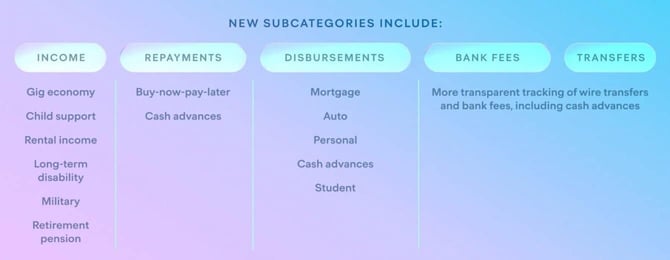
Higher accuracy gives lenders a cleaner view of behavior. The upgrade also connects to the UltraFICO Score. Plaid Check blends cash flow data with traditional credit information.
This connection decreases the misunderstanding of customer finances. It helps lenders compare normal and unique behavior. The UltraFICO link establishes that many nonprime borrowers have better cash habits than expected.
Why the Update Matters for Underwriting
More specific labels help lenders understand borrowers with limited credit history. Clean cash flow data shows the difference between steady and random income. In addition, it highlights required bills, one-time charges, and short-term issues.
These details help lenders avoid unnecessary rejections. Details help strengthen credit results when lenders adopt cash flow scoring tools like UltraFico.
“We’re unlocking the full intelligence of financial data with a model that keeps learning,” said Will Robinson, Chief Technology Officer at Plaid.
Plaid Check Helps Lenders
Subprime lenders often work with clients who have limited credit history. For such clients, there can be varied sources of income, varying working schedules, and small cash gaps. Cash flow data fills the gaps.
While it’s true that precise income figures can help make loan decisions, having less-than-stellar credit scores can hurt. Red flags, such as excessive charges and unexpected dips in financial income, can help lenders avoid losing money and alert them to potential problems.
Cleaner data means that faster decisions can be made. This new system makes it easier to qualify and uses actual information rather than an inaccurate credit history. Having good data translates to less work for the human evaluation team and makes it easier for lenders to deal with irregular payers.
Bottom Line
Plaid’s AI enhances cash flow lending. Banks are now able to understand the true payment behavior of people who receive irregular incomes. This information can help banks provide access to proper credit and enhance their capabilities to manage risk.


