


Writer: Lynn Cadet


Editor: Lillian Guevara-Castro


Reviewer: Ashley Fricker

Key Takeaways
-
Almost half (48%) of millennials and 42% of Gen Z Americans surveyed said they are far more likely to carry financial regret over a purchase than other generations.
-
28% of millennials and 26% of Gen Z consumers say that regret was due to impulse spending or living beyond their means.
-
Older generations are far less likely to express regret, with 64% of adults over 60 saying they made thoughtful financial choices.
They were raised on budgeting apps, YouTube finance hacks, and “money diaries.” But in 2025, nearly half of Gen Z and millennial adults say they regret a financial decision they made in the past year.
For most, the ensuing regret wasn’t because of an investment gone wrong or a crypto loss. Instead, it was a TikTok dress, a “deal” they didn’t need, or a late-night impulse triggered by stress.
As Prime Day and mid-year sales heat up, the same forces that may have caused regret last year, like emotional pressure, algorithmic targeting, and social media FOMO, are poised to strike again. For many young Americans, summer 2025 isn’t just sale season, it’s relapse season.
Over 4 in 10 Gen Z adults (42%) surveyed said they have experienced financial regret over a purchase they made in the last year, according to a recent BadCredit.org study. Millennials and Gen Z are significantly more likely than older generations to regret their financial decisions.
This generational regret comes at a peak moment for spending, with Americans gearing up for weddings, vacations, and retail blowouts. But while older consumers may budget for big expenses, younger buyers are often swept up in spontaneous, emotional spending they can’t afford.
The Main Culprit: Impulse Buying
The summer season is all about saying yes to vacation, sales, and fun. But for younger shoppers, that instinctive “yes” often comes before they’ve checked their account balance or cross-referenced their budget.
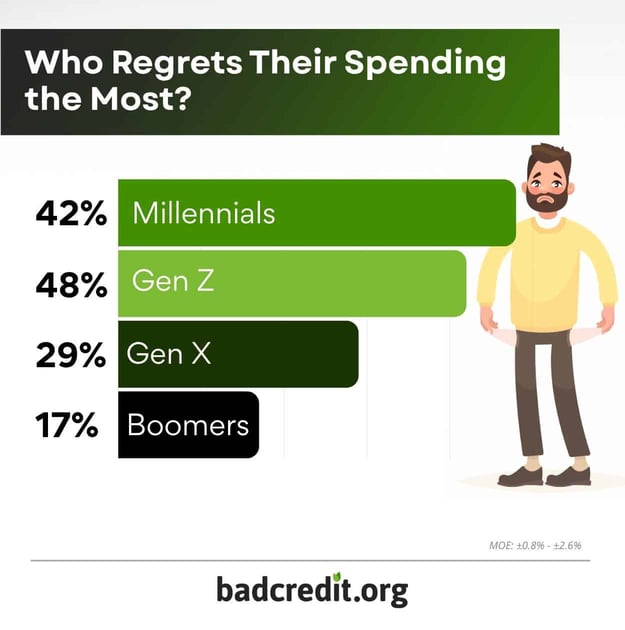
Our study revealed that nearly half of Gen Z (42%) and millennial (48%) respondents said they have made a money decision they regret in the past year, compared to just 29% of Gen X and 17% of those over 60 who said the same. Over 6 in 10 (64%) of consumers 60+ said they made conscious financial choices.
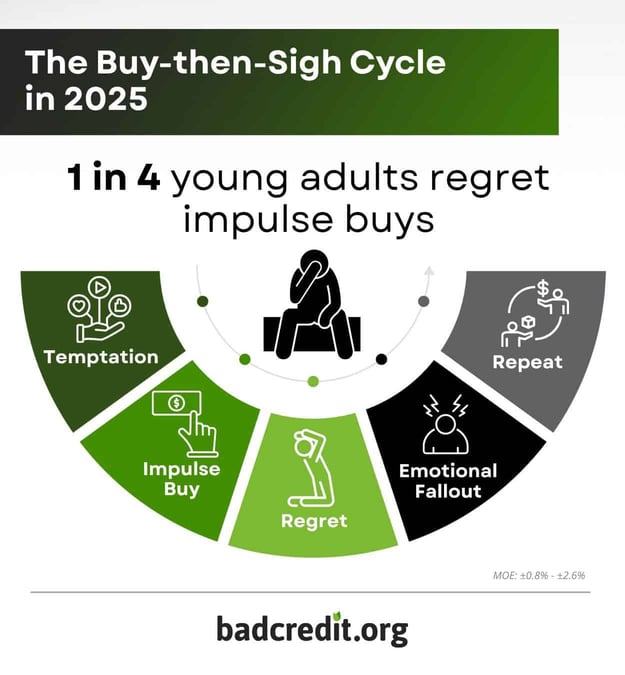
But why are younger generations more likely to lament their financial purchases? The answer is impulse buying. According to our survey, 28% of millennials and 26% of Gen Z respondents say the regret they feel about their financial decisions was due to impulse spending or living beyond their means.
So much of what is consumed on social media and other tech platforms can drive impulse buying among young people. An S&P Global study revealed that Gen Z and millennials are far more likely to rely on social media for entertainment discovery, content, and product and service information than older generations.
Constant viewing of social media content and marketing, especially those touting new products and getaways like Instagram ads and TikTok shops, can tempt users into buying things they don’t necessarily need or can afford.
Gen Z and millennials aren’t shopping impulsively by accident. They’re being primed to by infinite scrolling, “limited drops,” and hyper-personalized feeds that blur the line between want and need.
What Consumers Can Do
Technology has created a paradox where users have more access to information that may help them with their financial decisions, while also promoting impulse buying with tech-driven temptations, such as brand collab posts including social influencers.
“Impulse purchasing is normal. Everyone does it, including me,” says Erica Sandberg, consumer finance expert at BadCredit.org. “As long as you have enough money to support the unplanned extras and it doesn’t hurt your overall financial health, you’re fine.”
Social media isn’t going anywhere. But until younger consumers can learn to separate entertainment content from buying triggers, regret will continue outrunning their budgets. Breaking the cycle starts with awareness, not just budgeting apps or deleting TikTok.
Sandberg adds, “To mitigate future regret, stop for a moment and review your balances. If it’s going on a credit card, see how much you already owe and ask yourself if this new charge will make it more difficult to repay your bill in full. Using your debit card? Make sure the cash withdrawal will leave you enough for essentials. In many ways, it’s that simple.”
Below are practical ways to curtail impulse spending to protect your wallet and your peace of mind:
- “Save for later” in Your Cart: You may find something you want to buy, but realize you don’t have sufficient funds to pay for it. Saving products for later in your cart can allow you to purchase an item when you can, instead of paying for it right away.
- Join a Buy Nothing Group: If you love free stuff, join a Buy Nothing group. These groups match you with a community of people giving away items they no longer need. The Buy Nothing Project is all about helping people buy less and reduce waste by rehoming items they don’t need.
- Remove Card Information: Erasing your card data from delivery and shopping platforms can make the shopping process less immediate, affording you time to ponder whether you really need that neon green sweatshirt after all.
- Shop Your Closet First: Shopping your home before making a purchase can give you clarity on the decision. Is this new item filling a need or a desire?
- Develop a flexible budget. For instance, if you have $3,000 coming in every month on a net basis and already have assigned parts of your income to important categories, allot $100 or so to use for whatever may come up. That’s your “free” cash. You can either visit an ATM or create a separate slush savings account to access this cash.
Rethinking how you shop not only helps you build financial wellness, but it can also help you improve your mental health and the environment (e.g., the Buy Nothing Project).
This mid-year moment is not just a budget checkpoint; it’s a behavioral one. Younger consumers who change how they approach their spending can break harmful patterns, cut loose emotional baggage, and establish a better financial outlook.
If 2024 was the year of financial remorse, 2025 could be the year young consumers start reclaiming financial control instead of clicking “add to cart.”
Methodology
This survey was conducted among 1,500 American adults to explore generational differences in financial regret and impulse spending. Respondents were asked about their recent financial decisions, emotional drivers of spending, use of financial tools, and attitudes toward budgeting and technology-driven purchases.
The data was weighted to ensure balanced representation across key demographic variables, including age, gender, race, and region. The goal was to capture a broad understanding of financial behavior and regret across generations, with particular emphasis on younger consumers.
The survey included 1,000 respondents from the general U.S. population and an oversample of 500 Gen Z adults. The margin of error for proportions ranges from ±0.8% to ±2.6%, depending on the individual response. All results reflect a 95% confidence level.
