My Hands-On Review of National Debt Relief: A Viable Option If You Have More Than $7.5K in Debt
I found out how National Debt Relief helps people pay off unsecured debt through negotiated settlements — and save money.
By: Choncé Maddox
Choncé Maddox
Choncé is a Certified Financial Education Instructor (CFEI) and a nationally recognized personal finance and budgeting expert. She's paid off $50,000+ of personal debt, and her debt story has been highlighted in Essence Magazine and on Good Morning America as part of its 2020 Debt-Free Decade series. Her work has been featured on sites including Business Insider, LendingTree, Credit Sesame, Barclaycard, and The New York Post. Choncé was named one of the top financial experts to follow on Instagram by Black Enterprise.
With more than 15 years of journalism expertise, Jon stays apprised of finance trends, influential companies, and financial literacy resources for subprime consumers. He is most knowledgeable in the areas of budgeting, loans, and responsible credit use, and his articles have appeared in publications produced by The New York Times.
Ashley has managed content strategy for BadCredit since 2015, partnering with major banks, financial institutions, and media outlets to deliver authoritative personal finance content. Her expert credit card commentary has appeared in top national publications, including CNBC, MarketWatch, Investopedia, Yahoo Finance, and Reader's Digest, establishing her as a trusted voice in the industry.
Disclosure: When you apply through links on our site, we often earn referral fees from partners. For more info, see our ad disclosure and review policy.
Have you ever been sorting through your mail to review the usual stack of bills, credit card offers, and grocery ads, only to find an envelope marked “PAST DUE” or “FINAL NOTICE”? It can be easy to feel discouraged, but just know that it has happened to many others, including me.
A few years ago, I accidentally let a hospital bill go unnoticed, and before I knew it, I was flooded with tons of mail, “final warnings,” and phone calls. It’s not a fun spot to be in, but there are options if you’re struggling just to manage your debt (much less pay it down).
One option is National Debt Relief, which is a well-known service that can help you pay off debt faster and keep those creditors off your back. It isn’t all sunshine and rainbows, though, as there are some financial impacts you should consider.
In this hands-on review, I’ll walk you through everything I’ve learned about the company, including how much it costs, its application process, and its drawbacks.
That way, you can decide if National Debt Relief can help improve your financial situation. So, let’s dive in!
What National Debt Relief Offers
When I first visited National Debt Relief’s website, I was pleasantly surprised by how clean and professional it looks. Some debt relief and debt settlement websites tend to look a little outdated or don’t have a lot of information upfront.
Luckily, National Debt Relief isn’t like that.
Its tagline is, “Pay off your debt for less than you owe, in less time than you think,” and right away, I could see client testimonials that reflected that mission.
Also, the homepage makes it clear what types of debt National Debt Relief handles. It also includes some helpful FAQs for those who are unfamiliar with debt relief, which I found thoughtful.
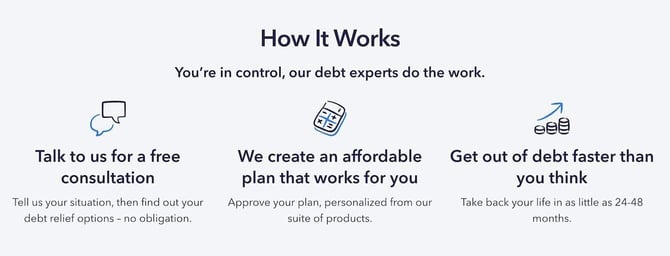
If you visit the site for more information, I’d recommend clicking on the ‘How It Works’ tab to learn more about National Debt Relief’s three-step process. It involves a free consultation, a custom plan, and the final stage: working out a plan to become debt-free.
To apply, you’ll need to fill out a short form (which I’ll cover later) to determine whether you’re eligible for services and what type of repayment program would work best.
National Debt Relief is transparent and straightforward about everything. That is something I admire, since other services can be more vague, and I don’t like to see consumers spend time searching for information or next steps.
Debt Settlement & Negotiation
National Debt Relief’s core services are debt settlement and debt negotiation. Its process includes reviewing your debt situation and then contacting to your unsecured creditors to negotiate lump-sum settlements and, potentially, reduce the amount you owe.
I used to wonder why someone would want to work with a debt relief company when they could just try to negotiate a settlement directly with their creditors.
But what I realize now is that negotiating with creditors isn’t as simple as making one phone call. It takes persistence, good timing, and strong negotiation skills to get true savings and relief from overwhelming debt.
This is where National Debt Relief shines. It has the resources to stay persistent and the experience to negotiate fair settlements.
Of course, you can always try to settle debt with creditors on your own. If that doesn’t work, or you simply don’t know where to start, a debt relief company is a solid option. You should also be prepared for a journey, not a quick trip, back to financial balance.
After an initial consultation, National Debt Relief delivers a custom repayment plan. But the company reports that clients typically need 24 to 48 months to get out of debt.
Dedicated Program Account & Monthly Deposits
If you choose to move forward with National Debt Relief, you’ll participate in a program that’s customized to your needs and goals. You’ll make a fixed monthly deposit into an account that is in your name, but managed by a third-party payment processor.
The money you put in the account is used to pay the negotiated settlements until the agreement is met. Since National Debt Relief does all the heavy lifting here by working directly with your creditor, you just have to worry about budgeting for debt payments to the dedicated account.
The dedicated account means you have one place to pay a fixed amount. That should take at least a little worry off your plate.
I saw an example of this in a review on the company’s website. A client who had $18,453 in debt paid $394 per month for 36 months and saved $3,700 with a debt relief agreement.
Another client claimed they started with $36,883 of debt and made monthly payments of $699 for 38 months. The negotiated payment plan helped them save $13,928 (38% of the total debt).
Support, Planning & Educational Resources
Debt settlement can seem complex to those who aren’t familiar with how it works. When I first heard about National Debt Relief, I wondered why the money had to go into a dedicated account instead of being paid directly to the creditor.
That’s because National Debt Relief needs to have a percentage of your total debt waiting in escrow to negotiate in good faith with your creditors.
I also wanted to know if the borrower’s credit score would tank if they stopped paying their credit card bills and switched to payments to the dedicated account only.
It shouldn’t come as a surprise that your credit score will likely drop once you stop paying credit card bills. But according to National Debt Relief, this strategy can actually help with negotiations and possibly lead to paying a reduced amount.
The company’s website has a ton of educational tools, articles, and resources to look through to answer common questions and give you a better understanding of how everything works, as well as alternative services if you’re considering any.
You’ll also have direct access to a dedicated specialist who can answer other questions and set realistic expectations about the process, so you’ll always know how you’re progressing.
Types of Debt National Debt Relief Handles
I wasn’t surprised to see that National Debt Relief mainly handles unsecured debts — because secured debts are already backed by an asset. National Debt Relief doesn’t offer services for secured debt, which include mortgages and auto loans, or federal student loans, taxes, and child support.
Now, the website does say it can handle “certain student loans,” so I’m guessing that private student loans may be considered.
Some of the most common types of debt that National Debt Relief helps with are credit card and medical debt, which, in my experience, can be the most stressful.
Credit Cards
We all know that credit card debt can get out of control fast. One minute, you’re swiping your card with the best intentions of paying off the balance in full that month.
Then, something comes up, you overspend, or you forget how much you’ve used the card this month. While it’s convenient to pay with a credit card (and maybe even earn rewards), it’s not worth accumulating high-interest debt.
My husband and I have taken long stretches when we stop using credit cards, especially if we plan to focus on specific or aggressive financial goals. The rest of the time, we use them wisely and aim to keep our spending under control.
But I understand many cardholders need help even getting to that stage. If you’re struggling with credit card balances that have become overwhelming, National Debt Relief can help you get a financial reset.
Its experts aim to lower your debt amount so you can make monthly payments and eliminate it over time. And while you’re paying it off, you can focus on learning the skills you need to budget and rebuild your credit score.
Personal Loans
Personal loans are another common type of debt that can grow to be a burden. If you’re unable to pay back your personal loan on time or the payments seem too high, you could benefit from National Debt Relief’s debt negotiation service.
It works with unsecured installment loans from banks, credit unions, or online lenders. At the end of the day, lenders just want to get as much of their money back as possible.
In many cases, they will be willing to accept something back, even if it’s not the full amount — which is why debt relief plays a helpful role. Just don’t expect a holiday card from the lender if you use National Debt Relief to pay them.
Unsecured Lines of Credit (Not HELOCs)
When I first started learning about debt settlement, I remember staring at the words “unsecured line of credit” and thinking: So, basically, a fancy way to say: “I borrowed money I didn’t have without putting my car or house on the line.”
That’s basically what it is. An unsecured line of credit is still revolving debt that isn’t backed by collateral, meaning there’s no physical asset (like a home or car) for the lender to claim if you don’t pay.
A home equity line of credit (aka a HELOC) is secured by your home and wouldn’t be eligible for debt settlement with National Debt Relief.
Unsecured debts tend to carry higher interest rates, and they’re often the first to spiral out of control when money gets tight. National Debt Relief works with these kinds of accounts all the time.
Other Types of Debt
When most people think of debt relief, they picture credit cards, but that’s just the tip of the iceberg. National Debt Relief also works with many other unsecured debts that can quietly pile up and become just as stressful.
Take medical bills, for instance. No one plans for a trip to the emergency room or an unexpected surgery, yet those invoices can linger for years.
I’ve talked to people who owed thousands of dollars for procedures they barely remember because insurance didn’t cover everything. National Debt Relief helps by negotiating directly with hospitals, clinics, and third-party collectors to reduce what’s owed.
Here’s a handy list of the types of debt National Debt Relief can help with:
Then there are the collection letters that keep showing up in your mailbox long after you’ve stopped recognizing the company name.
These may include old credit cards, utilities, or even forgotten gym memberships that spiraled into charge-offs and were turned over to a collections agency.
If you’re in a situation like this, it’s worth checking with National Debt Relief to see if your debt qualifies for its services and if any plans could save you money — or hassle.
A Look at the Easy Application Process
If you’re interested in using National Debt Relief, you’ll start with a free consultation to share more about your debt to see if you qualify.
Now, let’s talk about the application process. National Debt Relief has boiled it down to just a few steps to get the ball rolling as quickly as possible. Here’s my experience walking through the application.
Step 1: Debt Amount & Basic Contact Info
First, I clicked on the Apply page and used the form to choose my current debt amount and provide some personal information, including my name, phone number, and email address.
Whenever I’m signing up for something or filling out an application, I like to get to the next step as soon as possible, while I’m motivated to do it. This application (which is really an intro to the consultation) made it feel like I was getting started fast.
Step 2: Debt Consultation Email
After entering my info, I got an email to confirm the details, and someone reached out to schedule a debt consultation.
It’s good to be prepared at this stage with a list of your creditors, current balances, and repayment terms. I like the personal aspect of the consultation, as well.
Step 3: Pick an Option
After the consultation, it’s time to consider moving forward and review plan options. National Debt Relief tells me how much I’ll save and provides an estimate of what I’d pay per month.
Knowing this allows me to evaluate my current payments to see if the plan and savings would be worth it. After all, can you really call it debt relief if you don’t feel some relief with the settlement plan?
The free consultation is the biggest step, so be prepared to discuss your debts at length. National Debt Relief needs an accurate picture of what you owe to be effective.
During the free consultation, an expert from National Debt Relief will review your debts, your goals, your desired timeline for debt payoff, and plan options.
If you do qualify, there’s no obligation to move forward with the service after the consultation. Fees are also charged only after a settlement is reached with your creditors, and you begin making payments. So you won’t have to worry about paying anything up front.
How Much It’ll Cost You
National Debt Relief charges a fee of up to 25% of the total debt enrolled. So if you owe $10,000 for example, your fee could be as high as $2,500.
I hate having to dig through a website to see how much a service costs. No matter how valuable it is in the long run, I want to know right away if it fits my budget (or in this case, save me money).
National Debt Relief is upfront with fees, and I found the cost information on its home page in the FAQ section.
For National Debt Relief to charge you a fee, you have to agree to a payment plan and put money into your dedicated payment account. Then, the company needs to negotiate with the creditor and make at least one settlement payment.
Once that happens, the fee is charged to the dedicated account where you’re already making payments. I like that the fees are not upfront (since debt relief is not guaranteed) and they’re based on performance.
Who Qualifies for National Debt Relief Services
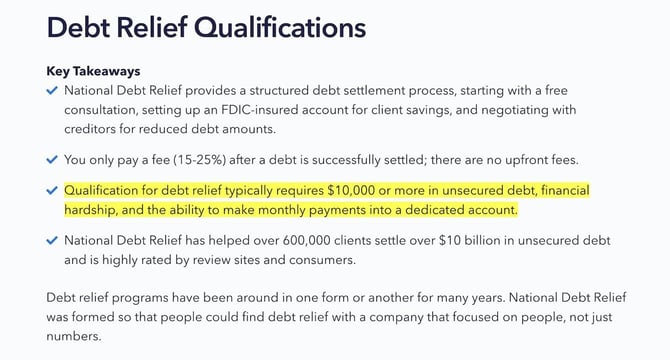
At first, I couldn’t find many details about who may qualify for National Debt Relief, but after a quick search, I navigated to a qualification section that lays it out more clearly.
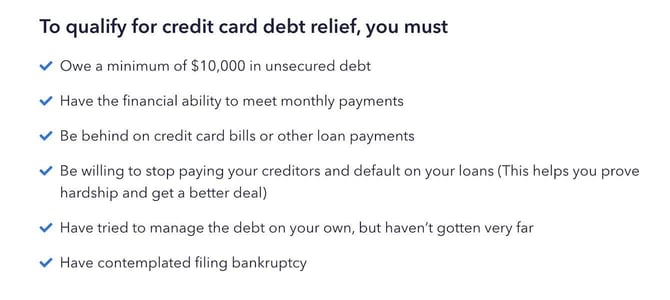
National Debt Relief can also help if you are struggling with debt due to a financial hardship like divorce, a spouse’s debt, or a job loss. But ultimately, the company needs to see that you can make the reduced monthly payments before you use its services.
Here’s a screenshot of the qualifications I was able to find:
I also checked where National Debt Relief services are available, and not everyone in the U.S. can use this service. The company doesn’t operate in Connecticut, Oregon, Vermont, West Virginia, or Wisconsin.
If you don’t end up qualifying for its services, National Debt Relief may provide you with resources and alternative options, whether you’re thinking about debt consolidation, bankruptcy, or consumer credit counseling.
Who Should Consider Working With National Debt Relief
Working with a debt relief service shouldn’t be taken lightly. National Debt Relief aims to help you negotiate with creditors and eliminate debt, but it shouldn’t be your first option.
Before enrolling in debt relief, you should try other solutions like budgeting, increasing your income to pay down debt faster, and perhaps even talking to creditors on your own. If you’ve done all of those and are still struggling, you may benefit from debt relief.
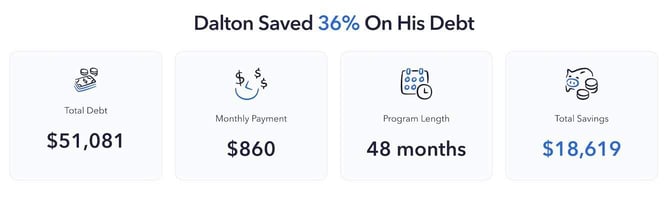
National Debt Relief’s client stories offer a detailed look at their debt and savings.
National Debt Relief is one of the best and most well-known services on the market, so if you’re looking for a credible company, this is it. If you’re overwhelmed with debt or facing financial hardship that may take a long time to climb out of, a debt relief service can come in handy.
I’d also say this company is worth looking into if you’re okay with spending plenty of time paying down your debt at a reduced rate. So, you need to be patient and ready to follow a repayment plan for two to four years.
Debt relief won’t happen overnight, but it’s also better to become debt-free after two or three years than letting your balances unravel and falling so far behind that even worse options are on the table.
How Debt Relief Impacts Credit Scores
One of the biggest downsides of working with a company like National Debt Relief is that you will have to stop paying creditors when you start its plan and pay into the dedicated amount instead.
Your credit score will likely fall as a result, but it may not go down that much if you’ve already been struggling to make payments or have fallen behind on payments.
It depends on your current credit score and your personal situation. Once you stop making payments on your debt, your creditors could close your accounts or send them to collections, which could also negatively impact your credit score.
But your debt expert at National Debt Relief will be negotiating with them on your behalf to reach a settlement amount. Some negotiations may be quick, while others could take longer.
Here’s a timeline of derogatory events that could impact your credit after you stop making payments:
Timeline of Late Payment Impacts
30-59 Days Late
60-179 Days Late
180+ Days Late
Bank will charge another late fee
Bank continues to charge late fees
Account closed
Penalty APR likely goes into effect
Your account may be closed
Debt sold to collections agency or other debt buyer
Account reported to the major credit bureaus as late
Accounts later than 90 days considered seriously delinquent
Bank may sue you
Your credit score will start to drop
Account may go to collections
Defaulted account remains on your credit report for seven years
I wanted to get an estimate of how much credit impact consumers could expect, and I found a post from National Debt Relief that provided more insight.
According to the post, once a debt settlement shows up on your credit report, your score could drop by 100 points or more. But if you filed for bankruptcy, you’d probably see this drop double.
Your credit score could be affected for a few months to a few years, depending on how you repay your debt and start rebuilding to positive credit history.
But National Debt Relief is a long-term solution, and its goal is to help you get free from debt and improve your finances. If you follow the plan, in time, that drastic credit score drop can turn around.
Pros and Cons of National Debt Relief
After my thorough review of the website, here are my general takeaways:
Pros
You can start with a free consultation to see if you qualify without paying any fees.
You only pay a fee once a settlement is reached with your creditors, which means no upfront fees.
Several types of debt are accepted, including credit cards, medical bills, and personal loans.
Cons
National Debt Relief charges up to 25% of the total enrolled debt, which can add up for large amounts.
Your credit score will likely decrease since you need to stop paying your creditors.
Most people spend 2 to 4 years completing the program, so it’s not a quick fix.
Alternatives to National Debt Relief
It’s wise to find some alternative options when you’re trying to determine if a service is best for you. That way, you can see what they have in common and where they differ to make sure you’re choosing the best option for your situation.
Here are two companies with similar offerings that you may want to consider alongside National Debt Relief:
Freedom Debt Relief
Freedom Debt Relief offers a very similar service that starts with a free consultation.
It also only charges a fee once your debt has been negotiated and you enroll in one of its plans.
The fee may be lower, ranging from 15% to 25% of your enrolled debt.
Freedom Debt Relief may recommend other services, such as personal loans, HELOCs, credit counseling, or even bankruptcy.
So your experience may not be as straightforward as it is with National Debt Relief.
It can help people pay down the same types of debt as National Debt Relief, but it takes the average person three to five years to pay down their debt through a negotiated plan.
Instead of a percentage-based fee, InCharge Debt Solutions charges an average monthly fee of around $34, depending on where you live and what type of debt you have.
There’s also a one-time set-up fee of around $52.
Would I Recommend National Debt Relief?
If you’re at a place where you’re considering debt relief, your options might already be limited. So, it could be insightful to check out National Debt Relief’s free consultation and ask questions to see if the pros outweigh the cons.
National Debt Relief doesn’t charge anything upfront, and you don’t have any obligation to move forward with a plan that is presented to you. That’s enough to recommend using it.
National Debt Relief’s fees can be high, and you need at least $7,500 in debt to qualify. I’d recommend at least comparing it with other options to ensure you’re getting the most value for your debt balance.
Advertiser Disclosure
BadCredit.org is a free online resource that offers valuable content and comparison services to users. To keep this resource 100% free for users, we receive advertising compensation from the financial products listed on this page. Along with key review factors, this compensation may impact how and where products appear on the page (including, for example, the order in which they appear). BadCredit.org does not include listings for all financial products.
Our Editorial Review Policy
Our site is committed to publishing independent, accurate content guided by strict editorial guidelines. Before articles and reviews are published on our site, they undergo a thorough review process performed by a team of independent editors and subject-matter experts to ensure the content’s accuracy, timeliness, and impartiality. Our editorial team is separate and independent of our site’s advertisers, and the opinions they express on our site are their own. To read more about our team members and their editorial backgrounds, please visit our site’s About page.
National Debt Relief
★★★★★ 4.9/5.0
4.9/5.0
About this rating
BadCredit.org’s debt relief ratings are based on our experts’ evaluation of important key factors including the cost, reputation, and estimated payoff timelines. We also evaluate customer experience, program flexibility, and success rates. Our ratings are unbiased and regularly updated.
Information Warranty & Disclosure: Great efforts are made to maintain reliable data on all offers presented. However, users should check each provider’s official website for updated terms, details and conditions for each offer before applying or signing up. Our site maintains strict terms of service and may accept compensation for paid ads or sponsored placements in accordance with these terms. Users must be at least 18 years of age to be eligible for financial offers as per the terms presented on provider websites.
* FICO scores/credit scores are used to represent the creditworthiness of a person and may be one indicator to the credit type you are eligible for. However, credit score alone does not guarantee or imply approval for any financial product.