I Analyzed the Flare Account to See if High-Yield Savings Can Offset Its Fees
The math works out for some people. Whether you're one of them takes some digging.
By: Jon McDonald
Jon McDonald
With more than 15 years of journalism expertise, Jon stays apprised of finance trends, influential companies, and financial literacy resources for subprime consumers. He is most knowledgeable in the areas of budgeting, loans, and responsible credit use, and his articles have appeared in publications produced by The New York Times.
Lillian brings more than 30 years of editing and journalism experience, having written and edited for major news organizations, including The Atlanta Journal-Constitution and the New York Times. A former business writer and business desk editor, Lillian ensures all BadCredit.org content equips readers with financial literacy.
Ashley has managed content strategy for BadCredit since 2015, partnering with major banks, financial institutions, and media outlets to deliver authoritative personal finance content. Her expert credit card commentary has appeared in top national publications, including CNBC, MarketWatch, Investopedia, Yahoo Finance, and Reader's Digest, establishing her as a trusted voice in the industry.
Disclosure: When you apply through links on our site, we often earn referral fees from partners. For more info, see our ad disclosure
Advertiser Disclosure
BadCredit.org is a free online resource that offers valuable content and comparison services to users. To keep this resource 100% free for users, we receive advertising compensation from the financial products listed on this page. Along with key review factors, this compensation may impact how and where products appear on the page (including, for example, the order in which they appear). BadCredit.org does not include listings for all financial products.
and review policy
Our Editorial Review Policy
Our site is committed to publishing independent, accurate content guided by strict editorial guidelines. Before articles and reviews are published on our site, they undergo a thorough review process performed by a team of independent editors and subject-matter experts to ensure the content’s accuracy, timeliness, and impartiality. Our editorial team is separate and independent of our site’s advertisers, and the opinions they express on our site are their own. To read more about our team members and their editorial backgrounds, please visit our site’s About page.
.
When I started my writing career a long time ago, I wanted to open a bank account for my freelancing LLC. First, a local bank gave me the side eye, all but accusing me of only being there for the signup bonus (couldn’t it be both?). Next, I went to a mid-size bank but was declined due to an administrative issue with an old account at another bank.
Eventually, I got that sorted out and, with a clean file, I was approved by a large national bank. While my struggles to open an account were thankfully short-lived, I can certainly empathize with those having a hard time.
If you’re struggling to open an account at mainstream banks, digital alternatives like the Flare Account could be worth a look.
The Flare Account lets you access basic banking features, including a high annual percentage yield (APY) on savings. While it does carry higher fees than a traditional checking account, its accessibility and perks could make it the perfect account for you to start with.
I’m here to give it to you straight about the pros, cons, and costs of the Flare Account. And if you make it to the end, you’ll have a good idea of who the account is for, and if you can benefit from it.
What to Expect With the Flare Account
The Flare Account is a deposit account that’s mainly offered via ACE Cash Express, a payday loan provider. But since it is not technically a bank, they’ve partnered with Pathward, which is an FDIC-insured bank. Pathward’s Netspend division handles the Flare Account‘s card technology.
The Flare Account is a checking and optional savings account designed for those who are unbanked or underbanked. This is often due to past financial mistakes that keep them from getting approved at traditional banks.
BadCredit.org’s bank account ratings are based on our experts’ evaluation of fees, deposit requirements, and account features. We also consider accessibility, customer service, and account flexibility. Our ratings are unbiased and regularly updated.
★★★★★
4.2
Monthly Fee
Minimum Deposit
Minimum Balance
Reputation Score
$5.00 or $9.95
$0
$0
7.5/10
People cashing their paychecks or getting loans at ACE Cash Express locations often fall outside the traditional financial system, so the Flare Account provides a way back into a more formalized deposit account.
The Flare Account is essentially a hybrid between a digital and traditional bank account.
Like some other digital accounts, particularly from neobanks, the account features are simple. You do gain some basic banking functionality that others may take for granted, such as the ability to receive direct deposits, use a debit card, and transfer money via your phone.
The main account is essentially a checking account, and you also have an option to add a high-yield savings account.
At the same time, being backed by ACE Cash Express gives the Flare Account some other traditional bank functionalities.
While ACE Cash Express is not an FDIC-insured bank (that stems from the Pathward partnership), and there are no traditional banking services like mortgage underwriting or investment management, you can still make in-person transactions at their physical locations.
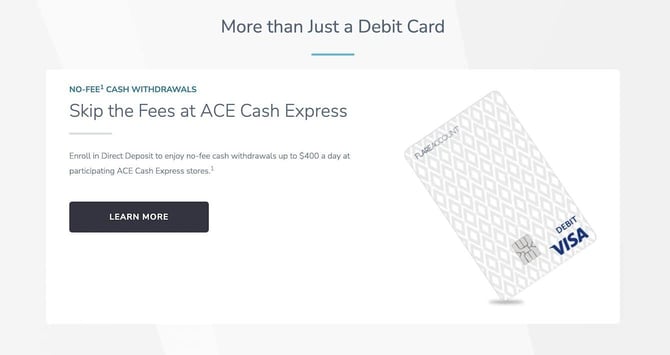
In particular, ACE Cash Express touts allowing for up to $400 per day in fee-free cash withdrawals at its locations (for customers with eligible direct deposits).
While that accessibility and flexibility are great, you’ll also want to watch out for the other costs and fees associated with the Flare Account, some of which are higher than those of many competing banks.
There are some ways to keep those fees down, as we’ll examine in this guide, but if you do open a Flare Account, you want to understand all the costs and fees so you can determine if it’s worth it.
Breaking Down the Cost
While the Flare Account certainly expands banking access, it can come at a price. The Flare Account has a monthly service fee, along with fees for other common services, including using ATMs.
If you’re not careful, these fees can add up to a sizable chunk of change. But let’s take a look at the Flare Account‘s fees (and how you may be able to avoid them).
How the Monthly Fee Works
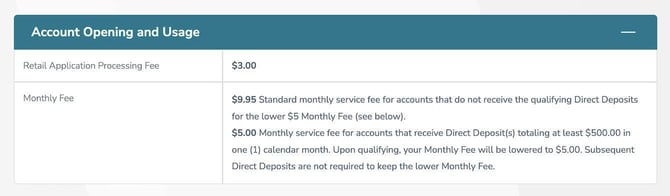
As a baseline, the Flare Account charges a $9.95 monthly service fee. However, that drops down to $5 if you receive a minimum total of $500 in direct deposits per month.
There’s no way to fully avoid the monthly fee, but if you can reduce it from nearly $120 to $60 a year, that could be worth it for a bank account that gets you in (or back in) the financial game.
And full transparency, some other banks either have no fees from the get-go or let you qualify for $0 monthly maintenance fees with qualifying deposits or transactions.
Interestingly, the Flare Account also makes getting, and maintaining, the discount a little easier. That’s because once you hit the $500 direct deposit threshold in a single month to qualify for the $5 rate, you keep the lower fee and don’t need additional qualifying direct deposits to maintain it.
And depending on how you open the Flare Account, you may need to keep another fee in mind. While applying online is free, opening a Flare Account in person at an ACE Cash Express store carries a $3 retail application processing fee.
So, you definitely want to apply online if possible.
ATM and Other Fees
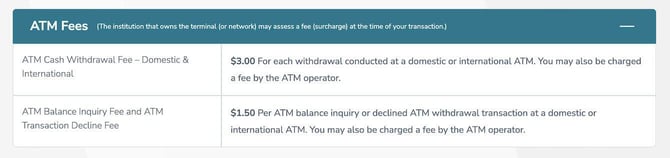
Another fee that can add up is the $3 ATM withdrawal fee, which is in addition to any fees the ATM operator might charge you.
This account treats all ATMs as out-of-network ATMS, but it does allow you to take out cash without a fee at ACE Cash Express locations, as we’ll dive into more later.
Also, you might be able to use your debit card at retailers that offer a cash back option — not specific to the Flare Account, just in terms of using general cash back capabilities, where retailers charge your debit card for a higher transaction amount and give you the difference in cash.
Still, that may not always be as convenient as using an ATM.
There’s also a $1.50 fee for an ATM balance inquiry or a declined ATM transaction, too. So if you do need to take out cash, you can just check the mobile app to see your balance.
Besides these ATM fees, monthly maintenance fees, and account opening fees, the Flare Account also has a couple of others to keep an eye out for:
$3 for a non-ACH money transfer of $20+, initiated by a third-party service (like Venmo or CashApp), or $1.50 per transaction that’s less than $20
$1.50 per declined ACH transfer or preauthorized payment
So, if you use this account, you need to be mindful of all the potential fees, beyond the headline monthly service fee. And a little planning can help you avoid almost all of them.
Debit Card Overdraft Service
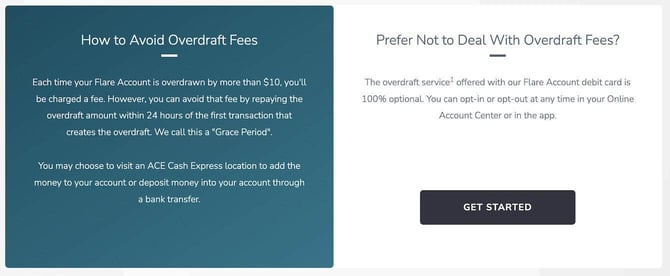
The Flare Account‘s Optional Debit Card Overdraft Service provides you with up to $10 in free overdraft protection. But it isn’t included when you sign up; you’ll need to opt in if you want it.
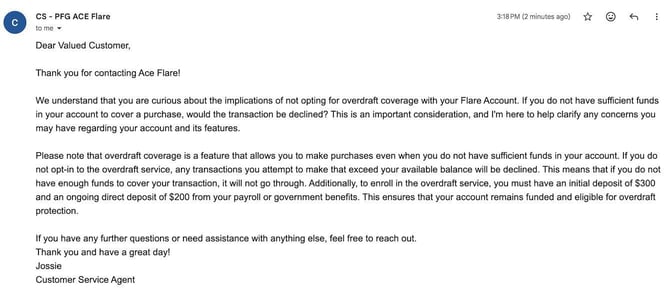
If you choose not to opt in, any debit card purchase that would put you over your balance would be declined.
If you opt into the service and overdraft by anything more than $10, you’ll pay $20 per overdraft transaction, up to five times per month. However, you do have 24 hours to get your balance back to at least $0 after overdrafting to avoid those fees.
If you find yourself overdrafting on occasion, that can get expensive quickly. The service also has some direct deposit eligibility requirements, so make sure to read the fine print before you sign up, because it could end up hurting more than helping.
Benefits & Perks of the Flare Account
While the Flare Account has its share of fees, there are also several benefits to weigh. In particular, if you’re rebuilding your finances, the account gives you some ways to make the most of your money.
While you have the Flare Account, you’ll have access to perks like:
The 6.00% APY Tier
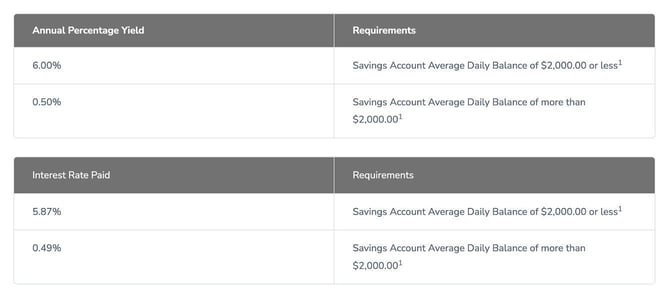
One of the most compelling reasons to open a Flare Account is to access the 6.00% APY for the optional savings account you can open. To qualify, you need direct deposits totaling at least $500 within one calendar month.
Then, you can earn 6% on up to $2,000. Past $2,000, your balance only earns a 0.50% APY.
So, you need to do the math to see what makes sense. If you save more than $2,000, and other banks are an option, then you might earn more — even if they have a lower headline APY.
For example, a bank with a 4% flat APY for savings would pay $200 in interest per year on a $5,000 balance. In a Flare Account, your first $2,000 in savings would pay out $120. But on the next $3,000, you’d make just $15, with total interest stacking up across the full balance to $135.
Yet if you had exactly $2,000, the Flare Account would come out ahead on interest ($120 at 6% vs. $80 for a 4% APY).
However, you also have to factor in fees. A bank with no monthly maintenance fee might also come out ahead even with a lower APY. Because even if you qualify for the lower Flare Account monthly fee of $5, that means you’d pay $60 per year, cutting the $120 in interest on a $2,000 balance effectively in half.
Also, note that the core account — basically the checking account instead of the savings — only pays a 0.01% APY.
No-Fee Cash Access at ACE
Another unique benefit of the Flare Account is that you can use your linked debit card to withdraw up to $400 in cash daily, without any fees, at participating ACE Cash Express locations, of which there are 750+ in the U.S.
To be eligible, you just need to have made a direct deposit within the past 35 days leading up to the withdrawal.
This feature gives the Flare Account more of a traditional bank account feel, like how you might go to a bank teller to withdraw cash. Still, the Flare Account does lack the convenience of free ATM access.
Payback Rewards & Early Cash Deposits
Another optional feature that could help offset some fees is Payback Rewards, which gives you cash back offers for certain purchases. You can activate these offers (specific to your account) when you access it through the mobile app or the Online Account Center.
The rewards vary based on your spending, but if you were going to make certain purchases anyway, it could be a nice bonus. Just don’t fall into the trap of buying something just because you get rewards — you want to maximize every dollar in your Flare Account.
Setting up direct deposit with the Flare Account also comes with the benefit of getting paid up to two days earlier. That’s possible because of how direct deposit works within the U.S. banking system.
Basically, Pathward (the FDIC-member bank behind the Flare Account) gets notified that a direct deposit, such as from your employer or a government agency, is on its way to your account by a specific date.
Because Pathward knows the deposit is coming, it may decide to essentially front you the money early. However, this early cash deposit isn’t guaranteed, so you may not know if you qualify until you have the account.
Charity Debit Cards
One big area where the Flare Account distinguishes itself is letting you choose from several debit cards that give back to charity. This provides a nice perk for using your debit card, and it doesn’t cost you anything.
While the individual donation amounts are relatively small, they aggregate from all customers with the same card. For each $100 in debit card spending, ACE Cash Express donates $0.05, up to a maximum of $200,000 per year, to charities including Homes For Our Troops, Humane World for Animals, and AdoptAClassroom.org.
Netspend also links up with ACE Cash Express for cards supporting the National Breast Cancer Foundation, providing a higher total annual donation maximum of $350,000.
While you can choose a non-charity-supporting debit card, there’s no difference in features besides the donations and the card design.
Account Management Tools & User Experience
The Flare Account offers in-person and online banking options, so your user experience depends on whether you visit ACE Cash Express physical locations or mainly use the online features.
Overall, though, the Flare Account‘s tools provide a simple banking experience, rather than a complicated one.
Mobile App & Dashboard
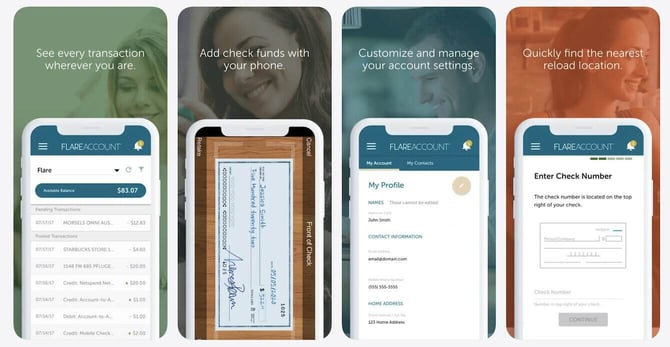
The Flare Account mobile app, available on both iOS and Android devices, lets you handle just about everything you need to do with your account, including depositing checks, reviewing your balance and transactions, paying bills, and transferring money.
You can also manage your account through the Online Account Center, which seems to be a bit easier for setting account alerts or reporting your debit card lost or stolen.
Through the app or online account dashboard, you can instantly send money to and receive money from other Flare Accounts for free using what’s called your FlashPay ID.
However, since many people use other banks, this may not be practical for most. There’s no Zelle integration, and if you try to transfer money instantly (not through ACH) through a third-party service like Venmo, linked to your Flare Account, you’ll pay a fee.
Customer Support & Service
You can access automated customer support 24/7 on the phone, or there’s live support from 8 AM to 10 PM CT Monday through Friday, and 8 AM to 8 PM CT Saturday and Sunday.
Email-based support from Netspend is available through your online account, and there’s a customer service mailing address in Austin, Texas. Another option is to visit an ACE Cash Express store for in-person help.
I sent an email to customerservice@aceflareaccount.com with a question about opting in to overdraft coverage. I received a quick reply telling me that a representative would respond as soon as possible.
A little over four hours later, I got a very detailed response from a customer service agent named Jossie. The answer was very thorough, and a little over four hours isn’t that long to wait, especially for a reply via email.
I tried contacting customer support by phone to ask a question about the Flare Account‘s overdraft coverage, but I found that the number is reserved only for people who have the account. None of the menu options allowed me to get through without having an account number — or falsely stating I had lost or stolen my card.
Transparency & Trust
The Flare Account is transparent about its terms and fees, with its fee schedule clearly published on its website and its terms and conditions readily available.
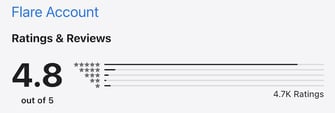
As for customer reviews, the Flare Account has a solid 4.8 out of 5 stars on the Apple App Store and 4.1 out of 5 stars on the Google Play Store, with nearly 10,000 reviews combined.
Elsewhere, reviews were mixed, with one common complaint being a potentially oversensitive fraud detection system. I saw a number of reports of accounts being unexpectedly locked or closed, especially when traveling.
Fraud detection is an important part of what the Flare Account offers, but it can be frustrating when it affects you. Overall, though, I’d rather have an overly sensitive fraud detection system than a lax system.
What You Need to Qualify
As an account geared toward those who are unbanked or underbanked, qualifying for the Flare Account is relatively easy.
There are no minimum opening balance requirements or credit minimums. The main necessities include:
Being at least 18 years old
Being a U.S. citizen or permanent resident
Having a Social Security number
Having a valid U.S. address that’s not a P.O. Box
As part of the USA Patriot Act, you may be required to show additional documentation to verify your identity, such as your driver’s license.
If, for any reason, your identity can’t be verified, then you might not qualify for an account.
For the most part, though, anyone who meets these basic requirements can open a Flare Account.
How to Sign Up (A Step-by-Step Guide)
Along with being easy to qualify for, it’s generally quite simple to sign up for a Flare Account.
While you can sign up in person at ACE Cash Express locations, that would incur a $3 application fee. But you can apply for free online through its one-page application.
Step 1: Click “Get Started”
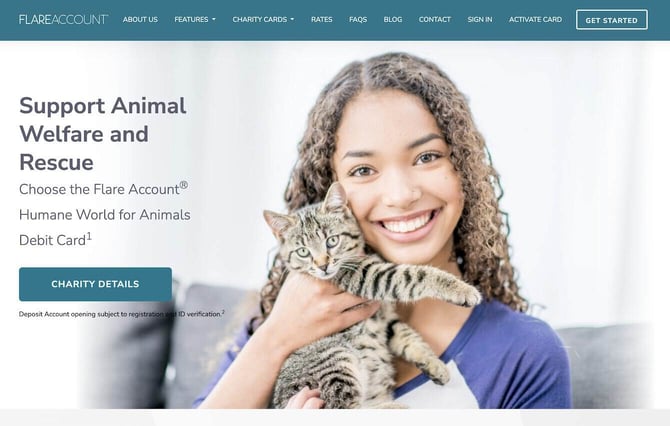
I clicked the “Get Started” button on the top right of the home page. But you’ll see the same button a lot on the Flare Account site, and they all lead to the same application.
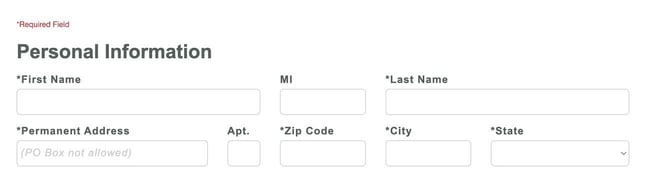
Step 2: Name and Address
That then took me to a new landing page, where it asked me for basic personal information, including my first and last name, and my address.
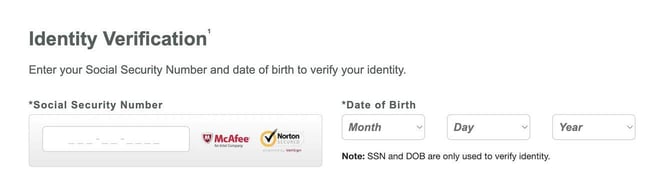
Step 3: Identity Verification (SSN and Birth Date)
Next, for the main identity verification section, the application asked for my Social Security number and date of birth.
It’s not even an option to select a date of birth for someone under 18, so minors and their parents should consider other banks that have accounts geared for them.
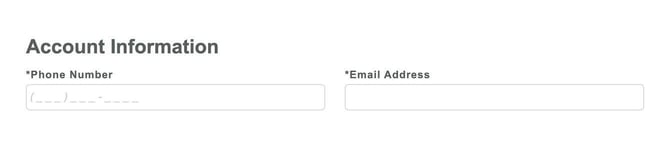
Step 4: Phone Number and Email Address
Next, as part of setting up the account, the application asked for my phone number and email address.
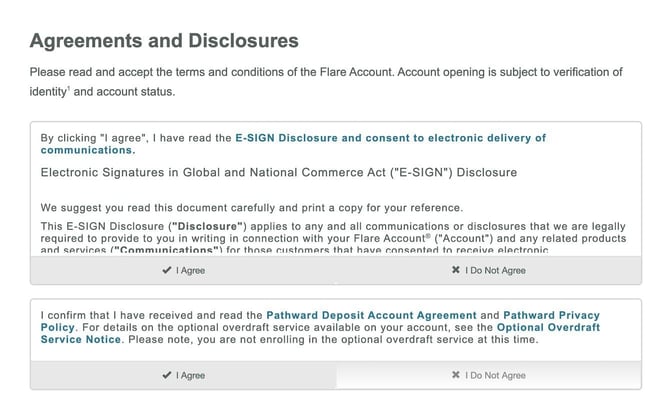
Step 5: Agreements and Disclosures
Perhaps the longest part of the application process then comes from the Agreements and Disclosures section, which includes an e-sign disclosure and consent to electronic delivery of communications, along with agreeing to Pathward’s deposit account agreement and privacy policy.
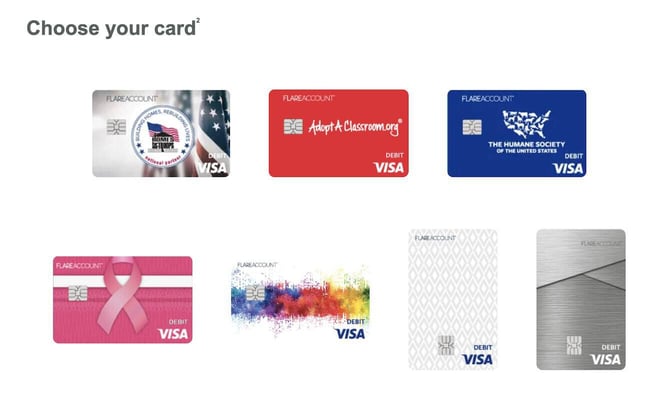
Step 6: Choose Your Card Design
Lastly, before submitting the application, it asks me to choose my debit card design. It gives me the option to choose from one of its five charity cards, or two other cards with simpler designs, which don’t support any charities.
After that, assuming your application goes through successfully, you should receive your debit card within 7-10 business days.
Who Should (and Shouldn’t) Consider a Flare Account
While the Flare Account isn’t for everyone, people in some common financial situations might find this type of account accessible and beneficial.
If you’re having trouble opening a bank account or if you’ve had some financial missteps in the past that have caused you to get turned down by other banks, the Flare Account can provide you with a solid option.
It offers up to 6% APY on balances up to $2,000, which can be helpful for those who are getting started with savings. Just be sure to understand how the fees work and how to avoid them.
Even though the 6% APY for savings might draw some people in, the rate drops to 0.5% on balances above $2,000, making it less attractive for anyone who plans to keep anything above that in the account.
And if you deposit or withdraw a lot of cash, especially at places other than ACE Cash Express locations, you may want to consider another account because you’d face a lot of additional fees.
Pros and Cons
The Flare Account is easy to open and offers perks like high-yield savings, but the fees and restrictions could outweigh the benefits.
Pros
Easy to qualify for
Withdraw up to $400 without fees at ACE Cash Express locations
Attractive APY on up to $2,000 in savings
Cons
Unavoidable monthly maintenance fee of at least $5
No fee-free ATMs
The Flare Account also comes with all sorts of other small but potentially frustrating fees that can add up, like for declined transactions or third-party money transfers. And overdrafting gets expensive quickly too, although this is an optional feature you could just not activate. But even if you end up avoiding most fees, it’s probably not a great experience feeling like a little misstep can lead to extra charges.
Alternatives Worth a Look
Sizing up the competition always helps, especially when you’re deciding between banking options. So, here are some other accounts worth considering that also cater to people who may have issues with traditional bank accounts.
GO2bank™ — Better for Waiving Monthly Fees
This is another online-only account that serves a similar audience to the Flare Account. On the plus side, GO2bank™ generally has lower fees, including the ability to waive the monthly maintenance fee with qualifying direct deposits.
Overdraft protection up to $300 with opt-in and eligible direct deposit*
No monthly fees with eligible direct deposit, otherwise $5 per month
Earn up to 7% cash back when you buy eGift Cards in the app
Get your pay up to 2 days early – Get your government benefits up to 4 days early.*
High-yield savings account, 4.50% APY paid quarterly on savings up to $5,000.*
*Terms and conditions apply. GO2bank™ cards are issued by Green Dot Bank, Member FDIC, pursuant to a license from Visa U.S.A., Inc. Visa is a registered trademark of Visa International Service Association. Overdraft fees may apply. Click Apply Now to learn more.
It also includes credit-building features like a secured credit card you can link to the account. One big difference is that it offers only 4.50% APY on its savings accounts (although the limit is $5,000). If you plan to have closer to $2,000 in your account, the Flare Account could be a better choice.
Chime® — Better for Fee-Free ATM Access
Chime® is a fintech company that partners with FDIC-insured banks, similar to how the Flare Account operates. In general, Chime® is more affordable than the Flare Account, as it has no monthly maintenance fees, no overdraft fees, and tools to help build your credit.
Your Chime® Checking Account comes with a Visa® Debit Card, no monthly fees or minimum balance fees.
Over 47,000 fee-free ATMs¹ — more than the top 3 national banks combined!
Get paid up to 2 days early with direct deposit, terms apply.²
Chime will spot you up to $200 on debit card purchases and cash withdrawals with no overdraft fees. Eligibility requirements and limits apply.³
Chime is a financial technology company, not a bank. Banking services and debit card provided by The Bancorp Bank, N.A. or Stride Bank, N.A.; Members FDIC.
¹Out-of-network ATM withdrawal and over the counter advance fees may apply.
²Early access to direct deposit funds depends on the timing of the submission of the payment file from the payer. We generally make these funds available on the day the payment file is received, which may be up to 2 days earlier than the scheduled payment date.
³Chime SpotMe is an optional service that requires a single deposit of $200 or more in qualifying direct deposits to the Chime Checking Account at least once every 34 days. All qualifying members will be allowed to overdraw their account up to $20 on debit card purchases and cash withdrawals initially, but may be later eligible for a higher limit of up to $200 or more based on member’s Chime Account history, direct deposit frequency and amount, spending activity and other risk-based factors. Your limit will be displayed to you within the Chime mobile app. You will receive notice of any changes to your limit. Your limit may change at any time, at Chime’s discretion. Although there are no overdraft fees, there may be out-of-network or third-party fees associated with ATM transactions. SpotMe won’t cover non-debit card transactions, including ACH transfers, Pay Anyone transfers, or Chime Checkbook transactions. See Terms and Conditions.
While Chime® offers many attractive features, it seems to be shifting more toward traditional banking, with lots of advanced features that might overwhelm some consumers. Plus, as it becomes more mainstream and rolls out more features, some of those are exclusive to higher-income customers.
Would I Recommend the Flare Account?
I would recommend the Flare Account as a banking option for anyone who can’t get an account at a traditional bank or who is just starting out and wants digital convenience with a little in-person service mixed in.
But I’d also caution anyone considering this account to take a look at how they deposit and spend money. That’s because your financial habits will likely determine how much you pay in fees with the Flare Account.
If you meet the minimum deposit threshold and don’t ever deal in cash, you may find that the $5 monthly fee is reasonable and worth it. But if you deal in cash, don’t receive direct deposit, and have a history of overdrafting, this account could drain your funds.
Much like any financial product, whether or not the Flare Account is best for you depends entirely on how you’ll use it.
Flare Account
★★★★★4.2/5.0
Flare Account
4.2/5.0
About this rating
BadCredit.org’s bank account ratings are based on our experts’ evaluation of fees, deposit requirements, and account features. We also consider accessibility, customer service, and account flexibility. Our ratings are unbiased and regularly updated.
Information Warranty & Disclosure: Great efforts are made to maintain reliable data on all offers presented. However, users should check each provider’s official website for updated terms, details and conditions for each offer before applying or signing up. Our site maintains strict terms of service and may accept compensation for paid ads or sponsored placements in accordance with these terms. Users must be at least 18 years of age to be eligible for financial offers as per the terms presented on provider websites.
* FICO scores/credit scores are used to represent the creditworthiness of a person and may be one indicator to the credit type you are eligible for. However, credit score alone does not guarantee or imply approval for any financial product.