

Writer: Andrew Allen


Editor: Lillian Guevara-Castro


Reviewer: Adam West

Key Takeaways
Nothing is certain except death and taxes — or so said Benjamin Franklin, one of the founding fathers, in a letter he wrote in the late 1700s.
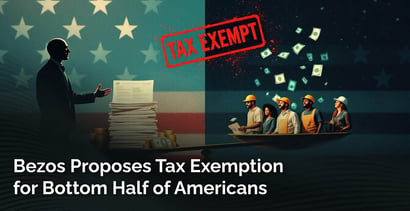
But if it were up to Jeff Bezos, Amazon Founder and Executive Chairman, Americans would not have to pay income taxes every year. In a conversation last week on CNBC, the entrepreneur said that the bottom half of earners in the U.S. shouldn’t pay federal income taxes.
Some will likely brush off the idea as the unrealistic brainchild of a powerful billionaire, but Bezos raised some thought-provoking points in explaining his position.
During the discussion, he said that the bottom half of taxpayers pay about 3% of federal income tax revenue while the top 1% pay roughly 40% of it.
“When people are starting out, and they’re struggling, stop taxing them,” Bezos said. “We don’t need it. We live in the wealthiest country in the world. America is the greatest country in the world. This is the best time to be alive in America because access to capital is so easy right now.”
Bezos indicated that the U.S. doesn’t need tax revenue from people who are just starting out and struggling.
The country’s higher earners may be in a much better position to afford their annual tax bills than those in the lower half of the income distribution.
Taxpayers in the bottom half had adjusted gross income under approximately $53,800 in 2023, according to recent Internal Revenue Service data. Meanwhile, the top 1% had adjusted gross income of $675,602 or more.
Not paying federal income taxes each year may be just the ticket that people with lower salaries need to keep pace with rising costs in the U.S. Gas prices have soared by more than $1.25 compared to where they were at the same time last year, according to AAA.
And buying a first home is so out of reach for many people that they’d consider taking out a 50-year mortgage if it were available.
Younger people in the market for a new home would also consider dipping into their retirement accounts to afford a house, according to a new TD Bank survey.
Lower Taxes Could Ease Debt Burdens
Federal income taxes can strain household budgets. Bezos said that income taxes that lower earner pay each year aren’t a large amount, from the government’s perspective.
But for some people, they can mean staying on top of debts rather than falling behind.
Managing debt is a significant problem for many U.S. borrowers. As of September 2025, Americans owe more than $18.5 trillion in overall debt, according to a new report from Experian. That figure is 3.5% higher than where total debt levels stood at the same point in 2024.
If people with lower incomes were able to sidestep paying certain taxes, they could use those funds to pay down debt, potentially boosting their credit profile in the process. And borrowers who can improve their credit may find they have an easier time accessing some of that capital Bezos spoke of.
Bezos has accumulated significant personal wealth and has experience managing substantial resources.
Net Worth of Jeff Bezos
as of May 27, according to Forbes
According to Forbes, Bezos has the fourth-largest fortune in the world with more than $276 billion. He only trails Elon Musk and Google co-founders Larry Page and Sergey Brin in that category.
But Bezos isn’t alone in his call for changes to America’s tax system that could benefit people with lower incomes. Senator Cory Booker (D-NJ) announced a proposal earlier this year, the Keep Your Pay Act, which could bring tax relief to many consumers.
The proposal would raise the standard deduction to $75,000 for married couples filing jointly.
Booker posted on his website said the proposal would cut the taxes of the median American family by approximately 85%. Booker suggested that such a proposal would have a major impact on working families.
“This tax cut would immediately put more money in your pocket every month to deal with the high price of everyday expenses, an unexpected emergency, or to plan for the future,” Booker said.
It’s too early to tell whether the tax ideas from Bezos or Booker will gain supporters. But people with relatively low incomes and poor credit are likely to welcome more discussions about potential tax relief.
“It’s part of our job as citizens and as business leaders to share our ideas,” Bezos told CNBC. “And this one would actually help people.”


