



Opinion: For Lenders, a Hard ‘No’ Is Costing Future Customers


Writer: Erica Sandberg


Editor: Lillian Guevara-Castro


Reviewer: Adam West

Rejection is a painful experience for hopeful borrowers. It can be the right decision, though. A stream of late payments, recent defaults, insufficient credit history, and overwhelming debt doesn’t exactly inspire confidence in lenders.
For people who are having trouble managing their existing accounts, not taking on another obligation until underlying issues are sorted out is usually in their best interest.
These are the very people who need to know that a denial isn’t necessarily a forever decision. The wrong approach can lead to discouraged borrowers — consumers who stop applying for loans and credit cards because they expect to be turned down. Past experiences and pessimism have soured them on the entire lending process.
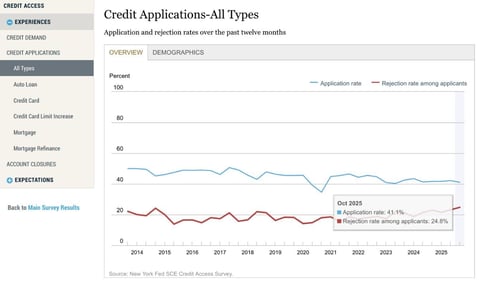
The current level of denials is alarming. According to the October 2025 Federal Reserve Bank of New York’s Survey of Consumer Expectations Credit Access, the overall rejection rate for any kind of credit reached a new high of 24.8% over the past 12 months.
And the share of discouraged borrowers shot up to 8%, well above the 6.6% in October 2024.

These are the people you as credit issuers want to help. Instead of a “no,” consider a “not right now” response with a tailored plan of action. When borrowers achieve credit health and confidence, they may not hesitate to return to you when they’re ready to try again.
Reframe Rejection
Even when only the applicant is privy to a credit denial, the emotional response can be demoralization and embarrassment. Those rejections can feel personal, and lead the person to avoid approaching you even when they’re in a better position. When they’re creditworthy, they may go to another lender instead.
In fact, a Nerdwallet survey found that 70% of people who were turned down for a credit card said they would not apply for another credit card or credit product from the same bank that rejected them.
That makes the initial messaging so important. Do you want borrowers to come back when they do qualify? If so, say so. The response doesn’t have to be overly sweet, but it should be kind and optimistic.
Offer Clear, Achievable Remedies
The Equal Credit Opportunity Act stipulates that lenders must provide a reason for a denial and the Fair Credit Reporting Act requires an adverse action notice if the decision is based on credit report information. But those messages can feel punitive and like a list of what a borrower has done wrong.
Lenders can go steps further with concise suggestions on what borrowers can do right.
For example, maybe you want the person to have six months of on-time payments on their credit reports, a credit score of at least 620, or a paid off collection account. Whatever it is, make it clear so the person can pursue a concrete goal.
Keep in Touch and Cheer Them On
Change doesn’t happen overnight, so reach out to the borrower with occasional correspondence via email or text.
Inquire about their progress, ask if they have any questions for you. Offer to help with information or with any credit building tools you may have or that they can access. This way they know you’re out there and are open to a credit relationship in the future.
Connect to Credit Counseling
Sometimes indebted people need extra assistance from the professionals. Make sure they know that excellent and free help is available. Both the National Foundation for Credit Counseling and the Financial Counseling Association of America are excellent resources for anyone needing a helping hand.
As a former credit counselor, I know that the people who work for these agencies are dedicated and knowledgeable. When the person’s aim is to transition from a bad credit risk into a good one, the counselor can provide an individualized road map.
Present Attractive Accounts as Alternatives
Obviously premium credit products are not going to be appropriate for everyone. So after a person is rejected for one type, presenting them with another that they do qualify for can lessen the sting of leaving empty-handed.
Do you offer secured credit cards, small loans, or products specifically designed for credit building? Even if such starter accounts aren’t part of your suite of options, you may still suggest one as an invitation to return for the one loan product they wanted.
Don’t Lose People Who Want You
When a person is denied a loan or credit card, they can feel lost. What will they do now? Should they stop trying entirely and suffer the consequences?
A 2025 Credit Denials Survey from Bankrate found that the majority of denied applicants said the rejection negatively impacted their finances, with 22% saying rejection increased their stress levels about the state of their finances.
As a lender, you certainly don’t want to discourage people who came to you for a credit product. They may not be right for an account now, but could be in the future. This is your opportunity to establish trust. Then when they have the profile you want, they know you’ll be there.


