



Ford’s Financing Gamble: Promotional Loans Target Subprime Market Amid Rising Delinquencies


Writer: Eric Bank


Editor: Lillian Guevara-Castro


Reviewer: Adam West

Key Takeaways
- Ford is offering special promotion loan rates, usually reserved for good-credit borrowers, to borrowers with FICO scores under 620 as a way to increase F-150 sales.
- The initiative comes amid a rise in auto loan delinquencies, especially among subprime and near-prime borrowers, signaling potential risks for lenders.
- Subprime lenders face higher competition, adverse selection pressures, and potential securitization effects as Ford tests riskier segments of credit.
Ford Motor Co. is doing something somewhat unusual in auto finance: It is offering promotional rates — rates you’d normally see for well-qualified buyers — to people with weaker credit profiles.
The push is meant to move more F-150s, plain and simple. It lands at a tense moment in the market, which makes the move worth watching. Timing, in other words, is part of the story.
Market Stress Signals
Delinquencies are climbing among subprime and near-prime borrowers, according to Federal Reserve consumer credit reports and Fitch auto ABS trackers. More loans are slipping past the 30-day mark, leaving less room for error.
And the Fed’s own research notes the pressure isn’t just about interest rates — larger loan sizes are the main culprit. Since 2020, the average subprime loan size has jumped about 26%, which weighs on monthly payments more heavily than rate hikes alone.

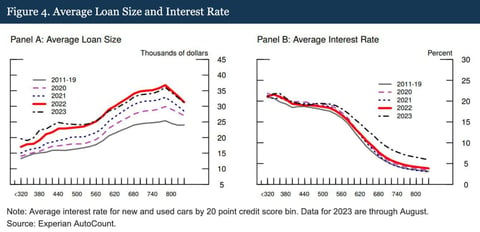
Look at the rates: In Q2 2025, weaker-credit borrowers were paying near 16% on average, while higher-credit buyers sat closer to 5%. Ford’s promotion temporarily narrows that gap.
The company is even stretching terms — offers can run out to 84 months — so monthly payments look smaller. That combination makes buying a pickup feel doable for households that otherwise might not qualify.
Implications for Subprime Lenders
The immediate effect is competitive pressure. When a big captive lender undercuts typical subprime pricing, independents feel the hit in both volume and margin.
Lenders that specialize in higher-risk portfolios may see applicants shift away, leaving them a tougher mix of borrowers. For smaller finance shops, that can mean higher loss rates or the need to hike prices — either outcome narrows room for profit.
Adverse selection shows up quickly: The better-quality subprime applicants get scooped up, and the remainder looks riskier on average. That shift forces underwriters to rethink sourcing and pricing in real time.
Ford’s loan performance will function as a critical market signal. If defaults stay muted, some low-FICO borrowers may be reassessed as less risky — or Ford’s models may be better at spotting who will pay.
If delinquencies rise, the consequences are fast: Investor appetite for subprime auto ABS could wobble, funding costs could climb, and capacity could tighten. Trouble in one corner can spill into the rest.
Then, there’s the regulatory and reputational angle. A major automaker pushing deep discounts into weaker-credit pools could draw scrutiny — especially if losses start to mount. Agencies like the FTC or state attorneys general may widen their focus beyond the captive finance arm.
And headlines alone can rattle both originators and investors, turning a sales tactic into a story about underwriting standards and market stability.
A Test Case for Ford’s Gamble
The gamble looks smaller when you consider Ford’s exposure. Company filings suggest only 3% to 4% of loans made since early 2024 fall into the higher-risk category. That frames the promotion less as a systemic overhaul and more as a controlled trial, with a limited share of the portfolio at stake.
It’s easier to see why Ford is pushing here when you look at the truck itself. The F-Series pickup has been America’s bestselling vehicle for nearly half a century. In 2025, the F-150 and its siblings account for about 40% of Ford’s brand sales. With so much revenue tied to one model, the incentive to keep sales moving is immense.
Consumer Perspective
Ford calls this a temporary push and says it relies on proprietary risk models rather than FICO alone. That distinction matters; if the approach works, it could reshape pricing norms. If it fails, it could tighten credit for the very borrowers it aimed to help.
For subprime lenders, then, this creates a test and a warning. Short-term choices are tactical — raise prices, shift sourcing, accrue loss buffers — but their longer-term effects are strategic. Watching the securitization markets, Ford’s loss rates, and shifts in applicant quality will tell if this wager becomes a new playbook or a lesson.
Consumer advocates weighed in as well. Chuck Bell, advocacy program director at Consumer Reports, told The Wall Street Journal that the promotion could help subprime borrowers if participating dealers keep vehicle prices and trade-in values transparent and limit add-on costs.
He also cautioned that there are “many ways that individual deals could go wrong” and urged shoppers to beware. Seasoned subprime veterans, no doubt, will be watching closely.


