



How to Identify & Fix Credit Report Errors (4 Steps for DIY Credit Repair)


Writer: Gerri Detweiler


Editor: Jon McDonald


Reviewer: Ashley Fricker

Every day, millions of pieces of financial information go back and forth between the systems that connect lenders and credit bureaus. That information is used to create credit reports and to calculate credit scores. And for all kinds of reasons, mistakes can happen.
While some credit report mistakes are minor, others can be serious enough to affect your ability to get a credit card or loan, obtain insurance, rent an apartment, or even land a job.

“Credit reporting complaints are by far the biggest source of complaints to the CFPB, accounting for about 85 percent of all complaints,” reports the National Consumer Law Center (NCLC), “with consumers often describing problems with incorrect information.”
Identifying and fixing credit report errors is often the first step in DIY credit repair. Here’s how to go about it.
Step 1: Analyze Your Credit Reports
Get your full credit reports from all three major credit bureaus: Equifax, Experian, and TransUnion.
You can get a free credit report from each bureau at AnnualCreditReport.com, and many credit monitoring services also provide full credit reports.

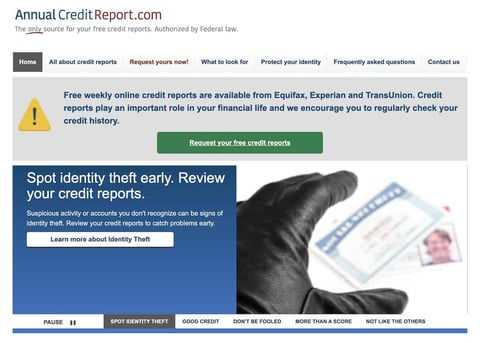
Don’t try to take a shortcut and just look at a single credit report. Credit bureaus operate independently, and any one of your reports may list incorrect information. That means you need to review all three.
Step 2: Conduct a Line-by-Line Audit
The next step is to go through your credit reports line by line. Carefully review each report and make a note of anything you think may be wrong or any item that’s unclear.
There may be a few things that don’t look quite right, but aren’t necessarily mistakes. For example, the balances listed for your credit cards may not be the same as your current balances.


Issuers typically report account information around the close of the billing cycle, so the balances listed may have been reported before you made a recent payment.
Pay close attention to late payments and collection accounts, both of which can negatively affect your credit. You’ll also want to carefully review inquiries.
While each inquiry typically lowers a credit score by just a few points, an inquiry you don’t recognize can be a sign of possible credit fraud.
Step 3: Dispute Errors
There are three ways to dispute credit report mistakes, and each approach has pros and cons:
1. File an online dispute with the credit bureau
Each bureau provides an online dispute portal, and they all encourage consumers to file disputes directly with them, as it’s the fastest and easiest way for the bureaus to process these requests.

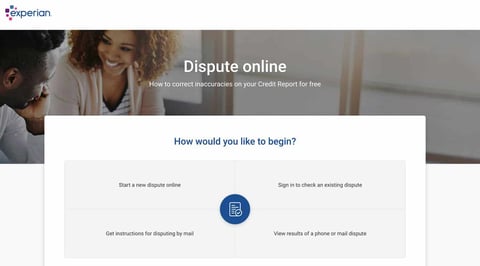
The downside is that you’ll usually have to choose from a list of types of mistakes, and if your dispute doesn’t fall neatly into one of those categories, you may not be able to accurately describe the reason you believe the information is wrong.
Pro Tip: Keep a record of your online dispute so you can follow up if it’s not resolved.
2. Send a written dispute to the credit bureau
Consumer advocates often recommend sending your dispute to the credit bureau by mail. This allows you to fully explain and document it.
A written dispute will take longer than an online dispute because you have to write and mail a letter. It’s a good idea to use a trackable method so you have proof that your dispute was mailed and received, and that will be an added expense.
Pro Tip: The Consumer Financial Protection Bureau (CFPB) offers a free guide and sample dispute letter you can use to write your own. Your main goal is to clearly describe what’s wrong and why you believe it’s wrong. Include supporting documentation if you have it.
3. Dispute the item with the company reporting the mistake
You can also dispute a mistake with the company reporting the wrong information. That company is called the “furnisher.”
If you dispute the item with the furnisher and it acknowledges a mistake, it must provide a correction to all the bureaus to which it reported that information. That may save you the additional step of filing disputes with multiple credit bureaus.
While disputing with the furnisher may be convenient, it’s not always your best approach. The NCLC warns that a “dispute to the furnisher will NOT give you a right to seek legal relief if the furnisher mishandles your dispute.”
Here’s a quick look at the pros and cons of these different approaches to credit report disputes:
| Dispute Type | Pros | Cons |
|---|---|---|
| Online Dispute With the Credit Bureau | Often a fast and convenient method for filing a dispute | May not be able to file a detailed dispute and must dispute with each credit bureau separately |
| Written Dispute to the Credit Bureau | Ability to share more details and documentation. May help preserve your rights if the dispute is not resolved | Takes more time. Must dispute with each credit bureau separately |
| Dispute with the Furnisher | The correction must be shared with each bureau that has the wrong information | Does not preserve your right to seek legal relief if the investigation is mishandled |
Step 4: Respond to Denials
Once you’ve submitted your dispute to a credit bureau, it has 30 days to investigate and provide you with the results. Just remember that the time period can be extended by up to 15 days if the bureau needs additional information from you.
If your dispute doesn’t result in the correction or removal of the item, it may not be the final word. Consumer advocates and the NCLC warn that bureaus “often only conduct a minimal and token review” by turning a dispute into a code that is sent to the furnisher.
You are entitled to add a statement of up to 100 words to your credit report explaining why you believe the information isn’t correct.
In some cases, the investigation consists largely of the credit bureau sending coded information about your dispute to the furnisher and receiving a response electronically.
You are entitled to add a statement of up to 100 words to your credit report explaining why you believe the information isn’t correct.
This statement won’t affect your credit scores, though, and may not even be seen by companies using automated systems to review credit applications. For those reasons, it’s likely to have a limited impact.
When to Consider a Credit Repair Company or Credit Attorney
If you are overwhelmed by the process of improving your credit, or if you aren’t getting anywhere with your own DIY credit repair efforts, you may want to get help.
Some nonprofit credit counseling services offer credit report review services. This review may help you understand your credit reports, though you’ll need to file disputes yourself if you find mistakes.
A credit repair service can file disputes on your behalf. Just make sure you choose a credit repair firm carefully, and remember it cannot guarantee results. Here are some red flags to watch out for when communicating with credit repair services:


You may also want to talk with a consumer law attorney who can help you understand whether the credit bureau or a furnisher has violated the Fair Credit Reporting Act or other consumer protection laws.
An attorney may offer a free case review, or even work with you on a contingency-fee basis, which means you don’t have to pay them unless you recover money through a lawsuit or settlement.
Lingering Credit Report Errors Can Affect Your Financial Future
Mistakes on your credit reports may cost you money or lead to lost opportunities. Bad credit can be expensive, and even small mistakes may mean higher interest rates when you borrow.
You don’t have to correct everything at once. Start by getting your credit reports, reviewing them carefully, and identifying information you believe is wrong. From there, you can dispute information yourself or get help if you need it.
Correcting mistakes isn’t a guarantee that you’ll improve your credit scores. But making sure your credit reports are accurate is an important step in protecting your credit for the future.


