



Easy-Approval Credit Cards with High Limits in July 2026
Explore credit card options for bad credit that improve credit scores while offering reasonable limits and unique features.


Writer: Eric Bank


Editor: Jon McDonald


Reviewer: Ashley Fricker

Disclosure: When you apply through links on our site, we often earn referral fees from partners. For more info, see our ad disclosure and review policy.
Even if you have bad credit, it is still possible to find credit cards with easy approval and relatively high credit limits. These products may be hard to spot, so we’ve rounded up a list of unsecured, secured, and business credit cards you can obtain without working up a sweat.
Even if the major credit card issuers have deemed you unworthy, you can qualify for a perfectly respectable card with enough credit to make a big-ticket purchase or two. Eventually, when you work yourself back into good credit, you’ll fondly remember the modest credit cards that helped you when you needed them most.
Easy-Approval Unsecured Cards With High Limits
These credit cards do not require a security deposit, offer easy approval, and have credit limits of up to $1,000. They are the best credit cards for subprime consumers who prefer unsecured cards and need a reasonable spending limit.
| | Our Rating |


- Earn Cash Back Rewards* – 3% on Eligible Gas, Groceries, and Utilities, and 1% on All Other Eligible Purchases
- Up to $1,000 credit limit subject to credit approval
- Prequalify** without affecting your credit score
- No security deposit
- Free Access to your Credit Score† *See Program Terms for important information about the cash back rewards program. ** Prequalify means that you authorize us to make a soft inquiry into your credit history (that will not affect your credit) to create an offer. If you accept an offer a hard inquiry will be made. Final approval is not guaranteed if you do not meet all applicable criteria (including adequate proof of ability to repay). Income verification through access to your bank account information may be required. † Your credit score will be available in your online account starting 60 days after your account is opened. (Registration required.) The free VantageScore 4.0 credit score provided by TransUnion® is for educational purposes only. This score may not be used by The Bank of Missouri (the issuer of this card) or other creditors to make credit decisions.
| Interest Rate | 36% Fixed |
| Reports Monthly | Yes |
| Application Length | 7 minutes |
| Reputation Score | 8.0/10 |
| Our Expert Review | 4.7/5.0 (see review) |
The Aspire® Cash Back Rewards Mastercard provides tiered rewards on all eligible purchases, making it one of the best cash back cards for subprime consumers. The card also offers transaction alerts and free credit scores. You can prequalify for this rewards card without impacting your credit score.
The card gives you 24/7 online access on any device. Merchants worldwide welcome this genuine Mastercard, a product of the Bank of Missouri. You can expect the card to arrive shortly after account approval.
| | Our Rating |
- Up to $1,000 Initial Credit Limit
- See if you Pre-Qualify with No Impact to your Credit Score
- Less than perfect credit? We understand. The Surge Mastercard is ideal for people looking to rebuild their credit.
- Unsecured credit card requires No Security Deposit
- Perfect card for everyday purchases and unexpected expenses
- Monthly reporting to the three major credit bureaus
- Use your card everywhere Mastercard is accepted at millions of locations
- Enjoy peace of mind with Mastercard Zero Liability Protection for unauthorized purchases (subject to Mastercard guidelines)
- Apply with Confidence! There is no impact to your credit score if you’re not approved. See terms.
| Interest Rate | 35.90% Fixed |
| Reports Monthly | Yes |
| Application Length | 5 minutes |
| Reputation Score | 8.5/10 |
| Our Expert Review | 4.8/5.0 (see review) |
The Surge® Platinum Mastercard® offers an initial credit limit of up to $1,000. That’s pretty rare for an easy-approval subprime card. The issuer sets your initial spending limit based on your recent credit history.
The Surge® Platinum Mastercard® does not require you to prepay a setup fee. It does charge the first year’s annual fee as soon as you activate your account, reducing your initial credit limit. The monthly maintenance fee doesn’t kick in until the second year, and the amount will depend on your credit limit.
| | Our Rating |
- See if you’re pre-approved with no impact to your credit score.
- Qualify for rewards like a credit limit increase (subject to credit approval) or APR decrease in as little as six months.
- Earn unlimited 1% cash back on purchases.
- Building your credit? We report to the major credit bureaus and good payment habits can pay off.
- Easily manage your account and make payments using BrightWay App.
- BrightWay cards are issued by WebBank.
- See the OneMain BrightWay® Card rates and fees.*
| Interest Rate | 35.99%* |
| Reports Monthly | Yes |
| Application Length | 5 minutes |
| Reputation Score | 9.5/10 |
| Our Expert Review | 4.6/5.0 (see review) |
The OneMain BrightWay® Card lets you see if you are preapproved with a simple, five-minute application. This process won’t impact your credit score and can give you a good indication whether your final application will be approved.
This card offers a top credit limit of $2,000 and is tailored for those working on building their credit. It comes with features that support ongoing credit improvement. Reporting to all three credit bureaus, it helps you establish a solid credit foundation as long as you make timely payments and maintain a low balance.
The OneMain BrightWay® Card rewards program can enhance your finances if you qualify. You might increase your credit limit or lower your APR in as little as six months with responsible card usage.
| |
- Up to $1,000 Initial Credit Limit
- See if you Pre-Qualify with No Impact to your Credit Score
- Less than perfect credit? We understand. The Reflex Mastercard is ideal for people looking to rebuild their credit.
- Unsecured credit card requires No Security Deposit
- Perfect card for everyday purchases and unexpected expenses
- Monthly reporting to the three major credit bureaus
- Use your card everywhere Mastercard is accepted at millions of locations
- Enjoy peace of mind with Mastercard Zero Liability Protection for unauthorized purchases (subject to Mastercard guidelines)
- Apply with Confidence! There is no impact to your credit score if you’re not approved. See terms.
| Interest Rate | 35.90% Fixed |
| Reports Monthly | Yes |
| Application Length | 8 minutes |
| Reputation Score | 8.0/10 |
The Reflex® Platinum Mastercard® offers an initial credit limit as high as $1,000, based on your credit profile.
This card can help you rebuild your credit when you use it responsibly, and you will need a checking account to qualify. The Reflex® Platinum Mastercard® is a sibling of the Surge® Platinum Mastercard®, both serviced by the Continental Finance Company.
Easy-Approval Secured Cards With High Limits
You’ll be interested in these options if you prefer an easy-approval credit card that collects a refundable security deposit instead of charging high fees. Your security deposit defines your credit limit, which in one case can reach $10,000, an astounding figure for a subprime card.
| |
- Earn Up To 10% Cash Back on everyday shopping with your First Progress Card, plus another 1% back on payments!^^
- Apply with no impact to your credit!2
- The first step to rebuilding your credit starts with just $200!¹
- Choose the First Progress Select Card for a lower annual fee!
- All credit types welcome to apply!
- Build your credit history across 3 major credit reporting agencies: Equifax, Experian and TransUnion.¹
- ¹Cardholders who keep their balance low and pay their credit card bill on time every month typically do see an increase in their credit score.
- 2We may pull a soft inquiry of your credit. Soft inquiries do not impact your credit score.
- ^^The 10% cash back rate is available only at a limited number of participating merchants. Offer percentages vary by merchant and are subject to change. See First Progress Rewards Program Terms & Conditions for details.
- *See Important Disclosures for complete offer details
| Interest Rate | 17.49% (V) |
| Reports Monthly | Yes |
| Application Length | 9 minutes |
| Reputation Score | 7.5/10 |
The First Progress Select Secured Mastercard® accepts refundable deposits of $200 to $2,000 that fully secure your credit line. If offers a flat cash back reward rate on all eligible purchases.
This secured card does not require a minimum credit score for approval and reports your payments to the three credit bureaus.
Triple reporting helps you rebuild credit efficiently if you pay your bills on time. The card provides a 25-day grace period, during which your purchases don’t incur interest. Paying your entire balance each month allows you to avoid interest charges altogether.
| | Our Rating |
- No minimum balance requirements*
- No credit check**
- 2% cash back on category of choice with direct deposit***
- The perks of credit building meet the best of banking****
- Chime Checking Account required to apply for the Chime Visa® Credit Card
Chime is a financial technology company, not a bank. Banking services provided by The Bancorp Bank, N.A. or Stride Bank, N.A., Members FDIC. The secured Chime Visa® Credit Card is issued by The Bancorp Bank, N.A. or Stride Bank, N.A. pursuant to a license from Visa U.S.A. Inc. and may be used everywhere Visa credit cards are accepted. Please see the back of your Card for its issuing bank.
*Money added to Chime CardTM will be held in a secured deposit account as collateral for your Chime Card, and you can spend up to this amount. You can use money deposited in your Secured Deposit Account to pay off your charges at the end of every month.
**Out-of-network ATM withdrawal and over the counter advance fees may apply.
***With a qualifying direct deposit, earn 2% cash back on category of choice on eligible secured Chime Visa® Credit Card purchases.
****On-time payment history may have a positive impact on your credit score. Late payment may negatively impact your credit score. Results may vary.
| Interest Rate | N/A |
| Reports Monthly | Yes |
| Application Length | 5 minutes |
| Reputation Score | 9.5 |
| Our Expert Review | 4.8/5.0 (see review) |
With the The secured Chime Visa® Credit Card, you can have a credit limit of up to $10,000, based on the amount of money you transfer to the account. You don’t need a credit check to apply, just a Chime Checking Account with a qualifying direct deposit of $200 or more.
This card is perfect for building credit without the annoying fees that come with other subprime credit cards. Unlike many secured cards, you can use the funds you transferred to cover your monthly charges.
| | Our Rating |
- Earn up to 10% cash back on everyday purchases
- No credit check required – 89% approval rate with zero credit risk to apply!
- Boost your credit score fast—2 out of 3 opensky® cardholders see an average increase of 47 points after 6 months
- Track your progress with free access to your FICO® score in our mobile app
- Build your credit history with reporting to all three major credit bureaus: Experian, Equifax, and TransUnion
- Seamless payments—add your card to Apple Pay, Google Pay, and Samsung Pay
- Start with just $200—secure your credit line with a refundable deposit
- Fast and easy application—apply in minutes with our mobile-first experience
- Flexible payment options—pick a due date that works for you
- More time to fund—spread your security deposit over 60 days with layaway
- Join 2 million+ cardholders who have used opensky® to build better credit!
| Interest Rate | 23.89% (variable) |
| Reports Monthly | Yes |
| Application Length | 9 minutes |
| Reputation Score | 7.0/10 |
| Our Expert Review | 4.7/5.0 (see review) |
The opensky® Secured Visa® Credit Card allows you to deposit up to $3,000 with your credit limit equaling the amount you put down. The issuer can refund your deposit if you use the account responsibly over a set period. The issuer does not check credit when you apply and approves around 85% of all applicants.
The card’s annual fee and APR are well below those for the average unsecured subprime card. The issuer reports to all three major credit bureaus to help you build credit history. Unlike most credit cards, this one does not require you to have a bank account.
How Do Credit Card Limits Work?
A credit card limit is the maximum amount of money that the card will let you charge. Issuers determine credit limits using various factors, including your credit history, income, and repayment ability.
When you make purchases with your credit card, the issuer subtracts the amount you spend from your available credit. For example, if you have a credit limit of $5,000 and make a $1,000 purchase, you’ll have $4,000 of available credit left.
Once you reach your credit limit, you must repay some of your balance before you can make additional purchases. Most cards won’t allow you to go over your credit limit. The card will usually decline any transactions that would cause you to exceed your credit limit.
Some cards include overdraft protection, enabling transactions to proceed but possibly incurring penalty fees. This feature may allow you to automatically transfer funds from another account if you exceed your spending limit.
Secured cards set credit limits equal to your security deposit.

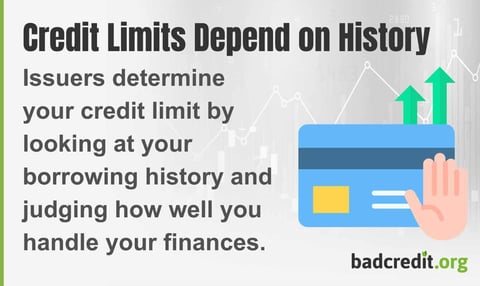
You can request a higher credit limit from the issuer, but whether it’s approved depends on several things, like your payment history, income, and credit score.
Increasing your credit limit can improve your credit score by reducing your credit utilization ratio (CUR) which is the amount of credit used compared to the credit you are approved for. This works as long as you don’t go on a shopping spree with your additional credit.
Credit card issuers can also lower your credit limit if you’ve missed payments or your credit score or income has dropped significantly. A lower credit limit can increase your CUR and hurt your credit score.
To keep your credit score healthy, aim to maintain your CUR below 30%. FICO, the leading credit score system, actually favors a CUR as close to 1% as possible.
How Do I Get a High-Limit Credit Card With Bad Credit?
Getting a high-limit credit card when you have poor credit isn’t easy. But here are a few suggestions to get the job done:
- Apply for a subprime card: Issuers design some credit cards for consumers with bad credit. These cards often have high fees and interest rates but may offer acceptable credit limits.
- Opt for a secured card: Secured credit cards require a cash deposit, which defines your credit limit. Some issuers will provide a credit limit increase without requiring an additional deposit if you consistently use the card responsibly.
- Improve your credit score: Improving your credit score is the most effective way to qualify for a high-limit credit card. You can do so by paying your bills on time and reducing your debts. This strategy frequently takes at least six months but can result in more favorable terms and interest rates.
- Add a cosigner: Having a cosigner with good credit can help you qualify for a higher credit limit. But this also means the cosigner is responsible for your debt if you can’t pay it. Unfortunately, many credit cards no longer accept cosigners.
- Opt for a card with a higher annual fee: Sometimes, cards with higher annual fees offer higher credit limits, even if you have less-than-perfect credit.
- Request a higher limit: After you’ve demonstrated your ability to pay your bills on time, you may be able to negotiate a higher limit with your credit card issuer. This strategy may also work when you get a raise or a new job with a higher salary.
The mechanics of applying for a high-limit card are no different from those for any other card. You submit an online application with the required information about yourself and your debts, income, housing costs, and employment. Most issuers will do a hard pull of your credit and give you a quick decision.
Some credit cards for imperfect credit — typically secured cards — do not check credit and are easier to obtain. Many cards offer to prequalify you without a hard credit inquiry, but remember, that prequalification does not guarantee final approval.
Once you’re approved for a secured card, you’ll need to pay the deposit before the card is sent to you. The same applies to unsecured cards with a setup fee. After settling these payments, you can expect the card to arrive within 10 days.
What Are the Differences Between Secured and Unsecured Credit Cards?
The key difference between these two card types is the required deposit for secured cards. They do have a few other notable distinctions as well.
Secured Credit Cards
With a secured credit card, you can often get approved easily and might even skip the credit check altogether. You’ll provide a refundable deposit that sets your credit limit.
For example, you can submit up to a $1,000 security deposit when you sign up for a secured card with a $1,000 credit limit. The bank holds your money in escrow until you close the account or the issuer promotes you to an unsecured card.
At that point, you’ll receive a refund for the total amount of your deposit — minus any fees or unpaid balances.
Remember, your deposit isn’t a paymentyou’ll still need to pay for some or all of the balances you charge on the card. Your monthly minimum payment will be based on your current balance.
Secured cards offer some advantages over their unsecured counterparts, including the following:
- Refundable deposits: Imagine a scenario where you can choose between a secured credit card and a subprime unsecured card. The secured card requires you to submit a $200 deposit but waives most other fees.
- Higher credit limits: Most secured credit cards allow you to bump up your initial deposit to support a higher credit limit, sometimes as high as $10,000 — or considerably higher for a secured business card. Those high limits are virtually impossible to obtain with a subprime unsecured card.
- Lower costs: You may prefer a secured card to a subprime unsecured version to minimize your bank credit card fees and interest charges. A secured card’s deposit reduces the issuer’s risk of loss, allowing it to impose fewer fees, but it will still likely charge a higher APR.
- Better perks: Some secured cards offer cash back or points. Most subprime unsecured cards do not offer rewards.
- No credit check: Your security deposit is a substitute for a good credit score. That’s why Issuers will almost always approve applications for secured cards. Most do not check your credit, and applying does not impact your score.
Secured cards have most of the same benefits that you’d expect from unsecured cards. Merchants treat them the same, you can carry balances from month to month, and you can rebuild credit through timely payments because the card issuers report your payment history to the three major credit bureaus.
Unsecured Credit Cards
Unsecured credit card issuers don’t take collateral, and you can’t make a security deposit to enhance your chances of approval. The lack of collateral requires issuers to take extra measures to guard against cardmembers defaulting on their accounts.
Given these challenges, it’s not easy to find a subprime unsecured card with a credit limit over $2,000. Plus, the card’s APR might approach the 36% threshold.


Many issuers that offer unsecured credit cards for bad credit provide a small initial credit limit, typically $200 to $300. Some cards, including the Surge® Platinum Mastercard®, will start qualified applicants off with a credit limit of $300 to $1,000.
Unsecured cards often include higher interest rates, an annual fee, setup fees, monthly service fees, and other charges. Issuers reduce the risk of losing money by imposing these extra costs when they extend credit to subprime consumers.
Unsecured cards for poor credit usually don’t offer consumers the best deals. Issuers must protect themselves from defaults, so subprime unsecured cards have several disadvantages, including the following:
- Low credit limits: Your initial credit limit may start at only $200. Issuers set a low limit to minimize the losses from cardmember defaults. Eventually, you may see your credit limit grow if you pay your bills on time and keep your unpaid balances relatively low.
- High interest rates: Subprime unsecured cards typically charge APRs in the 25% to 36% range. These rates can be hard on your budget, but you can avoid interest charges by paying your entire balance by the monthly due date. And you should avoid the few cards that charge interest starting on the transaction date.
- Fees, fees, fees: All cards, even those for excellent credit, routinely charge for cash advances, balance transfer transactions, and overdue payments. But some unsecured cards for imperfect credit may add fees for subprime consumers.
- Puny perks: Many subprime unsecured cards offer minimal benefits. They seldom pay rewards on purchases or offer signup bonuses or 0% introductory APRs. Some cards provide little more than fraud protection and free credit monitoring.
- Hidden costs: A few subprime cards bury fees in the cardmember agreement’s fine print. For example, we know of at least two cards with no grace periods, meaning you immediately incur interest on purchases. Another sneaky cost is the fee for credit limit increases. Some cards charge up to 25% of each credit line increase.
Consider taking a personal loan if you need $2,000 but can’t afford the security deposit. These loans don’t provide the revolving credit you get from a credit card. They instead lend you a lump sum that you repay in monthly installments.
Personal loans report payments to at least one credit bureau, so you can still build some credit by paying on time.
How Do I Select the Best High-Limit Card For Subprime Credit?
First, decide whether you want a secured or unsecured card. You’ll have better luck getting a high credit limit if you choose a secured card.
Compare cards based on their costs and benefits. On the cost side, secured card APRs are relatively low, but you can typically avoid interest on any card by paying your entire balance each month. Avoid cards with high fees, especially setup and monthly maintenance charges.


Regarding benefits, look for cards that offer cash back rewards on eligible purchases. A signup bonus or 0% intro APR is a definite plus, but hard to find. You may prefer cards with specific features, including rental car insurance or a $0 annual fee.
Which Credit Cards For Bad Credit Give You a $5,000 Limit?
Among the personal credit cards reviewed above, only the The secured Chime Visa® Credit Card can offer a $5,000 limit. In fact, you can set the limit at $10,000 if you are willing to make a matching deposit. Several other cards can offer a $2,000 to $3,000 credit line.
Business credit cards can provide the highest credit lines. Consider one of these if you are self-employed or own a small business and need a high-limit credit card.
What Are the Pros and Cons of High-Limit Cards For Consumers With Poor Credit?
High-limit credit cards for those with poor credit offer both advantages and disadvantages. Let’s dive into the pros and cons to help you make an informed decision.
Pros
A high-limit credit card is attractive for several reasons:
- Increased spending flexibility: A higher credit limit provides more credit for necessary or unexpected expenses, which can be helpful during emergencies.
- Potential for credit score improvement: A high limit can help you keep your credit utilization ratio low. Using only a small percentage of your available credit can improve your CUR and credit score.
- Opportunity to consolidate debt: You can use a high-limit card to consolidate other high-interest debts via balance transfers. These transfers can simplify payments and reduce interest expenses if you move your balances to a credit card with a lower interest rate. A balance transfer fee applies to each transaction.
- Rewards and benefits: High-limit credit cards often have rewards programs, cash back offers, and other perks. But these benefits come primarily from cards for consumers with good credit.
- Business and travel use: A high-limit card can help you manage sizeable expenses more efficiently, especially if you travel frequently or own a business.
Some of the cards we’ve reviewed offer these advantages.
Cons
It may not be initially apparent, but high-limit cards can have a few negatives:
- Risk of overspending: You may face the temptation to spend more than you can afford when you have a high-limit credit card, especially if you have poor financial habits or lack discipline.
- Potential for increased debt: You may accumulate debt you can’t easily repay, which can only worsen your credit situation.
- Higher interest payments: Subprime cards often have high interest rates. You’ll end up paying significantly more interest if you frequently carry a balance across multiple billing periods.
- Adverse impact on credit score: Overspending may cause you to max out your high-limit card and increase your credit utilization ratio, which can harm your credit score.
- High fees: High-limit credit cards for consumers with lousy credit often impose higher costs, including annual, late, setup, and maintenance fees.
- Difficulty in qualifying: Qualifying for a high-limit unsecured card is generally more challenging when you have bad credit. You will have better results with a secured card, but you’ll have to put down a large deposit.
The positives of a high-limit card outweigh the negatives, but only if you have the discipline to use the card responsibly.
How Can I Use a Credit Card to Improve My FICO Score?
You can use your credit card to improve your FICO Score in several ways, starting with timely payments. On-time payments account for 35% of your FICO score, so consistently paying your bill on time will drive your score higher over time.
To make sure your payments are always on time, try using a bill pay system through your bank or a personal finance app, like Quicken. Payments will be applied to your bill on a set day each month. Autopay ensures your payments will be processed on or before the due date.


If you forget about a bill and haven’t implemented autopay, immediately contact the credit card issuer and explain the problem. Call promptly because delinquencies don’t appear on your credit reports until they are 30 days past due.
Try asking the issuer to prevent the delinquent payment from showing up on your credit report. If it’s your first missed payment, they might also waive the late fee.
About 30% of your FICO score comes from how much money you owe. The gap between your unpaid credit card balances and credit limits—both per account and overall—makes up your credit utilization ratio, which has a strong impact on your credit scores.
Ideally, you can pay your entire balance each month, but sometimes you need to finance purchases over multiple periods. You should keep your credit utilization ratio at no more than 30%. FICO wants to see a CUR as close to 1% as possible.
Try to reduce your unpaid balance within a few months. Your CUR will improve with each large payment — made on time, of course. Eventually, it will return to the safe zone, which can help boost your credit score.
Reducing your debt will also decrease your debt-to-income (DTI) ratio. Creditors generally want to see a DTI ratio no higher than 36%, although some exceptions exist.


Issuers may calculate your credit scores before you’ve fully paid off your balances. To prevent this, try paying your credit card bill immediately or making several payments throughout the month.
Other steps you can take to support your credit score are:
- Keep old credit accounts open to preserve your average credit account age
- Refrain from applying for new cards more than once every six months to avoid too many hard credit inquiries
- Increase the mix of credit card types you own
A broad mix of loans and credit cards tells FICO you can manage your credit in various situations.
What If the Credit Card Company Rejects My Application?
Sometimes, an issuer will reject your credit card application even if it prequalified your request. When this happens, the issuer will send you an Adverse Action Notice (AAN) if it used your credit history to help make its decision.
The AAN explains why the issuer denied your application and the next steps you can take. An AAN can be a valuable resource because it tells you how to ensure your next credit card application succeeds.
You can also consider becoming an authorized user of another person’s credit card. As an authorized user, you will receive a credit card with your name, even though you are not legally liable for the account.
The account owner’s credit card activities and payment history will appear on your credit report. As long as they pay their bills on time, both of you can benefit from positive credit reporting, helping to build your scores.
Once your scores rise enough to qualify for your own credit card, you can use it to build credit further.
Don’t Let Bad Credit Keep You From a High-Limit Credit Card
Don’t let the thought of having poor credit stop you from pursuing a high-limit credit card. There are plenty of options available, and we can guide you to the right one for your needs.
We suggest starting with a secured credit card because it’s simple to qualify for, can save you money over time, and provides a great opportunity to boost your credit scores. Eventually, you’ll be ready to transition to an unsecured card, ideally one with fair or better credit, and enjoy a higher credit limit.
Advertiser Disclosure
BadCredit.org is a free online resource that offers valuable content and comparison services to users. To keep this resource 100% free for users, we receive advertising compensation from the financial products listed on this page. Along with key review factors, this compensation may impact how and where products appear on the page (including, for example, the order in which they appear). BadCredit.org does not include listings for all financial products.
Our Editorial Review Policy
Our site is committed to publishing independent, accurate content guided by strict editorial guidelines. Before articles and reviews are published on our site, they undergo a thorough review process performed by a team of independent editors and subject-matter experts to ensure the content’s accuracy, timeliness, and impartiality. Our editorial team is separate and independent of our site’s advertisers, and the opinions they express on our site are their own. To read more about our team members and their editorial backgrounds, please visit our site’s About page.


