



How to Tell Which Accounts Are Hurting Your Credit the Most


Writer: Gerri Detweiler


Editor: Jon McDonald


Reviewer: Ashley Fricker

Pay down your credit card balances. Pay on time. Don’t close your oldest account. Dispute mistakes on your credit report.
One of the biggest problems with credit repair advice is that it often feels like one size fits all. If you don’t know where to focus your attention, you may spend time trying to improve your credit, but instead realize you’re spinning your wheels.

The better approach: Find out what’s affecting your credit the most, and based on that information, decide where to focus your efforts. First, we’ll talk about what those main factors may be, then we will look at strategies to fix them.
Step 1: Check Your Credit Reports for Negative Items
I am a fan of using tools to monitor your credit scores. But if you’re not looking at your actual credit reports from time to time, you’re missing a big part of the picture. Scores are only as accurate as the information used to calculate them, and that data is found in credit reports.
You can get your full credit reports once a week from AnnualCreditReport.com. There are also some places where you can get your full credit reports, along with credit scores, for free.

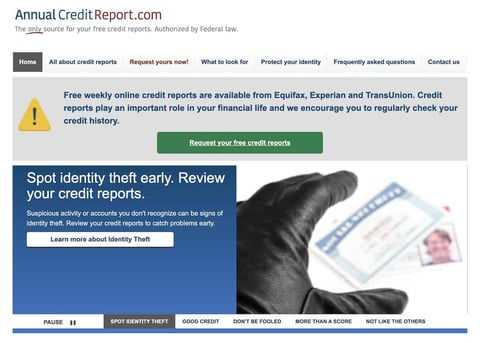
Wherever you get your reports, make sure you review one from each of the three major credit bureaus: Equifax, Experian, and TransUnion. You have no input into which one a lender or credit card company will use, and the information can be somewhat different from bureau to bureau.
If your goal is to improve your credit, the first thing you’ll want to look for is potentially negative items.
Payment history is the most important factor in credit scoring models, and it includes items that can lower your credit scores by a lot. These include:
| ❌ Late payments | ❌ Charge-offs |
| ❌ Collection accounts | ❌ Bankruptcy |
The more recently these problems occurred, the more impact they are likely to have on your scores.
Quantity also matters: a single 30-day late payment will be less problematic than a series of late payments, a charge-off, or a collection account, for example.
Step 2: Look for Credit Cards With High Utilization Ratios
Credit utilization can bring your credit scores down or up, and they can change quickly.
In the FICO formula, debt is the second most significant factor after payment history, and utilization is a big part of this factor.
How does it work? Utilization is a calculation that compares the balance on each of your credit cards with its credit limit. (It will also look at the totals for all relevant accounts.)
The credit utilization formula is simple:
Balance, divided by credit limit, then multiplied by 100.
For example, if your balance is $250 and your credit limit is $1,000, your utilization ratio is 25%. In other words, you’re using 25% of your credit limit.
| Here’s a Credit Utilization Ratio Calculation Example For Multiple Credit Cards | ||||
|---|---|---|---|---|
| Card A | Card B | Card C | Overall | |
| Balance | $500 | $0 | $2,250 | $2,750 |
| Credit Limit | $2,000 | $3,000 | $5,000 | $10,000 |
| Utilization Ratio | 25% | 0% | 45% | 27.50% |
What’s key to understand about this factor: Utilization is calculated using the balance reported by your card issuer to the credit bureaus, and that may be different than the balance after you make your payment.
Here’s an example: One of my friends saw her credit score drop about 40 points after the holidays. She was shocked as she always pays her cards on time and in full.
Utilization was the culprit. It turns out she had charged quite a bit on one of her retail cards in December, and her balance was reported to the credit bureaus before her January payment was received.
Her credit utilization jumped, and her credit scores dropped.
Step 3: Identify Fraudulent Accounts or Zombie Debt
Look for accounts that don’t belong to you. There are three main reasons this can happen:
- Someone has opened accounts in your name
- Your credit report is mixed up with someone else’s
- You’ve forgotten about accounts you opened in the past
Dispute any accounts that don’t belong to you. If you suspect identity theft, you’ll need to also take steps to report it and either freeze your credit reports or add fraud alerts.
Also look for what’s often called “zombie debt”. These are old accounts that show up on your reports years later, including debt that was turned over to collection agencies several years after you stopped paying, or even accounts that were wiped out in bankruptcy.
Step 4: Make a Plan to Repair the Damage
If you’re still not sure which factors are impacting your scores the most, here’s a cheat code: Look at the top factors listed as impacting your scores.
Errors on Your Credit Report
If you get your credit scores through your credit card issuer, or a free or paid credit monitoring service, you’ll likely see a list of the top factors that are affecting your scores.
Make a note of them, and evaluate them in the context of your overall credit situation. Then you can make a game plan to address them, or if you prefer, work with a credit repair firm.


Negative items such as late payments or charge-offs can be tough to change, but if anything reported about an account is inaccurate or incomplete, you have the right to dispute it with the credit reporting agency.
If it can’t be confirmed, the credit bureau must stop reporting it.
If you can’t get negative items removed, it may be reassuring to know that, as they become older, they tend to have less impact, especially if you have consistently paid on time since then.
Accounts in Collections
Collection accounts require special attention, especially in the case of zombie debts. Statutes of limitations are state laws that govern how long a creditor may be able to successfully sue to collect the debt.
Making a payment of any amount may restart the statute of limitations. So, before you pay an older charged-off or collection account, it’s a good idea to investigate your legal rights.
Credit Utilization
Bringing down your utilization may be one of the fastest ways to boost your credit scores. Paying down credit card balances can be very helpful here. FICO and VantageScore weigh utilization heavily — although FICO calculates it in the “Amounts Owed” category.
| FICO vs. VantageScore Factors | |
|---|---|
| FICO Score 8 Factors | VantageScore 4.0 Factors |
| Payment History: 35% | Payment History: 41% |
| Amounts Owed: 30% | Utilization: 20% |
| Credit History: 15% | Age/Credit Mix: 20% |
| Credit Mix: 10% | New Credit: 11% |
| New Credit: 10% | Balance: 6% |
| Only uses five factors | Available Credit: 2% |
The credit bureaus will use the latest information on your reports to calculate your scores, so you may want to make your payments a few days before the end of your statement closing date, as that’s when many issuers report to credit bureaus.
Credit Limits
Raising your credit limits may also help, and some consumers find that refinancing high credit card balances with a personal loan (where utilization is not an important factor) can provide some breathing room.
Even if none of the above problems apply, you can still have low credit scores. Sometimes, a lack of credit references is the main issue.
Lack of Credit History
This is often referred to as a “thin file”. With too few credit references, it’s difficult for credit scoring companies like FICO or VantageScore to calculate a credit score. Aim to have at least two to three active, open accounts reporting.
If you are early into the credit-building journey, credit age may be the problem. Older accounts can be helpful to building strong credit scores.
Getting added to someone else’s long-established credit card account as an authorized user may help.
Similarly, if you don’t have a mix of different types of accounts, including revolving accounts like credit cards, along with installment accounts such as mortgages or car loans, your scores may not be as high as they could be with those additional references.
A secured credit card or a credit builder account may help round out your credit mix.
What’s Hurting Your Credit Scores: What Works
Whether you decide to DIY your credit repair efforts or work with a credit repair firm, understanding what’s bringing down your credit scores the most can help you focus on actions that can have the highest impact.
It can also help you avoid mistakes like getting a secured credit card but then maxing out the balance. Ultimately, your credit reports and credit scores uniquely reflect your credit experiences and financial habits. Your approach to raising them should be tailored, too.

